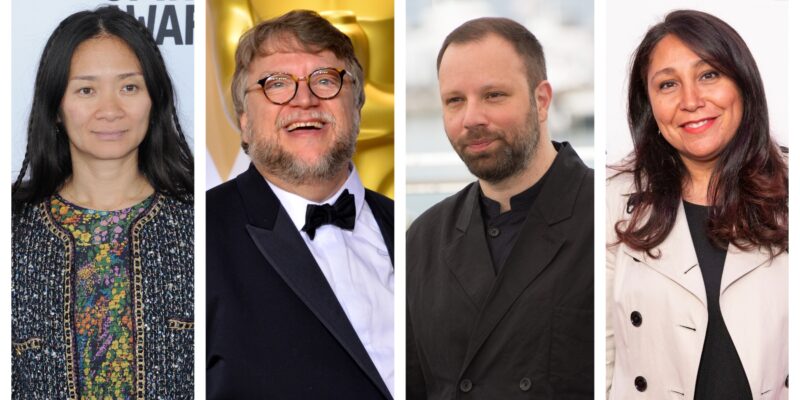
International filmmakers have long made the leap to English-language cinema—sometimes triumphing, sometimes stumbling, but always captivating their viewers. These debuts reveal what happens when distinct cinematic voices collide with studio expectations, new linguistic territory, and trying to reach a wider audience while maintaining artistic integrity. Here are 15 filmmakers and the films that mark pivotal moments in their careers and in cinematic history.
1. Fritz Lang, “Fury” (1936)
Before fleeing Nazi Germany, Austrian filmmaker Lang was already renowned for movies like “Metropolis” (1927) and “M” (1931). “Fury,” a searing indictment of mob violence starring Spencer Tracy, proved he could adapt his distinctive style to Hollywood. The movie’s success launched a prolific U.S. career that includes “The Big Heat” (1953) and “While the City Sleeps” (1956).
2. Michelangelo Antonioni, “Blow-Up” (1966)
By 1966, Italian auteur Antonioni had crafted landmark works like “L’Avventura” (1960) and “La Notte” (1961). “Blow-Up” follows a London photographer who may have captured a murder. Filmed amid Swinging Sixties London, it brought Antonioni’s cool modernism to English cinema, won the Palme d’Or and two Oscar nods, and became his biggest commercial success.
3. Wolfgang Petersen, “The NeverEnding Story” (1984)
After earning international acclaim for the war drama “Das Boot” (1981), German filmmaker Petersen made his English debut with “The NeverEnding Story,” a fantasy epic that became a beloved cult classic. Its success helped him transition to major Hollywood thrillers like “In the Line of Fire” (1993) and “Air Force One” (1997).
4. Paul Verhoeven, “Flesh+Blood” (1985)
Dutch writer-director Verhoeven, already celebrated for his movies “Soldier of Orange” (1977) and “The 4th Man” (1983), made the transition to English films with this brutal medieval adventure starring Rutger Hauer and Jennifer Jason Leigh. Though not a hit, “Flesh+Blood” showcased his command of spectacle and moral ambiguity, paving the way for “RoboCop” (1987) and “Total Recall” (1990).
5. Agnieszka Holland, “To Kill a Priest” (1988)
By the late 1980s, Holland had already established herself with politically charged dramas shaped by her experiences in Communist-era Poland. Her first English-language film, “To Kill a Priest” (1988), features Ed Harris and Tim Roth in a tense, fictionalized account of the real-life murder of Polish priest Jerzy Popiełuszko. Following its success, she would go on to direct other projects outside her native language, including the children’s fantasy drama “The Secret Garden” (1993) and several episodes of HBO’s “The Wire” and Netflix’s “House of Cards.”
6. Ang Lee, “Sense and Sensibility” (1995)
After acclaimed Mandarin-language dramas like “Pushing Hands” (1991), “The Wedding Banquet” (1993), and “Eat Drink Man Woman” (1994), Taiwanese filmmaker Lee directed the English period drama “Sense and Sensibility” (1995), adapted from Jane Austen’s novel by star Emma Thompson. His outsider perspective sharpened Austen’s themes of class and duty, earning the film seven Academy Award nominations and launching Lee’s global career with later Oscar-winning hits like “Crouching Tiger, Hidden Dragon” (2000), “Brokeback Mountain” (2005), and “Life of Pi” (2012).
7. Alfonso Cuarón, “A Little Princess” (1995)
Following his debut “Sólo con tu pareja” (1991), Mexican director Cuarón debuted in English with “A Little Princess” (1995), a visually rich children’s story filmed with his longtime collaborator, cinematographer Emmanuel Lubezki. Though it underperformed commercially, the film earned Oscar nominations for cinematography and production design, and foreshadowed Cuarón’s later triumphs, including “Y tu mamá también” (2001), “Children of Men” (2006), “Gravity” (2013), and “Roma” (2018).
8. Guillermo del Toro, “Mimic” (1997)
After del Toro’s Spanish feature debut “Cronos” (1993), he made his first Hollywood film, the sci-fi horror “Mimic” (1997), about mutant insects in New York City’s subways. Studio interference made production difficult, but the film still bears del Toro’s signature: a Gothic atmosphere, religious imagery, and intricate creature design. The experience taught him to fight for creative control on later projects like “Blade II” (2002), “Hellboy” (2004), “Pan’s Labyrinth” (2006), and “The Shape of Water” (2017).
9. Marjane Satrapi, “The Voices” (2014)
Iranian-French artist and filmmaker Satrapir certainly has range, from “Persepolis” (2007), the Oscar-nominated animated movie based on her own graphic novel about growing up during the Iranian Revolution, to “The Voices” (2014), a pitch-black comedy starring Ryan Reynolds as a schizophrenic factory worker. Though the subject matter may be vastly different, the film displays Satrapi’s continued knack for mixing horror, absurdity, and empathy. She later directed the biopic “Radioactive” (2019), starring Rosamund Pike as Marie Curie.
10. Bong Joon Ho, “Snowpiercer” (2015)
Having made acclaimed Korean hits like “Memories of Murder” (2003) and “The Host” (2006), Bong transitioned to English-language cinema with “Snowpiercer” (2015). Set on a post-apocalyptic train divided by class, it blended social satire and action with Bong’s dark humor. The film’s critical acclaim paved the way for “Okja” (2017) and ultimately “Parasite” (2019), which made Oscar history as the first non-English-language best picture winner.
11. Chloé Zhao, “Songs My Brothers Taught Me” (2015)
Before becoming the first Asian woman to win an Oscar for best director (for 2020’s “Nomadland”), Chinese-born filmmaker Zhao’s first English film was “Songs My Brothers Taught Me” (2015). The quietly observed drama set on South Dakota’s Pine Ridge Indian Reservation introduced Zhao’s signature style rooted in empathy, marginalization, and documentary-like realism. Though modest in scale, the film announced a major new voice in American independent cinema and set the tone for her later work, including “The Rider” (2017), the Marvel epic “Eternals” (2021), and “Hamnet” (2025).
12. Park Chan-wook, “Stoker” (2015)
The South Korean director of “Oldboy” (2003) had his first English feature with “Stoker” (2015), a Gothic thriller written by Wentworth Miller. Starring Mia Wasikowska, Nicole Kidman, and Matthew Goode, the film translates Park’s visual precision and psychological edge with striking results. It earned praise for its style and unsettling atmosphere, and led to his work on the AMC limited series “The Little Drummer Girl” (2018) and HBO Max’s miniseries “The Sympathizer” (2024).
13. Yorgos Lanthimos, “The Lobster” (2015)
After his surreal drama “Dogtooth” (2009), Greek filmmaker Lanthimos broke into the English-language world with “The Lobster” (2015), a deadpan dystopian satire about love and conformity. Starring Colin Farrell and Rachel Weisz, it won the Jury Prize at Cannes Film Festival and earned Lanthimos his first Oscar nomination, establishing his absurdist tone in English cinema. He’s also directed “The Killing of a Sacred Deer” (2017) and Oscar winners “The Favourite” (2018) and “Poor Things” (2023).
14. Haifaa Al-Mansour, “Mary Shelley” (2017)
After making history with “Wadjda” (2012)—the first feature shot entirely in Saudi Arabia, and shot by one of the first female Saudi filmmakers—Al-Mansour directed “Mary Shelley” (2017), a biopic starring Elle Fanning as the teenage author of “Frankenstein.” Though the film marks her transition to English-language cinema, she would continue exploring women’s agency across languages and cultures with the English film “Nappily Ever After” (2018), the Arabic-English film “The Perfect Candidate” (2019), and the Arabic film “Unidentified” (2025).
15. Jan Komasa, “Good Boy” (2025)
Polish filmmaker Komasa, who earned an international feature Oscar nod for his religious drama “Corpus Christi” (2019), made his English debut this year with “Good Boy.” Adapted from a Polish screenplay and shot in Yorkshire and Warsaw, the dark comedy thriller starring Stephen Graham and Andrea Riseborough premiered at the 2025 Toronto International Film Festival. Komasa’s second English-language film, “Anniversary”—a sociopolitical thriller with a star-studded cast including Diane Lane and Kyle Chandler—also premiered this year.