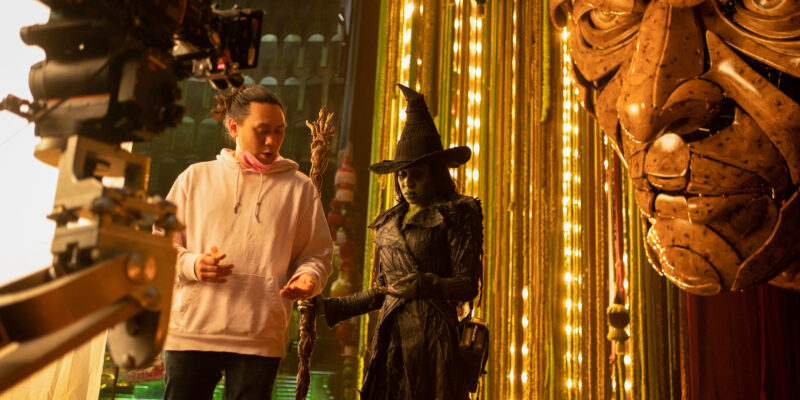
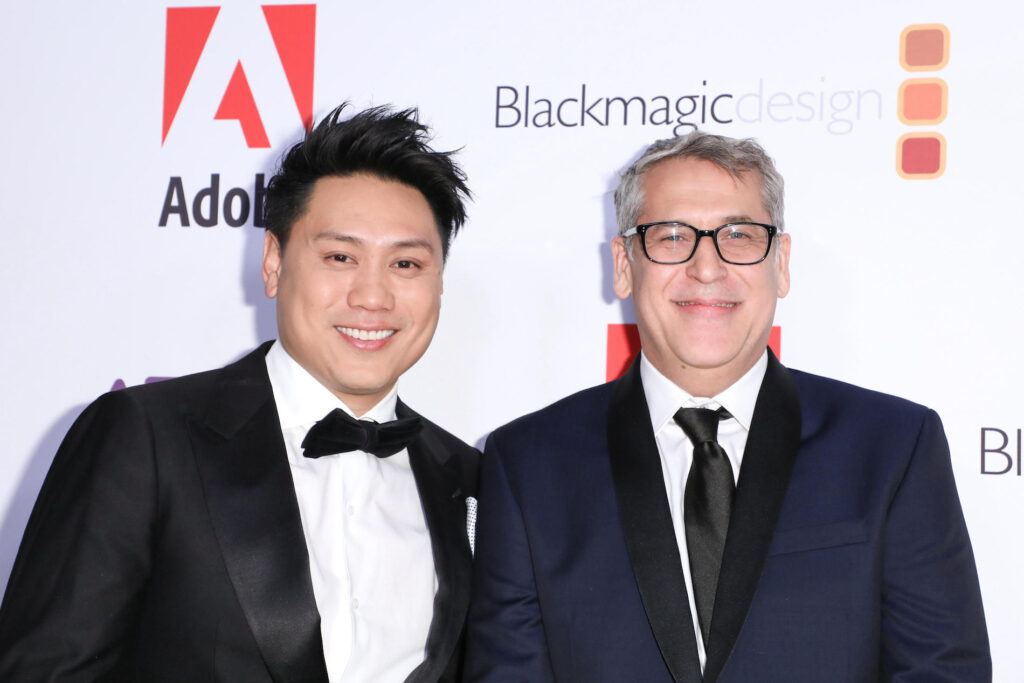
If you think making one movie is ambitious, just imagine doing two simultaneously—both on a massive scale, with delicate emotional threads tying them together. That was the challenge facing the visionaries behind “Wicked,” director Jon M. Chu and editor Myron Kerstein.
“Making two films back-to-back is not an easy feat, especially two films on this scale,” says Kerstein, who first collaborated with Chu on 2018’s “Crazy Rich Asians,” and has worked on all of Chu’s projects since. “I’ve been tested, as far as my abilities, my skills, and my stamina.”
The duo spent eight months filming the two-part big-screen adaptation of Stephen Graham and Winnie Holzman’s beloved Broadway musical about the events in Oz just before the arrival of a young woman named Dorothy. Shortly after production concluded, Kerstein cut together both films to present to Universal Pictures. The second installment, “Wicked: For Good,” was then put to the side until earlier this year, following the release of “Wicked” in November 2024.
With the saga’s finale now in theaters, Chu and Kerstein peel back the emerald curtain on their collaboration and process.
How does your lengthy director-editor relationship impact the work?
Myron Kerstein: From the get-go, we understood that we had the same taste as far as the performances we like, what makes us laugh and cry, and how we like to edit musical numbers. In the beginning, Jon would say, “I have an idea of what the scene should feel like or be like. Do you want to know?” And I’d say, “No, don’t tell me any of your ideas.” He just stopped asking me because he knows that I want to give a fresh perspective.
We still argue and have fights, and we’re both very stubborn; but we’ve raised each other’s bars over the course of making these films together, and it’s because we trust each other, push each other, and inspire each other. When I met Jon, I knew right away he was my cinematic soulmate.
Did you learn anything from your early work together that you carried into this project?
MK: My takeaway was [asking myself]: Is there a way to be more restrained in my cutting style? Can I tell a story by holding back a little bit and trying to not be so dynamic in cutting to the different characters? When we went into “Wicked,” I felt that I was telling a different story and I could be more grounded in some of my performance choices.
Jon M. Chu: It was really helpful to have gone through making a musical like [2021’s] “In the Heights,” because we got to test things. It was sort of a laboratory. Coming into “Wicked” [we asked ourselves]: Can we make it where the music is integrated with the dialogue, and push the limits there? Can we blend the two in a different way than necessarily is expected, like breaking up “Defying Gravity”? If we had not done “In the Heights,” it would’ve been harder to go more bold in something like “Ozdust Duet,” “Defying Gravity,” or “For Good.” That already gave us a language to know how to weave those things together.
Myron, as an editor, when you hear about splitting one film into two, is that a dream or nightmare?
MK: A bit of both. I knew the Broadway show quite well, so it was easier in that I could just divide it up as acts. But it’s very intimidating as well. I was just looking at the massive amount of days, and so it was more about the sheer amount of time that I was going to be spending on one project with the amount of dailies. When you have that long of dailies coming at you, you really have to treat it like a marathon.
You have to start compartmentalizing very quickly: Here are these scenes, and I’m going to cut these scenes, and what is this scene about? This is Elphaba [Cynthia Erivo] and Glinda [Ariana Grande] meeting for the first time, and the next day it’s going to be them saying goodbye. [They’re] completely different characters from the day that they met to the day that they say goodbye, so you’re just trying to keep it straight, not to get too overwhelmed, and pace yourself.
You’re adapting some of the most iconic scenes in film history with Dorothy and “The Wizard of Oz,” but from a different and distant perspective. What were the conversations like about how you wanted to shoot those scenes and then cut them together?
JC: In terms of shooting it, they’re so iconic. Even just color—the Yellow Brick Road or red smoke [are] so potent that it’s really hard to put that in. You don’t want to step on the story that we’re telling, which is the quote that they told us from the very beginning: “It’s about the girls.” Over and over, that was our mantra.
People have very specific ideas about “The Wizard of Oz.” If the moment you see Dorothy’s face, you’re like, “Well, who is she?” the movie rules start to kick in. We had to make sure that there was no avenue for people to question or wonder about this thing that is, ultimately, not emotionally part of our story.
MK: The more we started to play with “The Wizard of Oz” timeline, the more trouble we could get in, and so it was a trap that we had to be careful not to fall into. I’d get frustrated and say to Jon, “But in ‘The Wizard of Oz,’ we’d do this,” and he’d be like, “No, no, no. Where are Elphaba and Glinda in this timeline? That’s the only thing we have to worry about.”
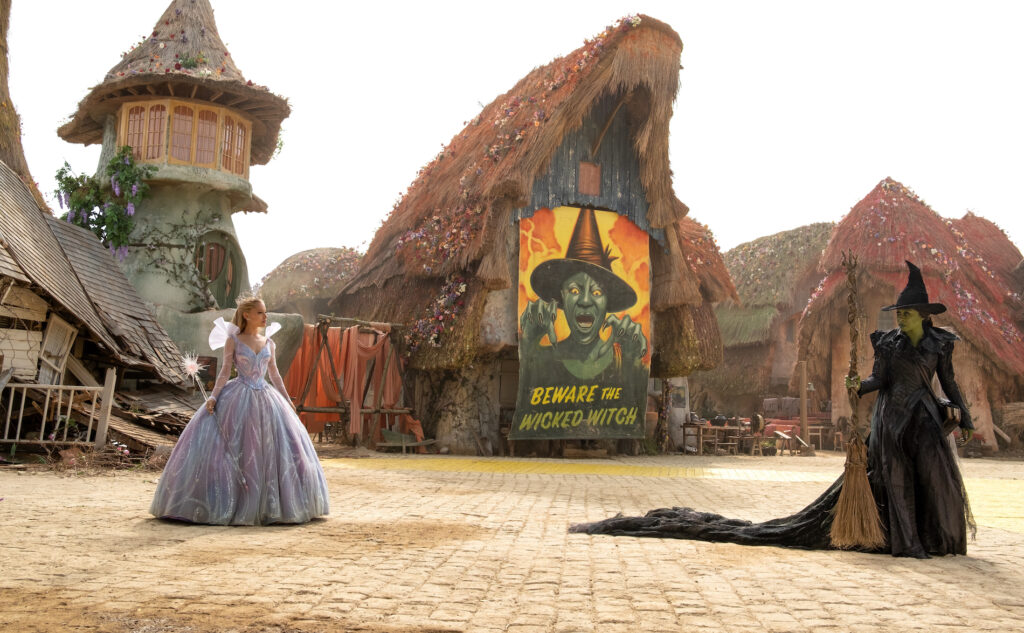
Can you talk through the unique editing process?
MK: It was quite overwhelming—a lot of footage coming at me and having to track two different films. We made an assembly [with both movies], and then we felt like we should put the second film to sleep for a little while and make sure that all our bandwidth could be focused on the first one. We could learn from the first movie and apply it to the second; and if we needed to borrow anything from the second film and apply it to the first, we could.
JC: I think that’s where our experience and relationship kicks in, because we had to trust this process, trust each other, and trust that the studio wouldn’t see the second movie and flip out. In a way, it was part of a strategy for the studio to understand that the two movies were going to be very different, but there was a cohesive master plan. For us, we could get ahead of their reaction to this movie a year from then, so that they didn’t say, “Well, this is not like the first movie; we need song and dance and all this stuff.” Let them know and they’re locked in.
That’s what we challenged Myron and the team to do, and it was very stressful. We’re showing the studio a movie in its rough form, a musical where you have temp score—and [to] actually let them not hate it and scare the shit out of them is a very dangerous dance. We had to trust our own abilities to say: They’ll get this; they’re gonna feel this. We then put it away for a year. We looked at it in January of this year for the first time again, and our whole lives had changed. So it changed the movie in ways, but the space from it also gave us more oxygen.
This interview has been edited for clarity and length.