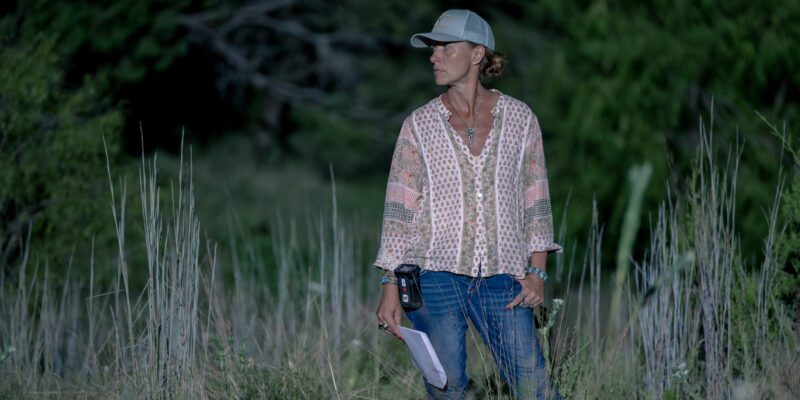
Nearly a decade ago, Christina Alexandra Voros traded the indie film circuit of New York City for a B-camera operator gig on an unproven Western drama in Utah. The show was “Yellowstone” (2018), and its creator, Taylor Sheridan, was making his television debut. The rest, as they say, is history. Sheridan has since become one of the most prolific writer-producers in TV, with more than a dozen shows now under his ever-growing umbrella. And Voros has risen through the ranks to become director, producer, and cinematographer across many of his projects, including the new “Yellowstone” sequel “Dutton Ranch” (2026).
“It is the great creative collaboration of my life,” Voros says of working with Sheridan. “I am so, so grateful for the last 10 years. There is a deep trust, a deep confidence. The longer we’ve been doing it, the less we talk about how to do it. Our communication is often on very specific things: casting, location elements. As I have gotten more of these stories under my belt, I know how to read all the information he puts into the scripts.”
But Voros didn’t even need to see a script to know she had to help spearhead “Dutton Ranch.” Set in the aftermath of the tragic end of “Yellowstone,” the Paramount+ drama finds ride-or-die couple Beth (Kelly Reilly) and Rip (Cole Hauser) buying a ranch in Texas, only to discover that violent rivalries between cowboys aren’t exclusive to Montana.
“I would walk through fire for Kelly and Cole,” Voros says. “We have spent the better part of the last seven years of our lives together, and I could not imagine not being part of whatever the next chapter was for them. I feel very protective of the show and of them, and when you have that kind of attachment and have been with something from the very beginning, you never want to leave it behind.”
Ahead of the Season 1 finale of “Dutton Ranch” (premiering July 3), Voros spoke to us about braving the elements and serving as her own director of photography.
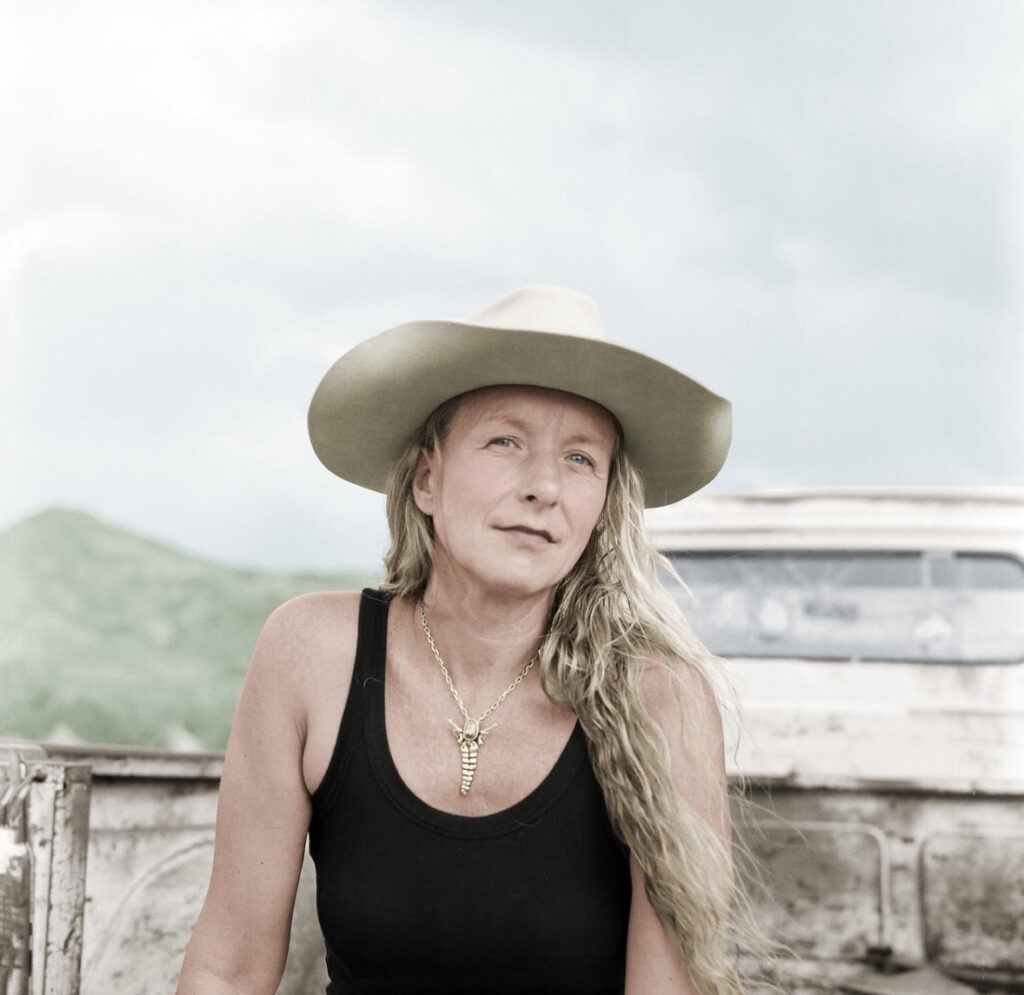
What is your Taylor Sheridan Universe origin story?
It’s so unusual, and I feel so lucky to tell it. I started as a B-camera operator on Season 1 of “Yellowstone.” The DP, Ben Richardson, was somebody I’d come up with, and when he stepped away for the second season, Taylor asked me to jump on as one of the DPs. And then in Season 3, he asked me to direct. And then in Season 4, he said, “Since you can DP and direct, do you wanna do both?” So I shot several episodes for other directors and DP’d my own episodes for the first time, and it was such a thrill to be given the opportunity and trust to do both. Because we’d been working with the same crew since the start, I felt so protected and supported.
That was the beginning of me wearing both hats, which is something that I cherish having done for most of my directing work moving forward. So it was an unexpected journey, and I think it’s a testament to the fact that Taylor is incredibly loyal and has a great eye for recognizing talent and people who he feels come from a similar DNA in terms of storytelling. I am one of many people in the family that has started in one place and moved up. He gives us the opportunity to swim in the deep end.
Now almost a decade into it, how would you describe your collaboration with Taylor?
He’s the big brother I always wanted. He really inspires in people the desire to do their best work. Every season, on every show, there has been something that he was more confident I was ready for than I was. I remember getting the script to episode 7 of “1883” (2021), with the tornado sequence, and thinking to myself, “I have no idea how to do this—do you want to give it to Ben?” But you dig down deep and work as hard as you possibly can to live up to an expectation that he has for you that you might not have for yourself.
Why is it so important to you to DP the episodes you direct, and what are the challenges and advantages of taking on both roles at once?
Early on in film school, I asked a cinematography teacher if you could ever direct and shoot your own work, and I remember being told that it was very rare and didn’t happen much outside of advertising. And I think there was always a bit of a dare there in the back of my head. So when Taylor offered that, part of my brain was thrilled and the other part thought, “Was there a reason that people don’t do this?” I think part of the reason it isn’t done very often is because you really have to have a team surrounding you that can read your mind and support a vision that you don’t have to articulate. And Taylor’s crews created an infrastructure where there was such a shorthand.
My benchmark for myself was always: If I ever get to a point where being my own cinematographer gets in the way of my being able to be my own director, I wouldn’t do it. But my gaffer, John Gorman, and my key grip, Craig Sullivan, have set up so many scenes with me that there’s a playbook and I don’t have to explain what I want. There are exceptions. I did the pilot to “Frisco King,” and I was coming right out of “Dutton Ranch” and didn’t have enough time to prep as a DP. It would have been irresponsible and unfair to the rest of the team, so I worked with another DP on the pilot, and then I shot the rest of my episodes. So it’s all about finding this safe spot and never doing it just for the sake of doing it.
What unique challenges did you face on “Dutton Ranch”?
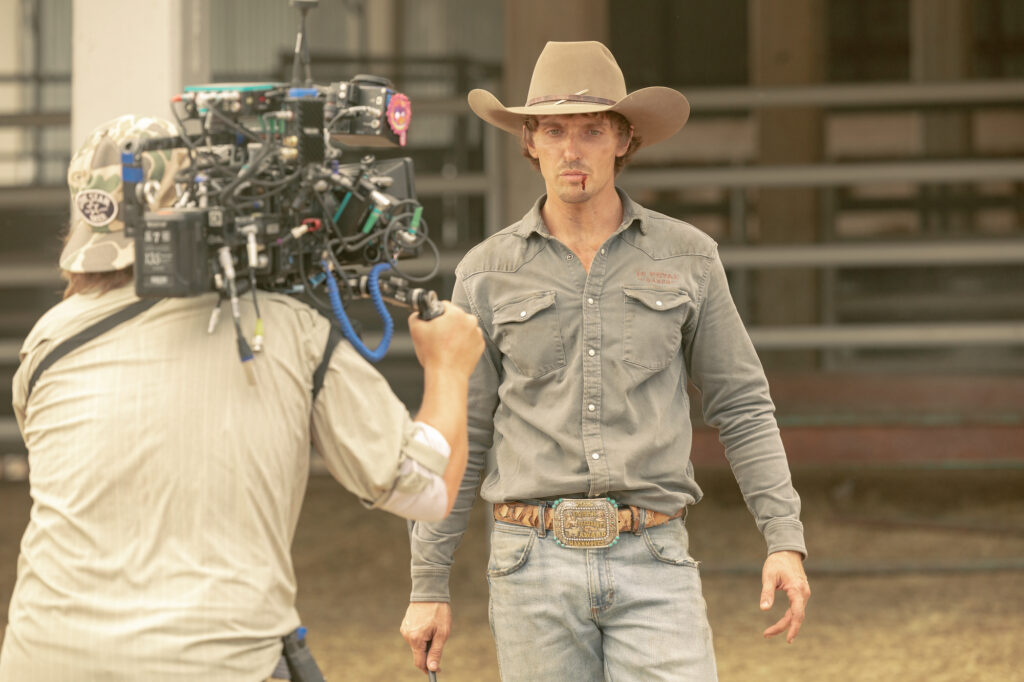
Shooting in Texas is its own skill set. We have been lucky for the past seven years to be in Montana during the summer and fall, and being in Texas during the summer and fall is a very different experience. In Texas, they say there are two seasons: August and everything else. We started shooting in August, and it was 107 degrees the first week. So it was tough. Because Taylor often writes the landscape as a character, you are at the mercy of its whims. And because we were shooting in Texas, a lot of the folks that I had worked with for years on “Yellowstone” were on different projects, so we kidnapped a Texas crew that had been working together for a long time. At the beginning, it was one of the more daunting things, but it turned out to be one of the greatest gifts because we’ve adopted a whole new family of really tremendous filmmakers.
What advice would you relay to aspiring directors or camera operators looking to take the next step?
My trajectory was very untraditional, but the thing that is universally applicable is I ended up where I am by refusing to listen to “no” for an answer, over and over again. In order to get to that next step, not only do you have to be given the opportunity to be thrown into the deep end, but you have to be willing to be thrown into the deep end. When I started “Yellowstone” as a B-camera operator, I had been doing indies as a DP in New York for five years, so, on paper, this was a step backward. There were moments in the first couple of months where I wondered if I had made a mistake. But I was in love with Taylor’s writing, so I trusted my gut. Even though it might’ve seemed like I was going in the wrong direction, something in me said, “These are the people I want to tell stories with.” Identify your tribe—the storytellers that align with the way you want to tell stories—and then focus on that.
This interview has been edited for clarity and length.