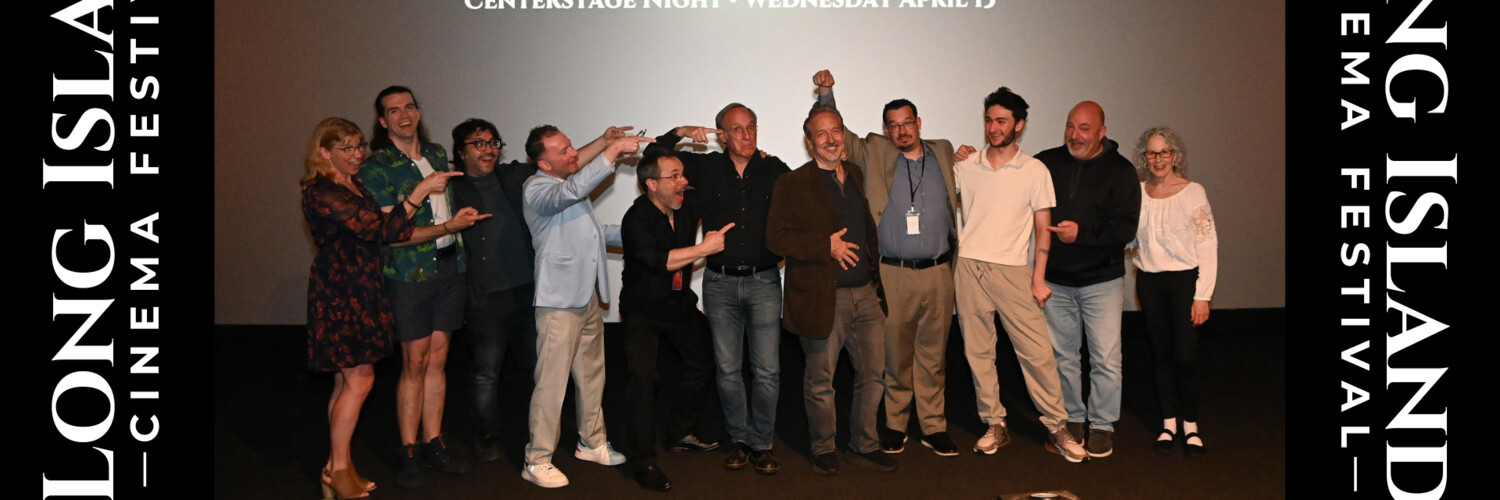

The Long Island Cinema Festival is a curated, personal event dedicated to showcasing films of all lengths and genres while fostering meaningful connections between filmmakers, audiences, and creatives. Taking place across multiple venues throughout Long Island, the Festival welcomes both local and international voices — this is Long Island coming together to celebrate film, from stories made right here to work from across the globe.
We built LICF around a simple idea: festivals should be as much about experience and connection as exhibition. Rather than programming for volume, we curate with intention — giving films real attention, real audiences, and real conversation. Screenings are complemented by filmmaker Q&As, panel discussions, networking events, and social gatherings designed to encourage conversation and collaboration.
The Long Island Cinema Festival is helping to foster a community built one filmmaker, one audience member, one conversation at a time. That's what makes LICF a boutique festival: not exclusivity, but intention. A place where every voice gets real room to be heard.
After a successful inaugural season across multiple venues, the Long Island Cinema Festival returns for Season 2 in Spring 2027, and we're only growing. Season 1 selections included Whale 52 — the animated short produced by two-time Academy Award nominee Bill Plympton, honored with the Crystal Bear at the 2026 Berlin International Film Festival — and Raging Midlife, the indie comedy featuring Paula Abdul and Eddie Griffin.
The Festival accepts films of all lengths and genres, including narrative features, documentaries, short films, microshorts, music videos, student films, international films, and episodic or serialized content such as pilots or standalone episodes. There are no budget limits and no premiere requirements.
The Long Island Cinema Festival is a curated event with a limited number of public screenings. While not all selected works may be publicly screened, all official selections receive full recognition as part of the Festival.
LICF isn't trying to be the biggest festival — we're trying to be the one filmmakers remember. That means a program where every selection, every screening matters, and a schedule built around actual time with the people who made these films, not just a screening slot.
In addition to film submissions, the Festival features a Breakthrough Screenwriting Competition dedicated to unproduced written works. This competition recognizes originality, voice, and craft in screenwriting and is evaluated separately from produced films.
The Long Island Cinema Festival also features a Legacy category, created to honor exceptional films completed outside the Festival's standard eligibility window. Legacy selections celebrate outstanding storytelling and craftsmanship from past years and are evaluated separately from current-year submissions. Legacy selections may be included in curated screenings at the Festival's discretion.
Programming decisions, venue assignments, and final screening schedules are curated at the Festival's discretion.
The Long Island Cinema Festival recognizes excellence in storytelling, performance, creative vision, and craftsmanship across film and screenwriting.
All awards are determined through a fair and transparent evaluation process conducted by the Festival's programming team and jury members.
Each year, award categories are shaped by the films selected and the strength of the submissions received.
Recognition Areas
The Festival may present awards in categories including, but not limited to:
Feature Film
Short Film
MicroShort
Music Video
Screenwriting (Produced & Unproduced)
Directing
Acting
Cinematography
Documentary
Genre Recognition
Legacy Recognition
The Marquee is awarded annually to one outstanding selection determined by a combination of audience and jury feedback.
Additional awards or distinctions may be introduced based on the strength and diversity of the films selected each year.
All award decisions are final.
Important Notices
Awards are recognition-based. No cash prizes are offered.
The Festival does not pay screening fees, and does not cover travel, accommodations, or any expenses incurred by filmmakers or their representatives.
Festival dates, venue locations, screening schedules, and award categories are subject to change at the sole discretion of the Festival based on submissions received and programming needs.