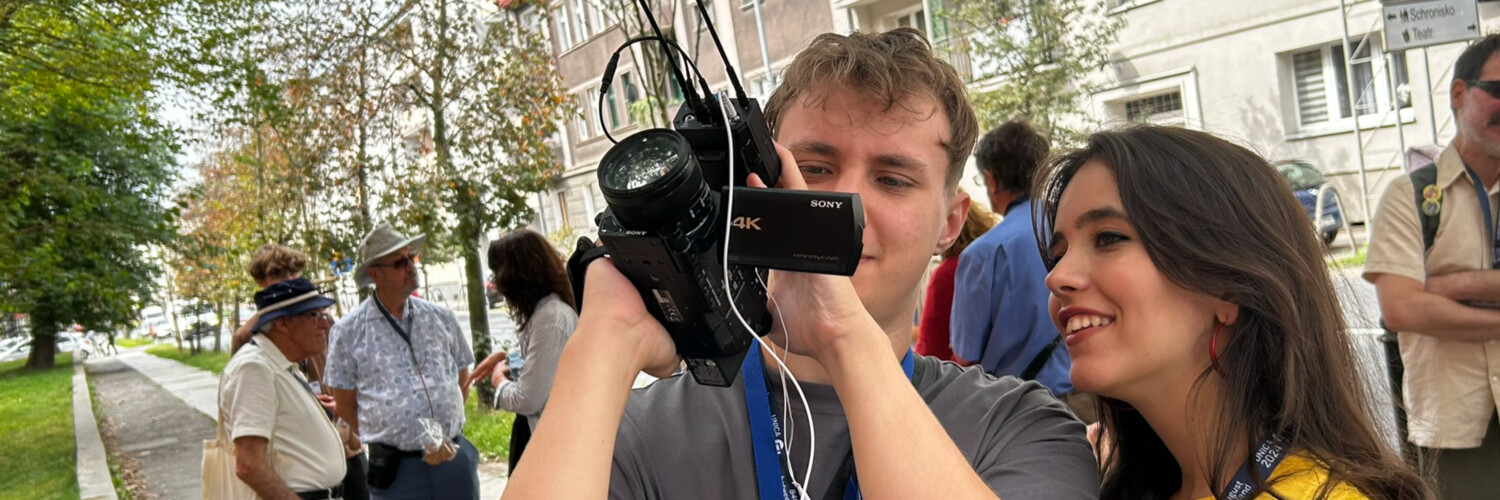
Video ART – International Youth Film Festival is dedicated to young amateur filmmakers aged 15 to 20 (high school and university students). The festival encourages artistic freedom while promoting cinema as an educational and formative medium.

Participants may submit projects in one of the two competitive sections:

Short Film – maximum duration 10–20 minutes

Spot (Video Clip) – maximum duration 60 seconds

Themes are largely open, provided they are appropriate to the age group. Suggested directions include family, school, love, travel, documentary subjects (cultural, social, artistic, ethnographic), cinematic essays, youth-related social issues, reading promotion, humoristic adaptations, environmental awareness, civic engagement, and other topics relevant to contemporary youth.

Video ART has a distinctive competitive format. All submitted films are first evaluated by a national and international jury composed of cinema professionals and members affiliated with UNICA. The score awarded at this stage represents 50% of the final evaluation.

The top ten nominated teams in each section are invited to Suceava, Romania, for the Final Stage. During the on-site Film Challenge (“Proba de film”), participants must produce, within two days, a short film (maximum 5 minutes) based on a theme announced by the international jury. This second film represents the remaining 50% of the final score. The arithmetic average of the two scores determines the final ranking and award recipients.

English subtitles are mandatory for all submitted films.

Complete details are available in the official regulations published on the festival website:
https://videoartfestival.ro/

For each of the two competitive sections, the following distinctions are granted:

1st Prize

2nd Prize

3rd Prize

Two Special Mentions

In addition:

Grand Prize – awarded to the film receiving the highest overall jury appreciation

UNICA Medal – distinction awarded by the International Union of Amateur Cinema (UNICA)

The jury reserves the right to withhold or modify awards depending on the artistic quality and value of the submitted works.

The festival is open to participants aged 15–20.

High school students participate in teams of two students, usually coordinated by a teacher.

University students (up to age 20) may participate individually or in teams of two.

If both team members are adults, participation without a coordinating teacher is permitted.

Films must be created exclusively by the participating students. The involvement of external professionals may lead to disqualification if proven.

Multiple teams from the same institution may participate. A team may submit more than one film.

If a team qualifies in both sections, it must choose only one section for the Final Stage.

Submitted films must respect the time limits of their chosen section (Short Film: maximum 10–20 minutes; Spot: maximum 60 seconds).

All films must include English subtitles (mandatory requirement).

The opening credits must clearly state the film title and identify key contributors (director, actors, cinematographer, etc.).

A synopsis (maximum one page) must accompany each submission.

Participants are fully responsible for securing copyright clearance for all audio, video, and graphic materials used in their films.

Final Stage Conditions

The top ten nominated teams from each section are invited to Suceava, Romania, to participate in the on-site Film Challenge.

During two days, teams must produce a short film (maximum 5 minutes) based on a theme announced by the international jury.

THE ORGANIZERS PROVIDE ACCOMMODATION, MEALS, AND THE CULTURAL AND RECREATIONAL PROGRAM (INCLUDING EXCURSIONS) FREE OF CHARGE FOR OFFICIALLY INVITED PARTICIPANTS DURING THE FINAL STAGE.

The following are strictly prohibited:

Obscene language or immoral visual content

Racist symbols or content inciting hatred or interethnic violence

Scenes that endanger the physical or moral integrity of minors

Content that damages the public image of individuals or educational institutions

By submitting a film, participants agree that selected works may be used by the organizers for the promotion of the festival and of non-formal education initiatives.