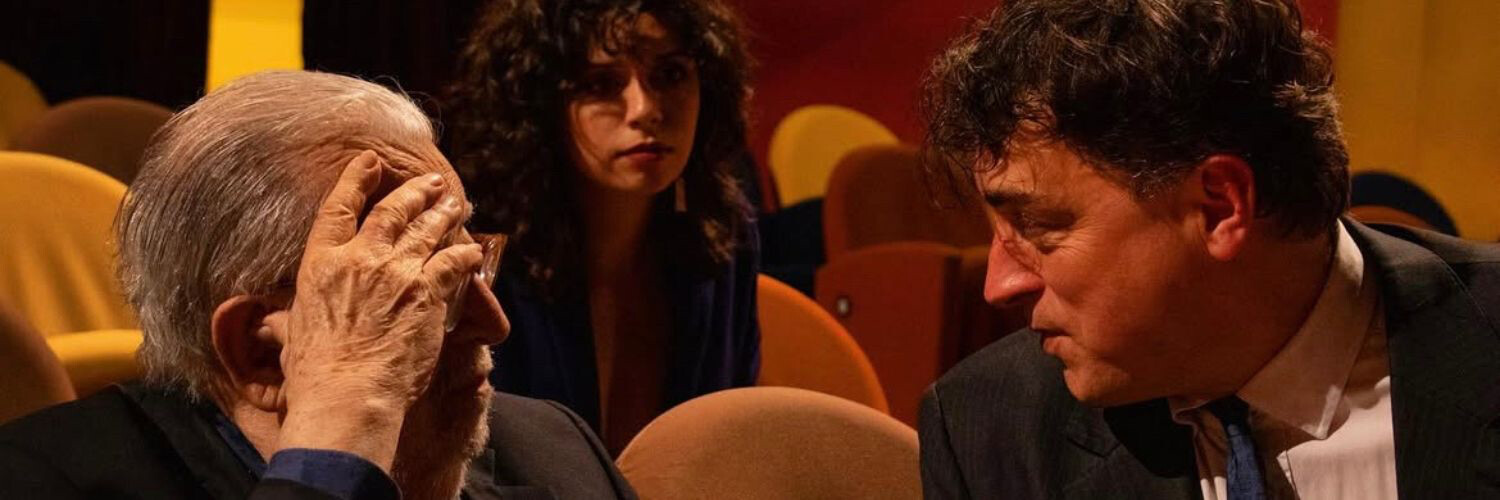
Since 2010, the Dantesco Festival has promoted the encounter between art and the Dantean work through: theatrical and cinematographic productions, exhibitions, meetings, contests, artist residencies, roundtables, social media columns

Massimo Popolizio, Pupi Avati, Isabella Ferrari, Giulio Ferroni, Monica Guerritore, David Riondino, Isabel Russinova, Luca Serianni: these are some of the artists and academics who have supported the Dantesco Festival over its editions.

- 24 overall editions, including 15 international, 3 university-based, 4 Tuscan regional, and 1 Lazio regional.
- 15,000 participants from all over Italy and abroad, over 15 years of activity (2010-2025
- 100,000 total views on the official Dantesco Festival YouTube channel
- 300,000 euros in public funding raised in the last five years (2020-2025)

For the University Competition (ages 21-30), the prizes are as follows:

- Absolute First Prize for the Cinema Category: €500
- Absolute First Prize for the Theatre Category: €500
- First Prize for the Photography Category

Additionally, special prizes will be awarded.

For Theatre: Best solo actor, best original music, best costumes, best choreography, best writing, best makeup.

For Cinema: Best editing, best direction, best actor, best writing, best makeup.

UNIVERSITY COMPETITION:

The Cinema Section is reserved for short films that revisit Dante's works (not only the
Divine Comedy) from an original perspective, focusing on:
✔ juxtapositons
✔ blends
✔ contrasts
✔ new contextualizatons
and contamination with:
✔ literary, visual, musical, cinematic works, etc., by Italian or foreign artists, contemporary or otherwise,
✔ emblematic events from distant or recent history and current events.

DURATION
The short film must have a duration strictly of 6 minutes.
TITLE OF THE WORK
The short film must have a title and optionally a subtitle.
MUSIC
The use of original music is encouraged. The use of copyrighted music is discouraged.
CREDITS
The closing credits must include:
❖ A textual slide of director's notes (max 300 characters) to aid the understanding and appreciation of the short film
❖ Credits related to the proposing institution and the artstic and technical authors of the work.

FORMAT
There is full freedom in structuring the short film. By way of example, but not limited to, alongside more traditional and commonly used formats, it is possible to create:
❖ works filmed (also) outdoors, with absolute freedom in the choice of landscape, urban, monumental, artistic locations, etc.
❖ works filmed in theaters, cinemas, or concert halls (even empty)
❖ works related to installations or live performances
❖ video works that are solely musical and/or choreographic
❖ animated, mimed, or silent works
❖ radio dramas or audio works, with a blank screen or fixed image.

Previously made and published short films are also allowed, provided they meet the requirements of these Regulations and were made after January 1, 2024.
The short film must have the highest resolution permiYed by the technical equipment in use (in any case, no less than Full HD resolution = 1920 x 1080 pixels).

The deadline for applications is Monday, March 2, 2026.
In the registration form, in addition to personal and basic information, applicants must submit: a link (via platforms like WeTransfer, Drive, SwissTransfer, or others) from which the Festival Secretariat can download the short film file.

Overall Rating
Quality
Value
Communication
Hospitality
Networking
  • Mehmet Sena Çiçekli

    A very good film festival with a professional team.

    April 2026