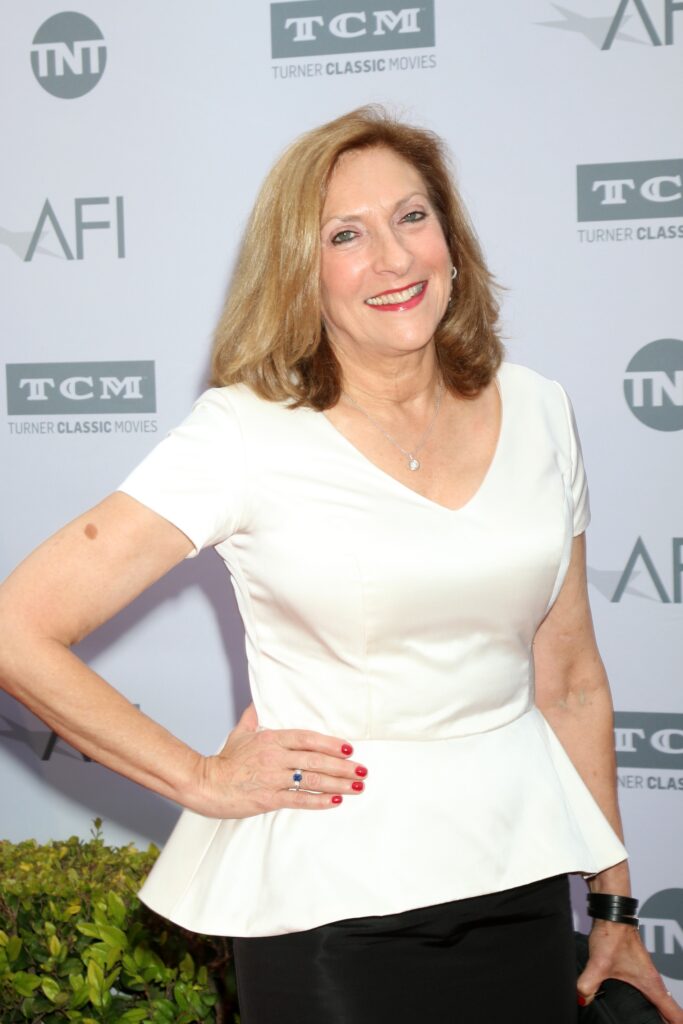
For Lesli Linka Glatter, passion is an integral part of directing. “I love doing this crazy job,” she explains, “and I want to continue doing it until I’m being rolled to the set with my walker.”
Over 40 years ago, a fateful meeting in Tokyo inspired an interest in storytelling. Since then, Glatter has lent her talent to dozens of decorated series, including “Twin Peaks,” “ER,” “The West Wing,” “Grey’s Anatomy,” “Mad Men,” “Gilmore Girls,” “The Walking Dead,” “The Leftovers” and “Homeland.” In 2021, she became the president of the Directors Guild of America.
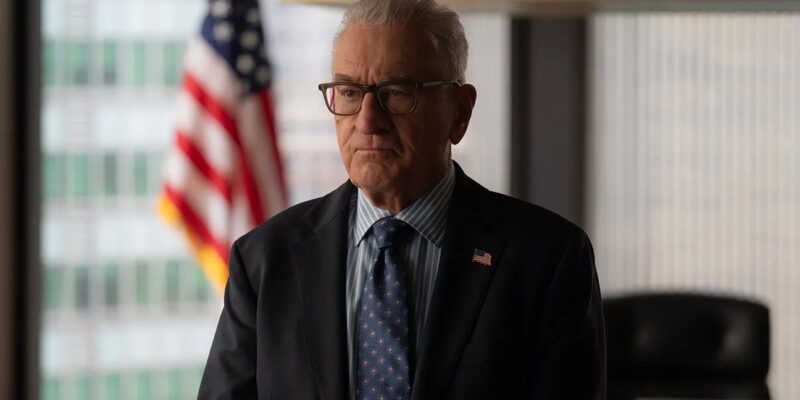
Glatter was recently recognized with her ninth Emmy nomination for directing Netflix’s “Zero Day.” (Previously, she earned one Emmy nod for “Mad Men” and seven for “Homeland.”) The political thriller features Robert De Niro in his first leading TV role as a former U.S. president charged with investigating a massive cyberattack. Here, Glatter reflects on the limited series and the people who shaped her as a director.
What is your “Zero Day” origin story?
I never want to repeat myself, and since “Homeland” ended [in 2020], I have steered away from the spy genre, as much as I love it and think it’s a great way to see character development within the thriller context. But I was sent the [script for the] first hour of “Zero Day,” and from the moment I started reading, it grabbed me. And when that happens, I know I’m the person to direct it. I knew what a zero day event was, but I had no idea about the depth of it until I started doing research. And then we jumped in.
The theme we’re dealing with—which started in the time of “Homeland” but is much more prevalent now—is, what is truth in a post-truth world? How do we ever have a conversation when we can’t agree on what is fact and what is opinion?
“Zero Day” was a first for you in the sense that you directed every episode. What was it like getting to be there for every single step?
It’s a huge undertaking. I directed all six hours, and that’s like doing three movies back-to-back, without taking a breath. You have to be prepared for the long haul. It’s very exciting and a bit overwhelming when you start off on day one and you know you’ve got 103 [more] days. And then, in the middle, you realize: Oh, my God, I’m only half through! But it was amazing to have the big-picture vision and be able to execute that.
Also, with Bob [De Niro] having never done television, the idea of switching directors was not something that made any sense to him. And given how we ended up shooting the show, it was absolutely the best choice on every level. Bob was so involved with the development process. When I first met him, I was a little nervous. I mean, he’s a legend. But that quickly went away because he’s such an extraordinary person, he’s got a great sense of humor, and he was so invested in this.
You were initially a dancer and choreographer. When did you know you were supposed to be a director?
I was very happy being a modern dancer and choreographer, and I never intended to be in the film business. I got a grant to teach and perform throughout the Far East, and one day I was in Tokyo and wanted a cup of coffee. There were two coffee shops, and, arbitrarily, I went to the one on the right, and that single act changed my life forever. There was only one seat left and an older gentleman in his 70s waved me over. This man, Yutaka Tsuji, became my mentor. We had the most extraordinary conversation. And several years into knowing him, he told me a series of stories that had happened to him all around the world, because he’d been the head of cultural affairs for the largest newspaper in Japan.
Those stories haunted me, and I knew I had to pass them on, but I didn’t know I was going to make a film. And then, again, by chance, I met the wonderful Australian director George Miller in Tokyo, and he encouraged me to make it a film [her Oscar-nominated 1985 short “Tales of Meeting and Parting,” which she made as part of the American Film Institute’s Directing Workshop for Women].
Had I walked into the coffee shop on the left, I would’ve never directed. Your life can change in a second, but one has to be open to that moment.
Once you got started, what were some of the formative lessons or experiences that molded you as an artist?
My first couple jobs were on [NBC’s] “Amazing Stories,” which was created and run by the brilliant Steven Spielberg, who is still a mentor, and David Lynch’s “Twin Peaks.” What auspicious [projects] to start with. I was encouraged from the very beginning to not look at TV as a lesser medium. It doesn’t matter what the delivery system is; tell the best possible story you can tell. I was lucky to be observing and sitting at the feet of those two masters, and they grabbed the hand of a newbie and opened the door. So I feel so committed to mentoring because I was so well mentored.
What advice would you pass along to young or aspiring directors?
Keep acquiring skills. I hadn’t worked with actors, so I immediately went to acting class. I didn’t know about cameras, so I took a photography class. Learn your craft because then you will have so many more colors in that paint box.
And don’t give up. You’re going to get so many people telling you how hard it is, and you’re going to get lots of nos, so you have to be incredibly tenacious. But you can’t forget what you love about storytelling; you don’t want to lose that joy. Tell the stories you want to tell. I was told not to make [“Tales of Meeting and Parting”] if I ever wanted a job in Hollywood, because three-quarters [of the film was] in Japanese, with subtitles; had flashbacks and narration; was a period piece set in World War II; and had one Caucasian character. But I was a young dancer. I didn’t care if I was gonna have a job in Hollywood. I didn’t know anyone in Hollywood! So I just told the story I wanted to tell.
This interview has been edited for clarity and length.