Great art prompts dialogue by leaving room for the viewer to bring their own perspective into the experience—and few contemporary filmmakers inspire as much post-screening debate as Yorgos Lanthimos. If you’ve seen his recent feature “Bugonia” (2025) with friends, you’ve likely found yourself trying (and likely somewhat unsuccessfully) to articulate what you just watched.
“Bugonia”—an English-language remake of Jang Joon-hwan’s 2003 Korean thriller “Save the Green Planet!”—follows creepy yet capable conspiracy theorist Teddy Gatz (Jesse Plemons) as he kidnaps Big Pharma CEO Michelle Fuller (Emma Stone), convinced she is an alien responsible for the suffering of his mother. With the help of his all-too-obedient cousin, Don (Aidan Delbis), Teddy’s increasingly unstable logic drives the film into murky moral territory.
Through deliberate casting choices, a permissive approach to performance, and an editing process that prioritizes variety, Lanthimos shaped “Bugonia” into a film that balances the absurd with the dreadfully hilarious. Here are the lessons filmmakers can learn from his latest film.
Build trust, then step back.
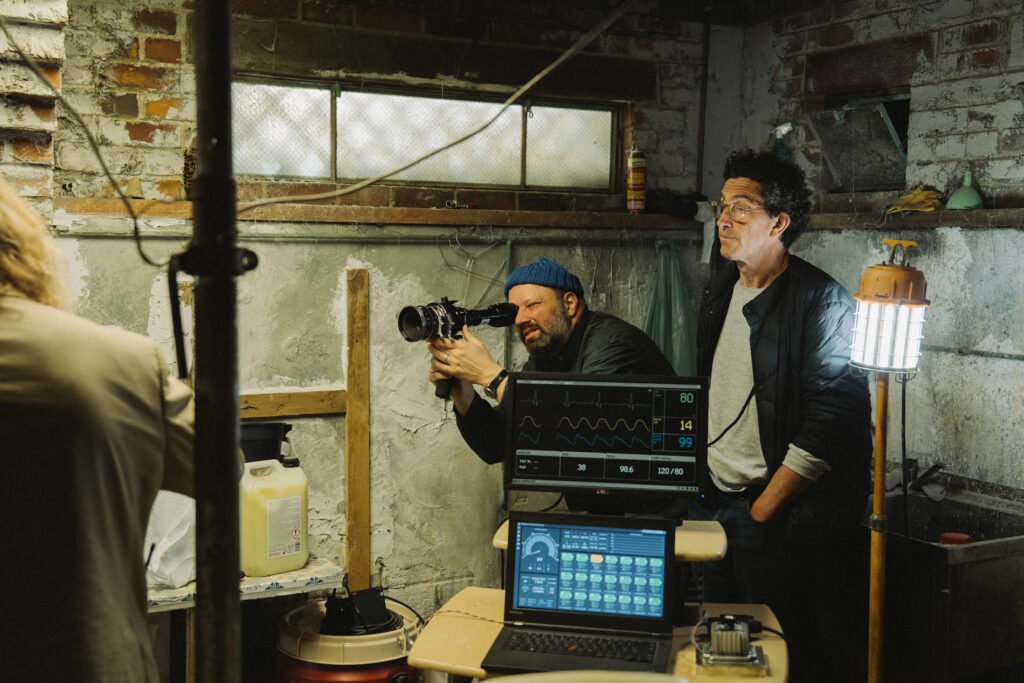
While the overtly political “Bugonia” may tackle new subject matter for Lanthimos, he approached the unfamiliar landscape with oh-so-familiar collaborators: The film marks his fifth collaboration with Stone and his second with Plemons. Returning to actors he trusts allowed his working method to be notably hands-off.
Rather than guiding his stars toward predetermined performances, Lanthimos maintained distance from their preparation, allowing their choices to remain opaque even to him. Relinquishing control in this way “was simple,” he explained on IndieWire’s “Filmmaker Toolkit” podcast. “It’s nice when you’ve worked with someone and just have a shorthand.”
In doing so, Lanthimos created an environment where actors felt free to experiment without over-explaining or over-correcting. For collaborators like Stone and Plemons, that creative space encourages confidence and freedom.
As Plemons told movies.ie, “The more time you spend with someone, the better you get to know that person and the easier it is to communicate. Or you realize that there isn’t even much of a need to communicate.”
Credit: Atsushi Nishijima/Focus Features © 2025 All Rights Reserved.
Mix professional and non-professional actors.
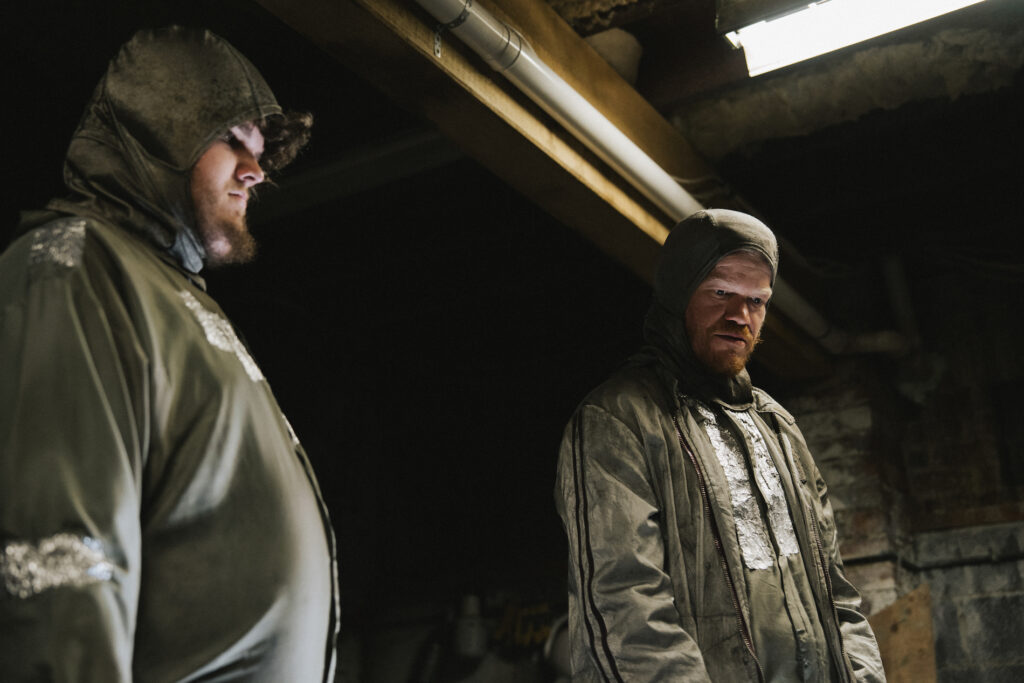
Alongside repeated collaborators Plemons and Stone, Lanthimos cast a new face to play Teddy’s autistic cousin Don: 19-year-old Delbis, who is autistic, developed his love for performance through the inclusive theater program the Miracle Project. Don functions as the audience’s proxy, carrying skepticism and moral uncertainty through the film. Stone, who also served as a producer, described Don to the Los Angeles Times as “the audience’s window, the one who can see through the charade.”
Delbis was unaware of the scale of the project when he responded to an open casting call for “Bugonia.” That unfamiliarity was precisely what Lanthimos was seeking. “I wanted him to bring his very special sensibility and understanding of the world and how he saw the character,” the director told NPR.
By placing non-professional actors alongside trained, experienced performers, Lanthimos introduces a level of uncertainty into each scene—one that heightens tension and forces real-time reactivity between characters. In a heated argument between Teddy and Michelle at the dinner table, for instance, Don’s eyes dart back and forth between the characters, as if silently admitting he no longer knows who to believe and inviting the audience to sit in that same discomfort.
Shoot for variety, not perfection.
Directors vary widely in how they approach a take. Some prioritize efficiency, while others favor exhaustive repetition in search of precision (we’re looking at you, Fincher). Lanthimos falls somewhere in between, focusing on intention over quantity. “It’s not cohesive from the beginning,” he told Variety of his diverse filmmaking approach. “You…try things out and see how they work and find the balance.”
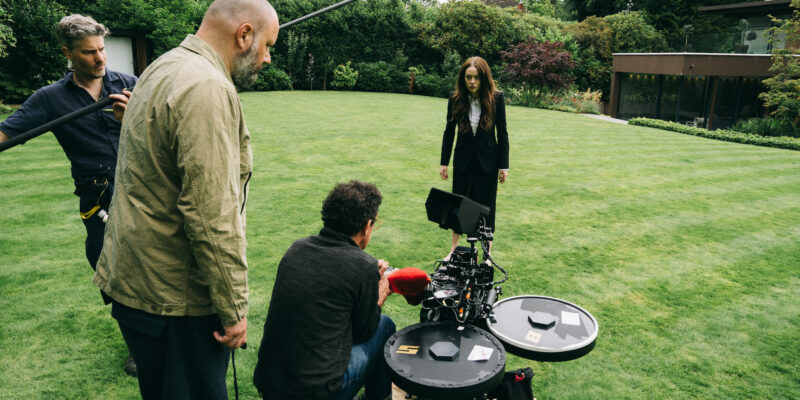
By encouraging variation, he and longtime editor Yorgos Mavropsaridis gain greater flexibility in postproduction. Take the chaotic kidnapping sequence, in which Teddy and Don struggle to physically restrain Michelle. Lanthimos made the last-second decision to film the scene using a crane setup. As cinematographer Robbie Ryan noted to Variety, “Yorgos just said, ‘Why don’t we try the attack from inside over the pool?’ ” This improvisation places the viewer at a comical distance, creating the scene’s delicate, unpredictable interplay of humor and tension.
That flexibility is essential to landing the film’s tonal balance. As Lanthimos told Deadline, directing often involves “figuring out the balance between the hilarity of it and the darkness of it.” Multiple interpretations of the same scene allow that balance to be adjusted in retrospect.
Credit: Atsushi Nishijima/Focus Features © 2025 All Rights Reserved.
Let the audience connect the dots.
Lanthimos’ projects often leave viewers eager to discuss not only how the film made them feel, but what it might be saying. This ambiguity is intentional. Rather than providing clear answers to questions raised in his films, Lanthimos structures them to encourage personal interpretation. As he explained to RogerEbert.com, his goal is to allow audiences to “connect the dots for themselves, whether it revolves around the plot or the motivations and background of a character.”
“Bugonia” encourages this type of audience participation by resisting clear binaries. What begins with archetypal roles gradually dissolves into moral gray areas, mirroring the complexity of the world outside the cinema; as Lanthimos told Indiewire, “Films build microcosms, and those can be of varying sizes, and this is one of the smaller ones. That creates a lot of tension and allows you to scrutinize the situation.” By narrowing the scope and intensifying the dynamics, he brings human behavior into sharper focus, reflecting societal anxieties while allowing viewers to interrogate their own.
Though “Bugonia” follows a clear narrative arc, Lanthimos complicates interpretation through plot twists and character ambiguity that unfolds over time. The ending resolves the story, but the political and social questions it raises about power, exploitation, and moral certainty remain open for discussion.