“The Menu” co-writer Will Tracy is ready to serve his next feature.
Six years ago, horror maestro Ari Aster suggested Tracy take a look at the 2003 South Korean film “Save the Green Planet!” written and directed by Jang Joon-hwan. Then, when the pandemic put Tracy’s job as a writer and producer on HBO’s “Succession” on pause, lockdown proved to be the ideal environment for the six-time Emmy winner to pen an American adaptation of the black comedy.
Although no director was attached when Tracy took on the project, he managed to write a movie with a plot and tone that would prove a perfect match for five-time Oscar nominee Yorgos Lanthimos, the filmmaker behind “Poor Things” (2023) and “The Lobster” (2015).
“Yorgos was the first person we sent [the script] to, and he got back to us almost that same week,” Tracy recalls. “He told me that he’s usually quite involved early on in the development of his films—generating the idea or reshaping the script toward him. But this was a case where a writer and a director were just simpatico. I didn’t need to modify my style to suit his working process because they seemed to meet each other.”
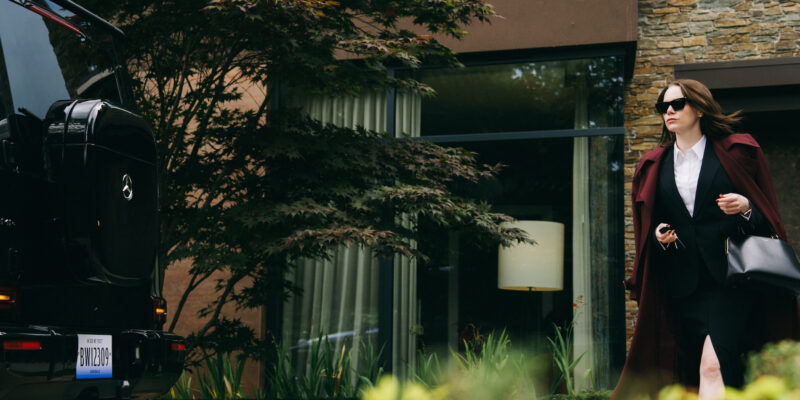
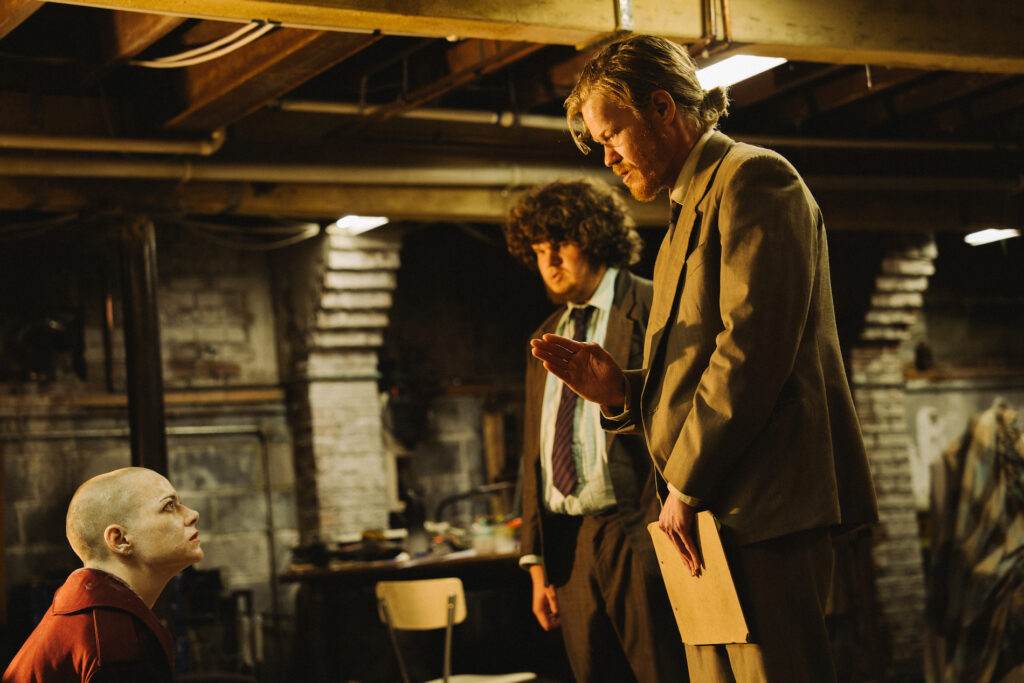
“Bugonia” stars Jesse Plemons and newcomer Aidan Delbis as cousins who abduct the powerful CEO (Emma Stone) of a major company, believing that she’s an alien. Ahead of the film’s limited release on Oct. 24 (out nationwide Oct. 31), Tracy discusses his unorthodox path to award-worthy dramas and writing what he knows.
What do you think of first when you reflect back on this “Bugonia” experience?
I got involved with the project almost six years ago, so it was a long runway before takeoff. That makes it sound like it was arduous in some way, but it was very enjoyable. I wrote this [movie] quickly and sent it off. Luckily, I was busy with other things, so I wasn’t just sitting by a telephone for years waiting for Yorgos to pick up and get going. By the time it went into production, there wasn’t much that Yorgos wanted me to do. His notes were all clear and actionable, but they weren’t massive.
I was slightly nervous before I got to set because the script hadn’t been monkeyed with much. I thought: Boy, is this gonna be a real rug-pull when I get to set and find out that they’re just throwing out pages and freewheeling it. But, no, Yorgos is very straightforward, and they really treated it like a play and shot it.
What was your journey to this moment? Is this always what you wanted to do?
I always wanted to work in movies, and at some point that dream felt too dreamy. I applied to undergraduate film school in New York and was not accepted, so I just sort of thought: Well, maybe I won’t do that.
Out of college, I worked as an intern for the Onion, and I don’t think I was even paid—maybe they bought me lunch. But toward the end of that internship, I started submitting jokes, and they liked my jokes and asked for more. Then they started asking me to write full stories, and then they hired me on staff. Eventually, I became the editor in chief. Usually when you leave the Onion, you go to a late-night show, so I was on the first writing staff of “Last Week Tonight With John Oliver.” But I started to realize: I’m pretty far away from what actually interests me.
The most difficult thing for me was then trying to work backwards to what I wanted to do, which was to write for a TV drama. I was told that it’s going to be hard to jump from a late-night comedy show to a one-hour drama, because they’re looking for playwrights and shit, not me. It just so happened that comedy writers are who [“Succession” creator] Jesse Armstrong most vibed with. He was looking for an American who wrote comedy, and who knew about the news and American politics, culture, and media. It just so happened that I was the one guy who fit that, and he was the one guy who fit what I was looking for. From there, I felt like, OK, now I have a sort of foundation in my career where if I write a movie script, someone might be interested in reading it.
How did “Bugonia” begin for you? Were you familiar with the South Korean film?
I had never heard of that film. I had lunch with my friend Ari Aster, who’s one of the producers of “Bugonia,” and he said, “You should check out this movie; you might think that there’s something in there.” So I went home, he sent me a janky Vimeo file, and I watched the movie just that one time. Sadly, I wasn’t really watching the movie as just a movie to enjoy, because I was immediately taking notes and seeing how you could take the premise and adapt that to a contemporary American context.
I then put that movie out of my head, because I knew it wasn’t going to help me if I felt like I had to really service that film’s vision or do justice to it. There’s no point in remaking something unless you make it your own. I didn’t have much happening at the time; it was the lockdown for the first wave of the pandemic, and I was feeling a bit isolated and alienated—and I also had COVID-19! Despite those challenges, it made the film actually easier to write. I don’t know if I could have written it two months earlier or later. I think I had to be in that place. There are ways in which the film is relevant that I couldn’t have foreseen when I wrote it five years ago. But my theory is that the world that we seem to be living in now seems downstream from that fever, paranoia, division, and isolation.
Were there any lessons from your first film script, 2022’s “The Menu,” that you carried over to “Bugonia”?
In my own writing, I don’t shy away from my comedy background, humor, or a satirical element, and I have to always be real careful with that stuff because satire can become a little bit too delicious and arch. I tried to be very careful in this script to not make anyone too stupid or ridiculous, to give everyone a point of view, and to try to play it straight as much as possible. Because, oftentimes, the funniest satire of comedies is when it’s played quite straight. And Yorgos is very good at that.
What advice would you give to aspiring screenwriters?
One of the things that you hear a lot is, “Write what you know.” I always sort of ignored that because I thought that meant you have to write from experiential knowledge and you actually have to have done the thing. Like: Oh, OK, I once played minor league baseball, so I’m going to write a script about minor league baseball players. And that can be true, or it can be that very niche subject that you’re really interested and obsessed with.
If you happen to be really into the space program in the ’80s, and if you start writing a scene at NASA Mission Control Center in Houston, it’s already going to feel more alive, real, and cliché-averse than someone who’s just coming to that subject for the first time as a writer for hire. So just try to find those subjects that really intrigue you. “The Menu” was a good example of that, because I’d spend my lunch break at work watching videos of high-end chefs and reading books about them—but it never occurred to me to write about that. So really think about what you’re interested in, and not just what you think is interesting to other people right now or what you think will sell.
This interview has been edited for clarity and length.