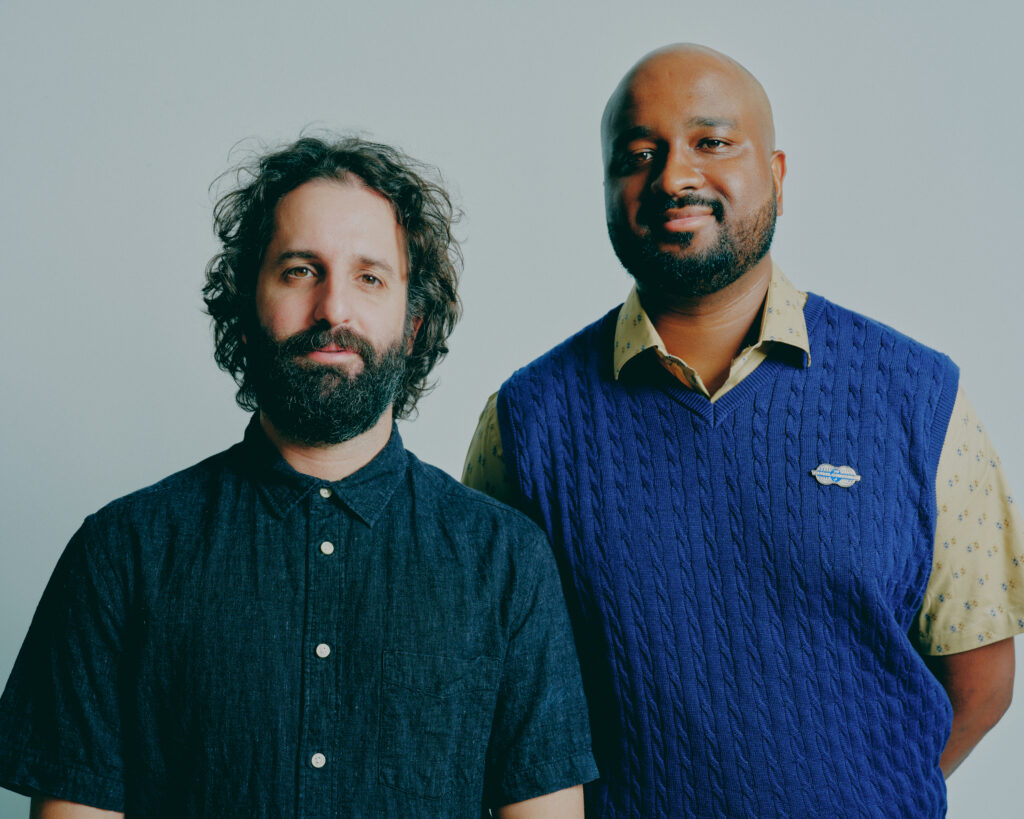
Getting your first feature into Tribeca on your very first submission is the kind of thing that doesn’t happen… until it does. For filmmaking duo Alex Mallis and Travis Wood, that stroke of luck was the beginning of a longer grind: a dozen festivals, DIY publicity, and what Mallis calls a “tough” path filled with “a lot of roadblocks.”
After each director had built a body of short films independently, they connected through the New York City filmmaking cooperative Meerkat Media, hit it off, and began collaborating. “It’s rare when you find a creative person who doesn’t stress you out and actually makes the process better,” Mallis says. “We were at this similar spot in our career where we were like, ‘Let’s take a bigger swing. Let’s make a feature.’ ”
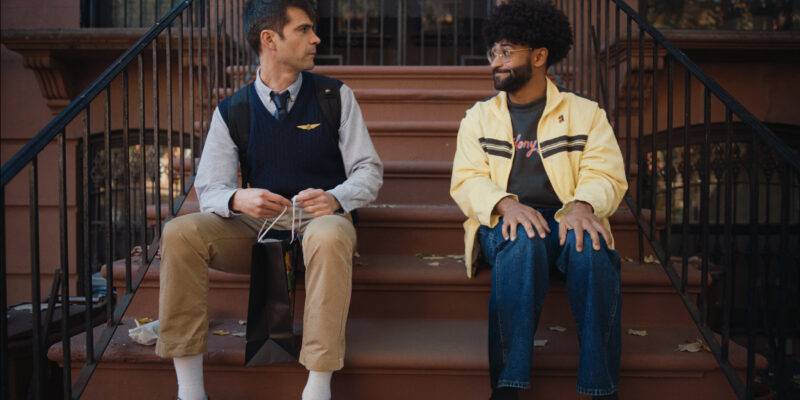
The payoff is “The Travel Companion” (2025), a comedy about a struggling documentary filmmaker whose access to free standby flights—courtesy of his airline-employee roommate—is suddenly threatened by a new girlfriend. The film premiered at the 2025 Tribeca Film Festival, was acquired by Oscilloscope Laboratories in February, and opens at BAM Cinemas in Brooklyn on April 10, followed by a limited national release on April 17.
Longtime users of FilmFreeway, Mallis and Wood turned back to the platform when it came time to showcase their feature. To their delight, they were selected by their first submission: Tribeca. Here, the duo discuss how FilmFreeway helped them along the way and why young filmmakers just need to keep going.
How did you find the transition from short films to a feature?
Alex Mallis: Making a feature is not necessarily a hugely additional amount of work from a short film; it takes up a similar space in your head. Maybe the shoot is more days, but you’re still putting together a jigsaw puzzle while juggling a thousand balls. And I think it kind of just demystified it a lot.
Feature filmmaking has always felt like this thing where I’m like, I’m not ready for that because that needs to be my masterpiece. All the wisdom that I’ve gained in my entire life needs to be distilled and reflected in this piece, or else it’s not worth making. And I think making this feature burst that, like, oh, no, this is just what you have to say right now, and it’s not the beginning, and it’s not the end. It made it feel a lot less precious and a lot more achievable, and I’m trying to really hold that thought as we start to think about the next one.
What impact did FilmFreeway have on you throughout your push to get the film screened and eventually sold?
Travis Wood: I’ve been on FilmFreeway since the conception of it. And we got lucky that our first submission got into Tribeca, and that’s literally never happened to me. It’s a tool for the job, and it’s telling you what’s coming up. There’s so many festivals in our brains—it’s even good to remind us, like, oh, we’re alumni at the New Hampshire Film Festival, so let’s email and ask for the waiver code that they will give us to submit on FilmFreeway. But, without seeing that in the upcoming deadline section, those things might slip through the cracks. I wish there was a FilmFreeway for booking theaters, for booking critics. If I could just go on and search in one spot, it would be so convenient.
AM: It acts as this archive, especially for us, having made tons of short films. I’ll click on past projects and see where I’ve played, and the film festivals have profiles, and you can see reviews and where people are hyped, and that just helps me feel more organized. It just streamlines that process so much. FilmFreeway is how it should have always been, rather than feeling like you have to go through this lengthy grant-writing process where you’re like, “What is the color profile of my film?” It’s plug and play: You hit submit, it goes out, it’s easy, it’s fun. And I’m so grateful that it exists, because the process used to be such a pain.
What has it been like taking “The Travel Companion” out on the festival circuit?
AM: Short filmmaking is something I love and will continue to do, but when you’re a feature, it’s your film, it’s your slot, it’s your Q&A—people are essentially coming to see your film and your film only, and that’s exciting. And with filmmaking now, I’m spending 90% of the time sending emails in a dark home office, and the festivals are your time to go out and celebrate, meet other filmmakers, build and increase your community, see other films, and get motivated and inspired for the next one.
This has been a true DIY process, down to doing your own publicity. What have you learned?
TW: It’s been empowering. For many years I’ve had this idea that somebody needs to come along and they’ll have the secret keys and open some door and do the thing for you. And with this film, the method of making it was so DIY that at every step now I’m kind of like, we can figure this out. Like, we can send the emails, we can do the research, and yes, it’s a lot of work, but it’s nice to not feel that just because I don’t have the money or resources that I can’t access that thing. You can get out, you can do it, the tools are there—you just gotta be diligent.
What advice would you give to filmmakers who are just starting out?
AM: Just finish something. There can be a frustration that stops you because you’re trying to be this perfectionist, and I think the antidote to that is just to keep making more stuff. And a lot of it is gonna suck, but eventually some of it will be kind of good. There’s not really a shortcut—you just have to start, make, and, most importantly, complete. And then do it again.
TW: Just always keep doing it. A lot of times we would hear, “Well, that’s not the way it typically goes,” or, “You’re not gonna get to film in an airport,” and once we embodied [this idea of] “well, we’re not stopping,” it made all those roadblocks just feel like fun, like, “We’re gonna do it.” So just find a way to believe and keep pushing. You can learn that in shorts, but a feature presents a mountain.
AM: Sometimes people thought that they were throwing up roadblocks, but it actually felt like they were daring us, and I was like, “Oh yeah, that’s not how it’s done? Watch this.”