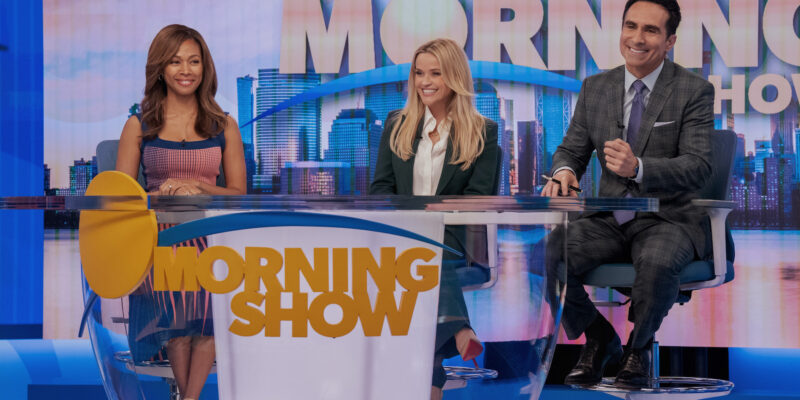
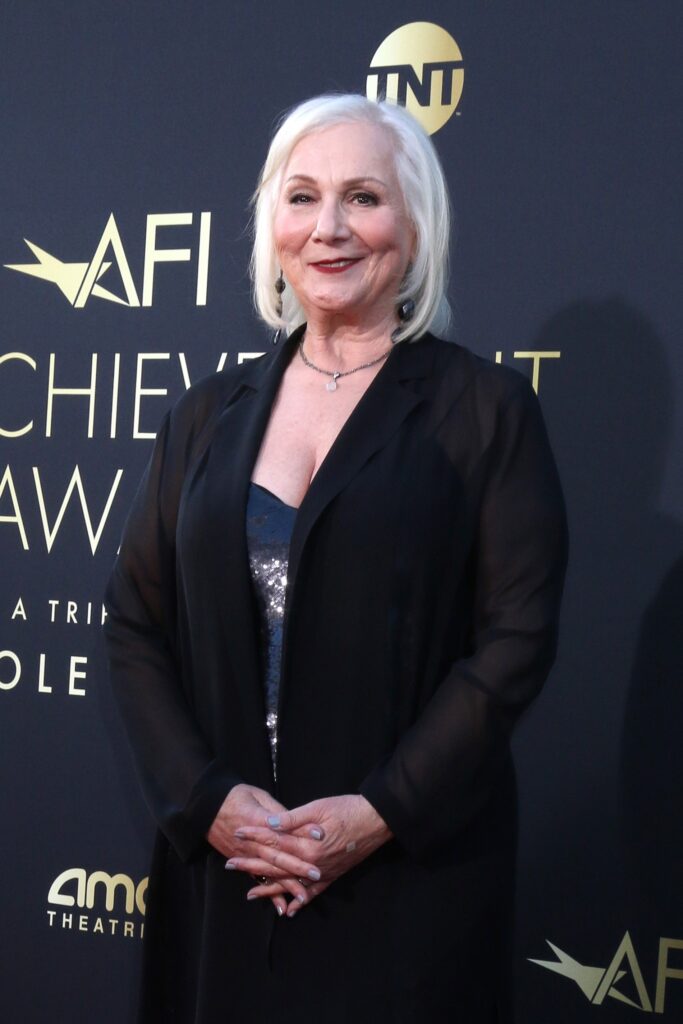
Keeping up with the never-ending news cycle as depicted on “The Morning Show” is something that both scares and energizes Mimi Leder. The two-time Emmy winner has served as an executive producer and a director on the Apple TV+ drama ever since it premiered.
“We are living in such an interesting time where we can’t even keep up with how fast the news cycle is going,” explains Leder, who received two Emmy noms last year for her work on the series’ critically acclaimed third season. “And that is our burden—like, is it going to be stale? But we keep doing things that are fictional and then they become truths. I have a feeling the news cycle is going to just keep feeding us very challenging material.”
Created by Jay Carson, developed by Kerry Ehrin, and fronted by Reese Witherspoon and Jennifer Aniston, “The Morning Show” returns Sept. 17 for its fourth installment, or what Leder calls its “power” season. Here, she shares what keeps her coming back to the series and why you shouldn’t let anyone else tell the story you want to tell.
How are you keeping things interesting for yourself four seasons in?
We look at each season as a 10-hour movie, and so we’ve now completed four 10-hour movies. That’s a huge accomplishment. It’s exhausting and exhilarating. It’s like having a baby, and you’re going, “I’m never doing that again”; but, of course, you forget about it and then you do it again.
Freedom of the press has always been a cornerstone of the series. I know we do a lot of silly things, but freedom of the press and the truth are really what I’m interested in exploring and why I’ve stayed with it for so long. The show is my baby. I gave birth to it with a great group of artists, and I’m still challenged and excited by it.
How have you and the team worked to evolve the show over the years?
The show keeps evolving as the landscape of the country keeps evolving. We started with #MeToo, and then all of a sudden we were in a global pandemic. So then we threw away all these scripts and dealt with the pandemic. The third season was about billionaires and mergers, and I like to call this season the power season. We have all these women who are trying to get a seat at the table, and what will they give up to have this power?
What is your standard preparation process when directing?
I read the script again and again. I think about every [character’s] journey, and I sometimes even write out a whole arc. I like to explore what the characters all want and what the action is that’s going to take them there, and then I discuss it with the actors. But I don’t like to rehearse. My process includes talking about the script, [including] how we can make it better, what the intentions of the characters are—but I don’t like to over-discuss. I really love to get it on the floor when we’re rolling; I want the experience to be completely organic. The actors are stepping into these shoes, and I like them to find the scene, not give them the result of it.
I also go to the set or go find the location, and I like to muse over how I’ll shoot it. Sometimes I read the script and I know exactly what I’m going to do even before I have the location.
When I was doing “The Leftovers,” we went to Australia to do the third season, and I scouted all these states and decided where we were going to be shooting in Melbourne and the Outback. I found all these locations, but I didn’t know what we were shooting because the season had not been written. I kept sending back pictures to the writers [saying], “We’re shooting here. I don’t know what it is we’re shooting, but we’re doing it here.” And it inspired them in writing that third season.
I’m a very visual storyteller, but I’m also very actor-oriented. And so the whole thing’s a dance. You want to dance slow, you want to dance fast, and hopefully it’s a nice slow dance that gets ramped up.
In your 40 years of directing television, how much has the medium and process changed?
There are shows you do for less money, and there are shows you do with huge budgets, like “The Morning Show.” And so you examine: Does the budget really change the way you design a show? It depends on what kind of show that is.
I started on a show called “China Beach” on ABC, about nurses in Vietnam and the price of war and the cost of human life. That show would never ever see the light of day on a network [today] like it did in 1988…. Television has evolved. It used to be [that] filmmakers didn’t come to television, and it was hard for me to get hired to do a feature because I was a “TV director.” And now everybody wants to be in television, because it’s an incredible format where you can do a 10-hour show and tell the story you need to tell in the time you need to tell it in.
What’s your advice for early career filmmakers?
Find your story that you must tell and never let anyone tell you that you can’t tell it. “We want so-and-so to tell it”—no, you tell your story. Some people are going to love it, and some people aren’t. Who cares? What matters is that you’ve told it the way you want to tell it. Trust your soul and trust yourself.
This interview has been edited for clarity and length.