Creativity doesn’t always come easy. Just ask John Crowley, who nimbly weaves together multiple timelines in the romantic drama “We Live in Time,” or Robert Eggers, whose “Nosferatu” attempts to deliver the most chilling version of Dracula yet. As seasoned as these filmmakers may be, even they’re not immune to challenges that arise during production. Here, these directors—along with Sean Baker (“Anora”) and Jane Schoenbrun (“I Saw the TV Glow”)—share the tips they used to craft some of the year’s best feature films.
Sean Baker, “Anora”
Tip: Don’t be afraid to play with color.
“I think that it can actually be very manipulative and, in a way, condescending if you apply this drab look on other people’s lives. ‘Let’s turn down the saturation, making everything gray and gloomy.’ I think that’s been done, and it’s almost like the history of social realism film for worlds to be portrayed in that way. And we wanted to try something different. We wanted to perhaps see the world through the eyes of the people who live there. And when you look around, even if you might be experiencing hardship, the world isn’t gray around you; colors still pop. The world is still the same.”

John Crowley, “We Live in Time”
Tip: Trust your actors’ instincts—but rein them in when necessary.
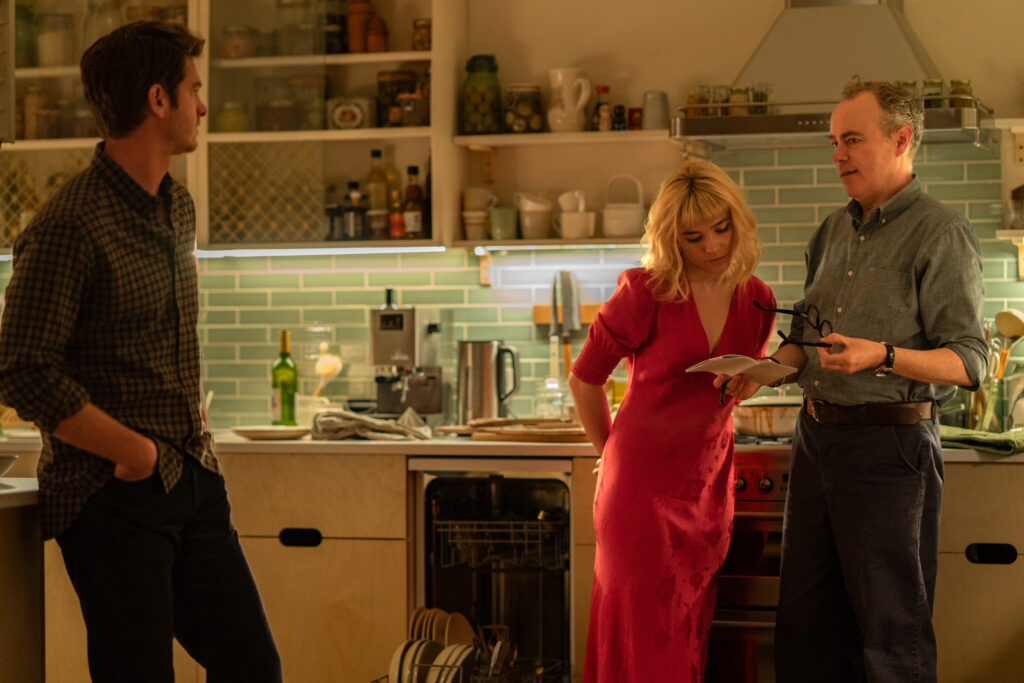
“I didn’t know [Florence Pugh] before we had asked her to do the film. I knew her wonderful work, of course, and could see from so many of the performances that she’d given that she’s very comfortable playing women who are very strong and quite forceful. And I thought an interesting acting task for her would be to combine that with the vulnerability that comes into [her character] Almut in the later parts of her journey. And it was interesting, because [for] Florence, some of her instincts were to play the role more emotionally. And without stifling her instinct, I was trying to keep her on a tight rein; I was like, ‘Hold it back. I’m telling you, hold it back, because you are in different places, and [Andrew Garfield’s character] Tobias is a more emotional creature than you are. And when you crack, the crack will be profound.’ And she did it beautifully, I think.”
Robert Eggers, “Nosferatu”
Tip: Even the most stunning locations may not be practical to shoot in.
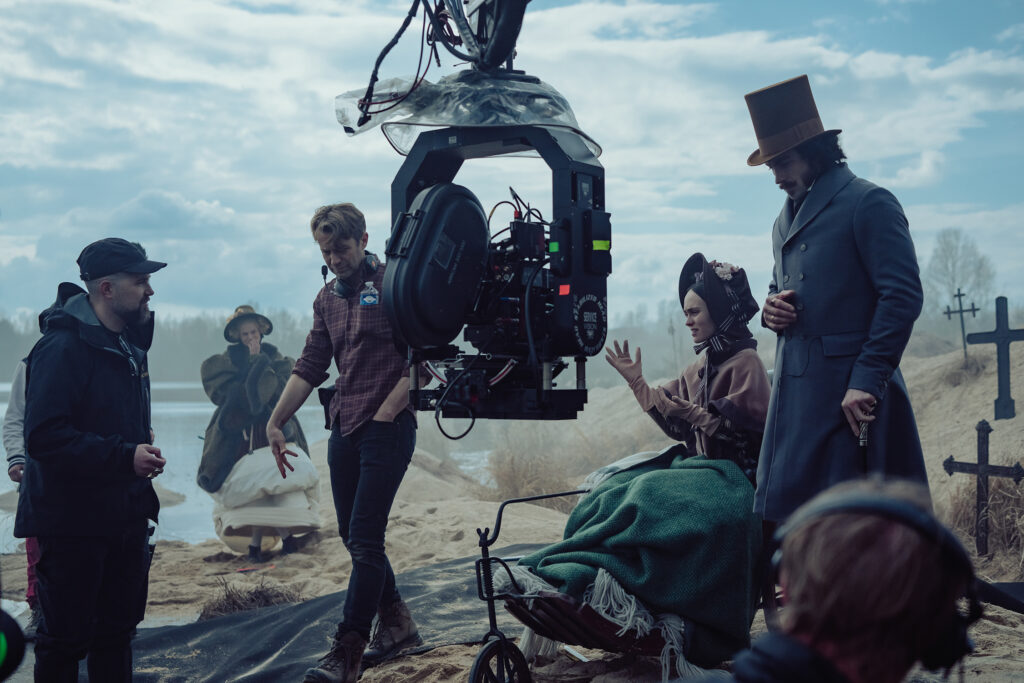
“We shot in Prague, so everyone thinks we must have taken advantage of the amazing locations of the Czech Republic, but we pretty much built everything. We really rarely [shot anywhere] that wasn’t built, because we have all these long oners, where the camera is moving all around the room and we need to be able to move walls. And you can’t take a practical castle apart when you’re shooting there, obviously. It was a great challenge. I mean, oftentimes in scenes, walls are opening up or collapsing to get the camera where it needs to go. Even at times when we had planned things and measured things, all of a sudden the saws all come out and the carpenters are tearing stuff down to get the shot…. Even the cemetery is a cemetery in Prague, but in order to find a place in that cemetery that had enough space to build that mausoleum, there weren’t a lot of graves around. So we had to bring in 30 headstones to populate it.”
Jane Schoenbrun, “I Saw the TV Glow”
Tip: Create a vision board for your film before you start shooting.
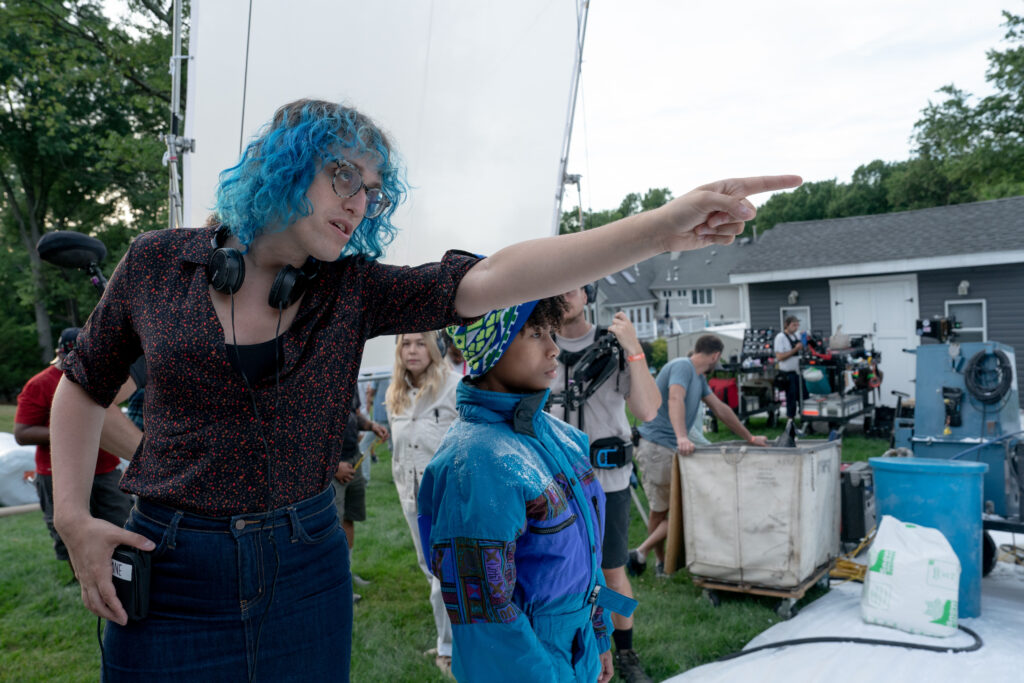
“About seven months before production, I drove to Baltimore [to see] my friend Albert Birney, who’s an amazing artist and filmmaker…. I convinced my producers to give me a little money to pay him. We chose 25 images that were going to be in the film that were on the page, and that I had very clear ideas of in mind. And we started by making Photoshop collages, just Google image searches [of], like, ‘CRT TV’ and ‘’90s basement carpet.’ And then once we had collages that we were happy with, he animated each one, drew it, and then we just sat there and got obsessed about the exact shade of green that the grass should be while that TV burns, or the red glow of the vending machine. It’s pretty crazy to look at some of those drawings. I put them up against the actual frames in the movie because many of them were just these very specific references that were able to grow from my brain to Albert’s pen to the screen.”