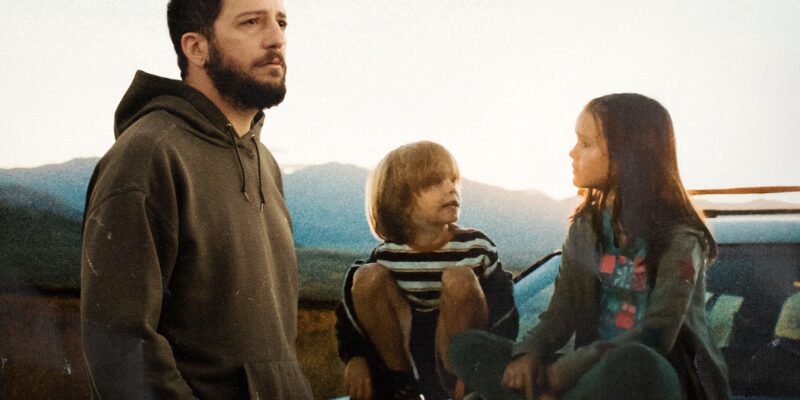
After directing seven short films and over 300 commercials, Cole Webley made his feature film debut with “Omaha” (2025), a heartfelt, poetic drama about a broke father (John Magaro) hauling his children across the American West after losing the family home. Along the way, he wrestles with the ache of parenting on empty pockets while trying to plot a brighter future for his kids.
“Omaha” premiered at the Sundance Film Festival in January 2025, where it earned rave reviews thanks to Magaro’s subtle yet powerful performance and Webley’s assured direction. To mark the film’s theatrical release on April 24, we talked to Webley about his journey to the project and his pointers for burgeoning filmmakers.
Shorts helped Webley transition to features.
He may be a Clio– and AICP Advertising Excellence Award–winning commercial director, but Webley doesn’t credit that for his film’s success. Since the format trains filmmakers to believe a shot shouldn’t last longer than five seconds, he feels that “in a way, just directing commercials can make you a worse film director,” he said. “It’s dangerous to assume making commercials will help you make a good feature film.”
Instead, Webley credits his short films—“Birdland” (2011), “Con Amor” (2016), “10:17” (2016), and “Dark Blue” (2022)—for growing his confidence behind the camera, especially when working with actors. “You might be working with less-talented actors who you’re trying to pull a good performance out of, because sometimes you’re not getting the cream of the crop,” he explains. “You gain confidence in being able to sniff out bullshit and helping people find a sense of truth. That alone contributed to making ‘Omaha’ feel as real as it does.”
While Webley admits his younger self might be wondering why he didn’t film a feature debut in his 20s or 30s, he’s relieved to be steering such a complex story at an older age. “If I’d made features at 25, they’d have been OK, but I’ve been able to infuse my life experiences, humanity, and the way I see the world into this film,” he explains.
He knew “Omaha” was the right script for his debut feature.
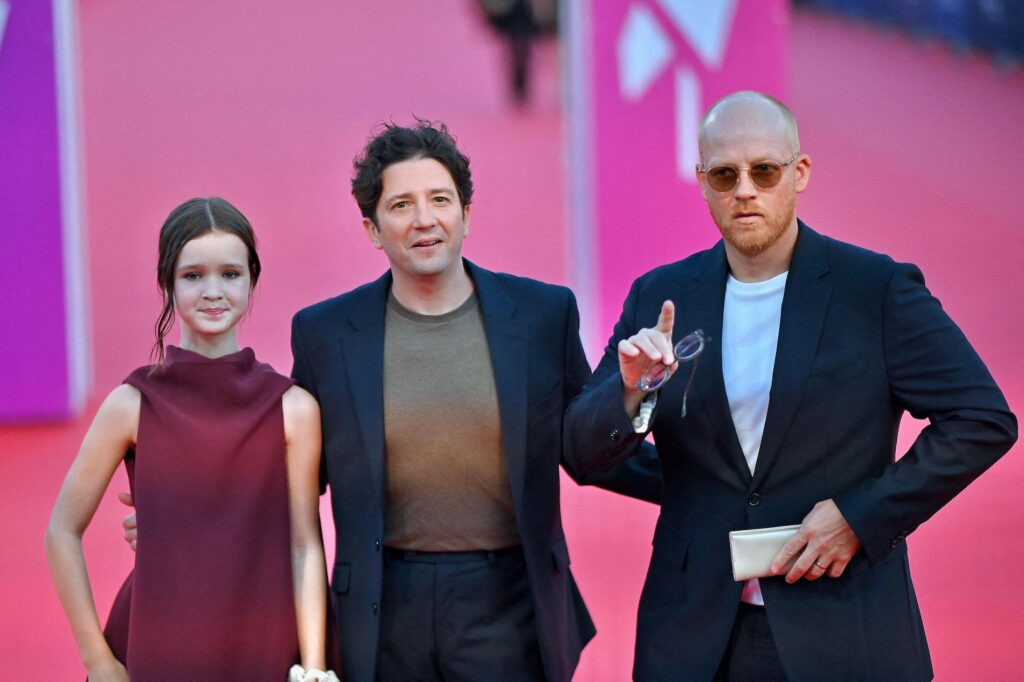
Over the years, Webley had circled a number of screenplays as he searched for the right debut. But after reading Robert Machoian’s script for “Omaha,” he was instantly seized by a determination to bring the story to life. “ ‘Omaha’ had everything that I really loved about movies,” he says. “There was the potential for great performances [through] a very impactful and emotional story, plus there was a pure and simple objective to it. Robert’s script was so clearly a film on the page. I could just envision the movie.”
The story also helped win over the film’s actors. Webley set his sights on Magaro for the lead after being struck by his turns in “First Cow” (2019), “Not Fade Away” (2012), “Past Lives” (2023), and “Showing Up” (2022), and he used connections from 15 years of making shorts and commercials to get the script in front of the actor. “A DP I’d worked with a number of times got the script to John,” he says. “Once he read it, he just knew this was a role he wanted to do.”
As a father of four, Webley connected deeply to the plight of the film’s characters. “Family is a source of our greatest joy and sometimes our greatest trauma,” he says, noting that he had to balance raising his children with establishing himself as a director. “I came out of film school and was dirt poor, trying to raise kids. My lived experience is different from the characters, but I certainly have a perspective on it.”
Sundance opened doors, but the road to release was still long.
Hollywood’s aversion to character-driven dramas meant Webley knew he’d have to make “Omaha” efficiently and for as little money as possible. Earlier scripts he’d worked on were ensemble pieces that would have been tough to shoot on a low budget. “Omaha,” by contrast, had a “scope and scale that was achievable,” meaning he was setting himself up for success on a practical level. “There’s just a succinctness and potency to this story,” he says.
The film’s acceptance to Sundance opened doors for getting it into the world. But despite critical acclaim, it still took 15 months for “Omaha” to land in theaters, since “the way in which it is brought into the marketplace is quite different,” according to Webley. “You have to work with the right people and have everything in order so it’s released in the right way.
“What we learned was that emotional, human stories always rise to the top,” Webley concludes. “But it also has to have a POV and be executed in such a way that you can feel the filmmaker’s soul onscreen.”