Andrew Stanton is something of a storytelling savant. As vice president of creative at Pixar, he has helped write every “Toy Story” film—including the upcoming fifth installment—along with “Monsters, Inc.,” “A Bug’s Life,” “Finding Nemo,” “Finding Dory,” and “WALL-E” (the latter three he also directed).
In recent years, Stanton has moved into live-action work, overseeing episodes of “3 Body Problem,” “Better Call Saul,” “Legion,” and “Stranger Things,” as well as the Disney sci-fi blockbuster movie “John Carter.” In March 2012, he gave an inspiring TED Talk entitled “The clues to a great story,” which broke down his storytelling secrets in a hilarious and informative manner.
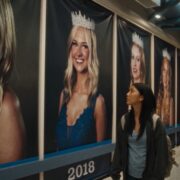
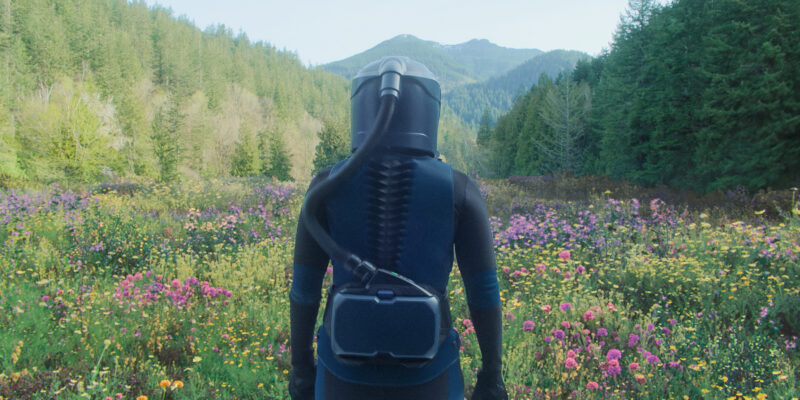
Now, Stanton’s latest film, “In the Blink of an Eye” (streaming on Hulu), may be his most ambitious project yet. The multi-narrative sci-fi drama is set thousands of years apart, connecting a Neanderthal family, present-day scientists, and astronauts on a spaceship centuries into the future. At its heart, the film asks what similarities and humanity we all share—no matter where we are in time.
What attracted Stanton to the project was the way Colby Day’s script subtly tried to answer that question. “I tried really hard to capture that in film form,” he says. Here, Stanton shares what four decades of storytelling have taught him.
Don’t be rigid
When asked what elements make a story work, Stanton can’t help but laugh, “Oh, gosh! You’re gonna make me quantify it?”
He admits that in the decades since he established himself in Hollywood, his approach to writing has evolved. “Ten or 20 years ago, I’d have been very rigid about what to do. But I’m not like that now.”
Having spent years absorbing everything he could about storytelling and structure, Stanton now prefers to write instinctively. “I want to play the instrument and see what comes out intuitively. I get a little bored if I map it out,” he says.
Sometimes, leaning too hard on that experience and knowledge backfires—overanalyzing a script can kill the very inspiration that got him interested in the project in the first place. “We call that analysis paralysis,” he says. “When I do that, I just need to get excited again and discover something else about it.”
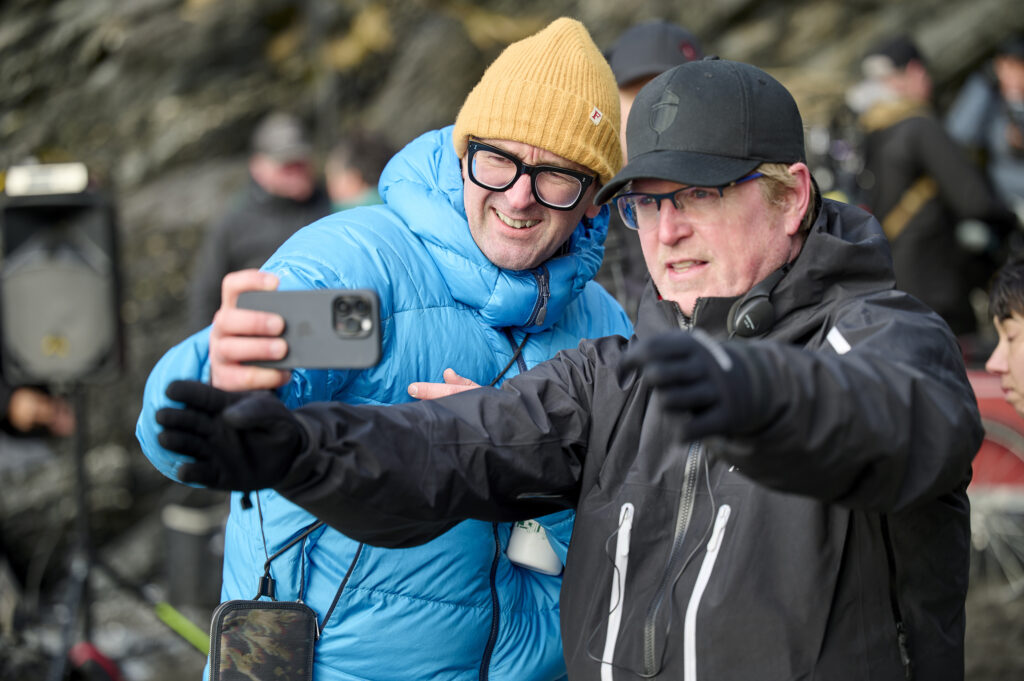
Part of the appeal of working in live-action for Stanton is the room it creates for spontaneous inspiration while filming. He’ll often move the camera or change course mid-scene to try and spark a moment that he hadn’t envisioned. “Obviously working at Pixar, I get carte blanche, but it’s like trying to turn an aircraft carrier. With filming, you can pivot in the moment on set. It’s very different ways to try and get the same result, which is having a story that captures you and keeps you glued.”
Silence can be golden
One of the mantras that Stanton has lived by as a storyteller is the power of “two plus two.” Rather than telling audiences the answers to questions, he wants them to come to the conclusion on their own.
Stanton says his film that sums up this approach most purely is “WALL-E,” the 2008 romantic, sci-fi, animated film that has minimal dialogue in its opening 30 minutes. “I was watching so much silent cinema as research and seeing what they did so well.” It was during this research that Stanton realized silence “was more impactful than a David Mamet movie where everybody talks. They’re both amazing, but, when it’s done right, there is just so much power to silent cinema.”
Almost two decades later, people still stop Stanton to talk to him about what he achieved with the opening half hour of the film. For Stanton, it only reinforces what he always believed.
“That’s something only cinema can do. It can make you have all these complex thoughts and feelings just by watching something. Sometimes dialogue can complement that. But cinema is a visual medium. I just want to play with it in all the different ways I can.”
The power of the human face
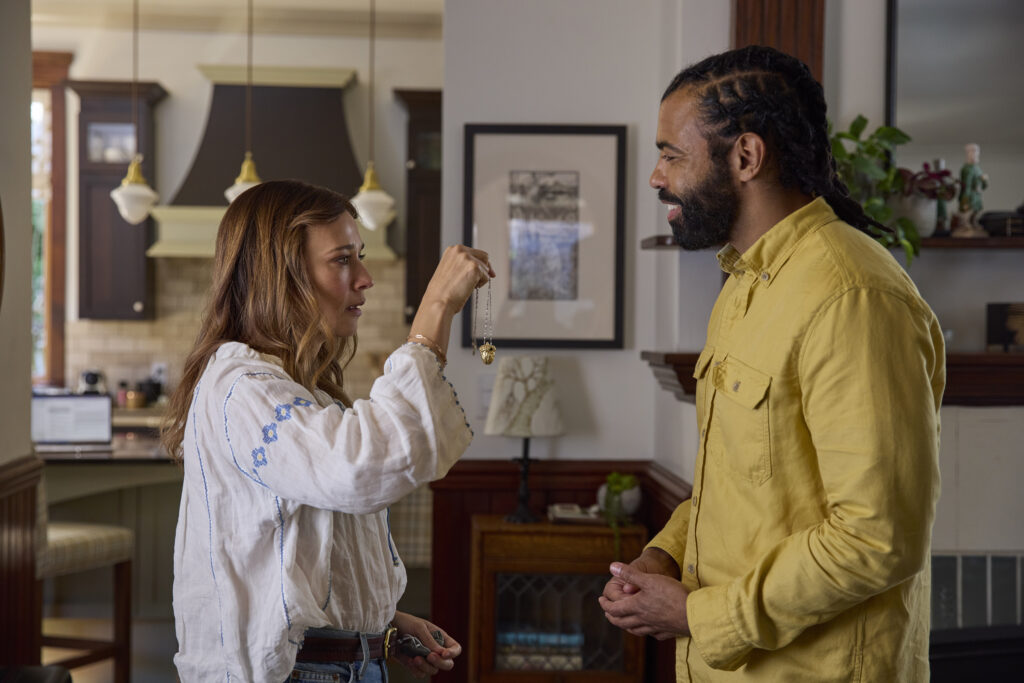
For Stanton, one of the most undervalued weapons in cinematic storytelling is hiding in plain sight: the human face. Viewers, he says, always gravitate to the eyes of whoever is onscreen, which means a director’s most important job is to make sure something true is happening there.
“That’s all you do when you watch the finished product. I feel like my job on set is to just stare at the actor’s eyes and make sure they’re completely engaged the whole time. Everyone else can worry about the camera, lights, and focus and tell me if something is off. But I’m just focused on that. That’s the power of the face.”
Give audiences something new
Ultimately, whether they’re reading a book, listening to a story, or watching a film, Stanton believes what audiences are after is always the same thing: “Something that sweeps them away, makes them forget where they are, and makes their brain guess what’s going to happen next. People are willing to watch a year’s worth of crap just to find that high again.”
As the way audiences watch films, television shows, and other content continues to evolve, Stanton applauds any creative person who can make their story feel fresh. “I make no predictions about how that can be achieved. I just hope that it makes a color that I haven’t seen before. That’s all I’m trying to create on my side.”