Amy Wang has wanted to be a director since she was a teenager, but her early determination didn’t make the path any easier. After graduating college, she found work directing promo shoots for the local versions of “The X Factor” and “The Voice” in her home country of Australia. Yearning to break into the Hollywood club, she decided it was time to take a big chance.
“I worked in TV for a couple years, and then I was like, ‘I have to try and go to America and give it a go—why not,’ ” she recalls. “And so I quit my job, sold everything, packed my bags, and came out to L.A., not knowing a single person, and went to film school at AFI. I’ve been lucky enough to have made a career in Hollywood, which is wild to think about, knowing where I come from.”
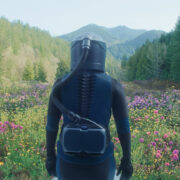
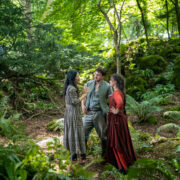
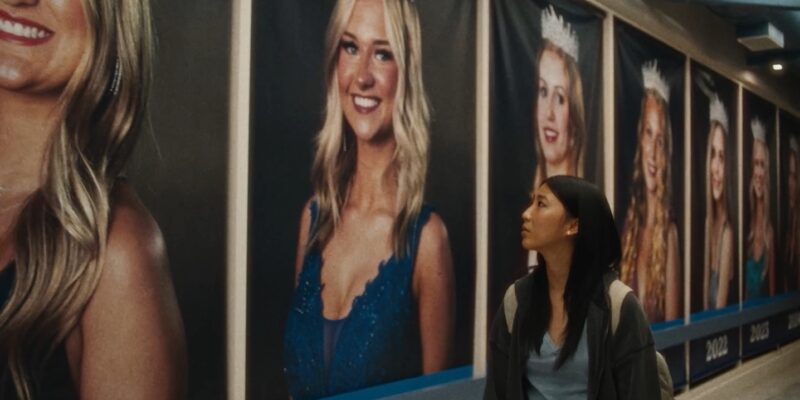
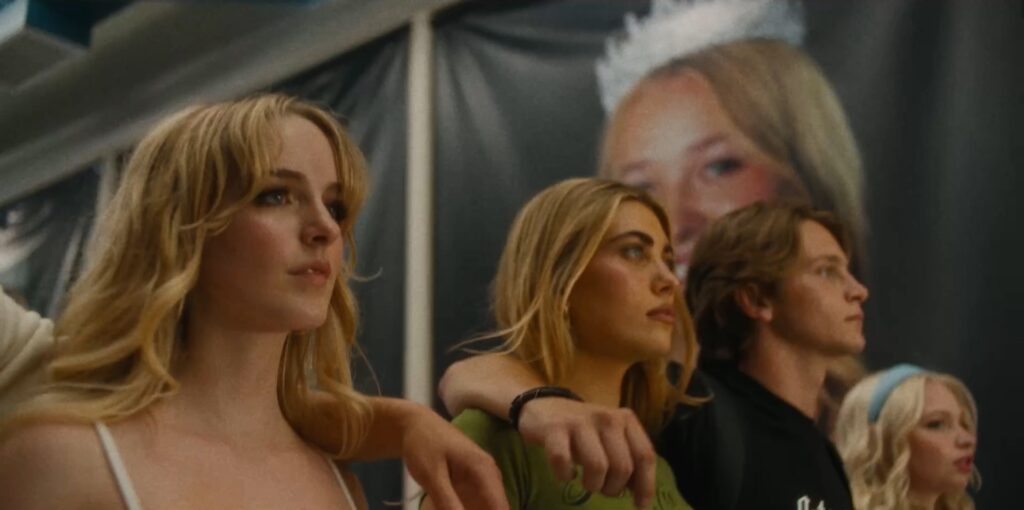
Upon completing her AFI program in 2017, Wang wrote and directed her own short films and worked on TV series including “The Birch” (2019) and “The Brothers Sun” (2024). Wang is now making her feature debut with “Slanted” (2025), a body horror comedy centered on Chinese-American high schooler Joan Huang (Shirley Chen), who undergoes a mysterious cosmetic procedure that makes people of color appear white in hopes of becoming prom queen.
With “Slanted” opening in theaters March 13, Wang chatted with us about doing the work to find your own voice—and why she’ll never do something as personal as “Slanted” again.
Did you always want to be a filmmaker? Did you ever doubt this path?
At 11 years old, I wanted to be an actress, and I did some acting classes and realized I wasn’t very good. And then, at 15 years old, I first watched “Fight Club,” which just opened my eyes. I remember running downstairs to my parents and being like, “I want to make people feel how that movie just made me feel.” From then on, I made stupid short films with my high school friends, making them act in my shorts during lunch.
And absolutely there were doubts. I mean, I probably had doubts today. [Laughs.] It’s a constant battle of doubting yourself and feeling vulnerable and navigating the rejection that’s in this industry. But I always think back to why I’m doing it: because I get to share stories, reach people I don’t normally get to reach, and be able to make people feel just like how “Fight Club” made me feel.
Where did the idea for “Slanted” come from, and what made it the perfect first film for you?
The concept has always been something I’ve thought about, especially when I was a teenager, but it really came into fruition because [of the] Atlanta spa shooting in 2021 where [six] Asian women were killed. It just brought back a lot of memories and feelings that I had. That’s when I started to craft the core concept of this girl changing her race, because I was feeling fearful, confused, and all of these different things that I wanted to channel into something. It’s fantastic that it’s my first film, because I don’t think I’ll ever make something this personal again.
How did growing up in Sydney, Australia, as an Asian woman shape your artistry and your perspective?
Growing up as an outsider, I think that’s always been who I am, even in this industry. When I immigrated to Australia, I didn’t speak English. I had to integrate and assimilate into this completely foreign, different culture and try and fit in. And the more I’m in this industry, the more I realize that I’m very rare, in that most people who are in the film industry either come from money or have roots in the industry—and I could not be further from it. My parents have nothing to do with it; I grew up quite poor, and early in my career, I had to take jobs because I needed to pay the rent, whereas a lot of my friends out of AFI didn’t really have to think about that and could just focus on writing or being a filmmaker. And so I’ve always felt this chip on my shoulder, and I often question my place in this industry, but I’m also very grateful that that’s my perspective.
What lessons from “Slanted” will you carry over to your next film?
Something that I think is difficult to master—because I feel like you need to go through it—is you realize that, in post, you won’t need half of the dialogue that you wrote in the script. A scene can exist with just a look, or a cutaway of an apple rotting, and that speaks volumes to what you’re trying to say. So, especially going into my second film, I’m hyperconscious of not overwriting.
At the same time, you’re writing scripts for other people to read, to convince financiers and famous actresses to want to do your movie, so you also can’t write it so sparsely that they don’t even understand. And so there is this kind of dance that you have to do.
What advice would you pass along to any aspiring filmmakers who, like you, are looking to blaze their own path?
I think the biggest thing that makes a good filmmaker is doing the work to find your voice. Really thinking about your past and figuring out: What do you believe in? What are your core values? How do you see the world, and what differentiates you from everybody else? Because that’s really your superpower: the thing that’s going to make you stand out and be as authentic as possible. Early on in your career as a filmmaker (at least for me), you’re kind of copying elements of people, like, “I wanna be like Sofia Coppola, David Fincher, Quentin Tarantino.” I think that’s fine, but it all needs to serve your road and who you are.