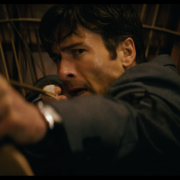
From “ER” to “Grey’s Anatomy,” medical dramas have long been a TV staple—so it’s a big challenge to put a fresh spin on the genre. Enter HBO Max’s “The Pitt,” which delivers an adrenaline shot to the chest thanks to its real-time format: Each episode represents one hour of a 15-hour shift for senior attending physician Dr. Michael “Robby” Robinavitch (Noah Wyle) and his team at a fictional Pittsburgh hospital. Now on its second season, the show snagged several Emmy Awards last year, including outstanding drama series, as well as two nominations for directing.
Real-life doctors and nurses have praised R. Scott Gemmill’s series for its accuracy, as well as its immersive, documentary-style visual language devised by Johanna Coelho, the show’s sole director of photography. Her goal was to allow camerapeople to move freely and shoot long single takes within a self-contained 360-degree set—and to film it all in chronological order. “I felt like you needed to be in the middle of this to feel the intensity of the script,” she says. “It’s almost like the camera is another person in the hospital.”
Preproduction: choreographing the chaos
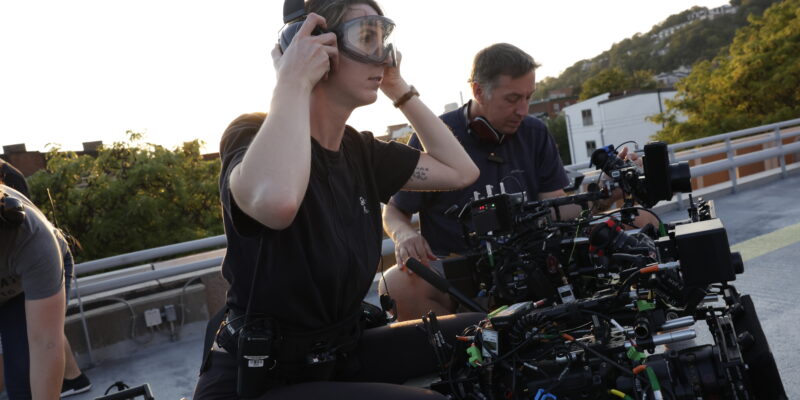
Before filming on the series began, Coelho collaborated with Gemmill and executive producer John Wells, who also directed two episodes of the debut season, to work out the necessary technical requirements. This included developing a kind of choreography for the crew—figuring out where to place two cameras inside a trauma room where 10 actors are standing around a single gurney. “How could we get close enough without blocking the action?” she asked herself. “Because they keep passing instruments to each other, and sometimes they switch places.”
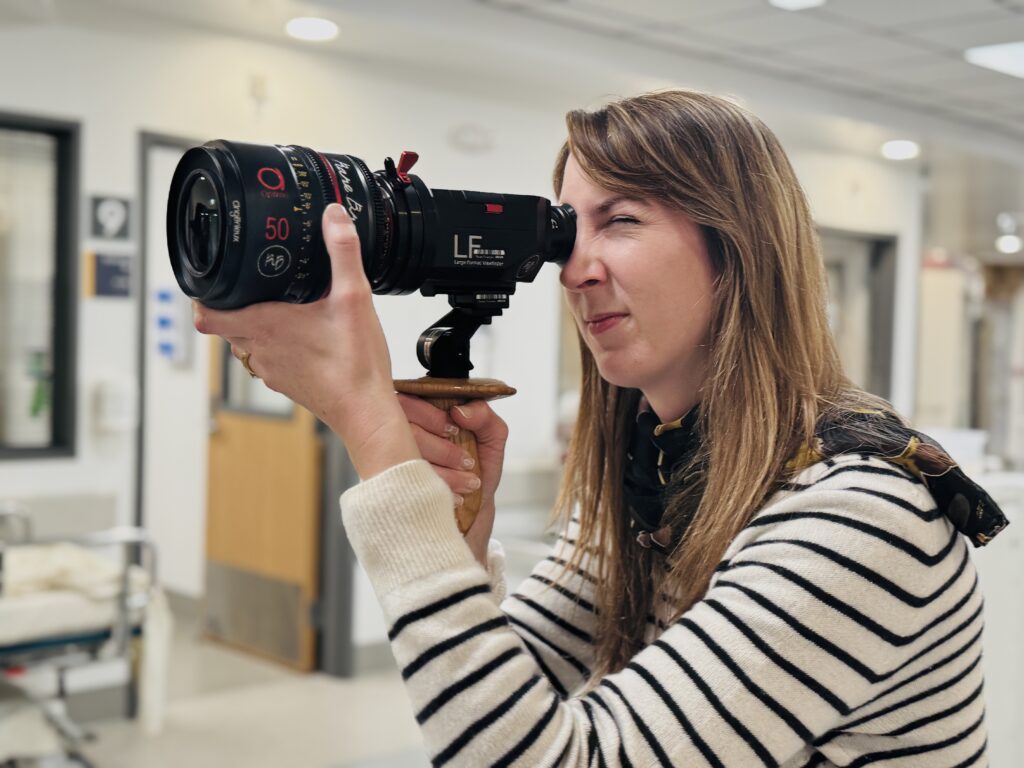
But for Coelho, who studied at Université Sorbonne Nouvelle in Paris and the American Film Institute in L.A., her craft is about much more than logistics. She thinks of a director of photography as a visual psychologist. “You’ve got to understand the character and listen to them so you can be part of that journey,” she explains.
Finding intimacy amid intensity
That meant capturing private moments and small facial reactions, like when Robby attempts to hide his deteriorating mental health from his coworkers on Season 1. “You can be with [the actors] with the camera and be the only one seeing [what they’re doing],” she says.
Filming was particularly challenging on a late-season episode in which a mass shooting at a music festival sees more than 100 patients come through the doors of the ER. “The way we had to approach it was different,” Coelho explains. “We couldn’t do these long camera moves anymore, because so many people are absolutely everywhere.” She added a third camera to film reaction shots amid the sea of patients and staff.
Problem-solving on set
Initially, she was concerned that all the fake blood on the floors would present a hazard for the crew: “I was like, ‘How are we going to make sure the operators moving around everywhere don’t slip?’ ” Thankfully, filmmaking magic saved the day. “It’s a puddle that’s applied on plastic,” Coelho says. “It looks very realistic, but it’s not slippery. It’s not liquid.”
The actors playing the medical team weren’t alone in sporting scrubs, either; the crewmembers wore them, too, so it wouldn’t be an issue if they were spotted in a reflection. Though this was done for practicality, Coelho says it helped unify the people working behind and in front of the camera. “We all looked the same on set. Crew, cast, background—we were all part of one big team. You couldn’t tell who was who anymore.”
A collaborative approach to filmmaking
Much like the hospital itself, production on “The Pitt” is all about collaboration. “There was a lot of respect among all the craft teams, because we were all doing it together. No one was really above anyone else. It only worked because we were all pieces of that puzzle.”
For filmmakers looking to create immersive visual storytelling, Coelho’s work on “The Pitt” demonstrates how technical constraints can drive creative innovation—and how collaboration across all departments is essential to pulling off ambitious projects.
A version of this story appeared in Backstage magazine.