For John Patton Ford, it was a long road to pulling off his first feature, 2022’s “Emily the Criminal.” Now, as he debuts his follow-up, “How to Make a Killing,” the writer-director says filmmaking comes down to one thing: You have to keep showing up.
“I am not the coolest, smartest, most talented person I went to film school with,” says Ford, pointing to “Hereditary” filmmaker Ari Aster as the classmate who fits that bill. “I’m just a schmuck who worked hard and kept trying, over and over again. I always say: If someone gave you a basketball, put you on the half-court line, and said, ‘Take a shot,’ you’d miss for three straight days. But, eventually, you’d get one in. And not because you’re good at basketball, but because you just wouldn’t stop shooting. Ultimately, that is what it boils down to: How consistent can you be?”
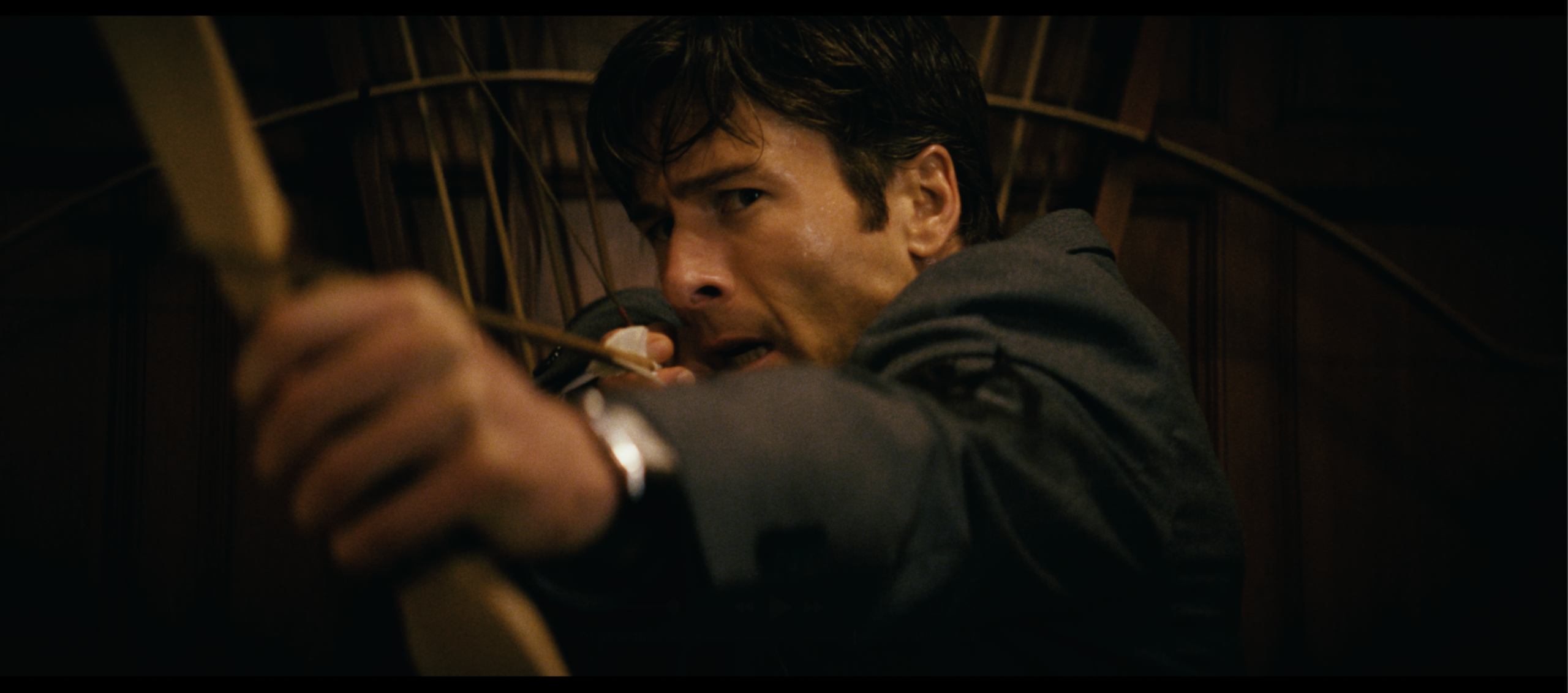
After graduating from the American Film Institute, Ford spent over a decade trying to make it to the big screen, working at a catering company as he churned out short films and unproduced scripts. His breakthrough moment came with “Emily the Criminal,” in which Aubrey Plaza stars as a young woman whose crippling student debt leads her into the criminal underworld of Los Angeles. Ford won a Film Independent Spirit Award for best first screenplay for “Emily the Criminal”; but despite this success, he says he yearned for “something more fun.” The result is A24’s black comedy thriller “How to Make a Killing,” starring Glen Powell as Becket Redfellow, who gets tired of waiting for his family inheritance and decides to kill the relatives ahead of him in line.
With “How to Make a Killing” in theaters Feb. 20, Ford chatted with us about why “fun” doesn’t mean “easy” and the need for directors to also be writers now.
Did you always want to be a filmmaker?
It wasn’t until college that I got really serious about it. And only someone as delusional and naive as a 21-year-old would decide to pursue this. Like, if you know what the odds are, you just wouldn’t try to begin with. But I got really dead set, and I just couldn’t shake it—and I kept trying for an incredibly long time. There were a whole host of ups and downs and moments where I thought I’d walk away…and then I’d go back. It was like in “The Godfather Part III”: “Just when I thought I was out, they pull me back in!”
After working so hard to finally make your first film, what drew you to “How to Make a Killing” as the next move?
My first movie was really dark, serious, and heavy, and it felt that way making it. After finishing that, I just felt like, I don’t want to do that again. That was great, but I’d like to make something more fun. I remember thinking, like, what’s my Bong Joon Ho movie? What’s my “Ocean’s Eleven”? Like, can we have a good time now?
Beyond that, you’d think that you’d feel some confidence after you get your first movie into Sundance. I felt a little, but I also felt really insecure. I felt like: Here’s my 15 minutes—I gotta make good on this and get another movie going before people forget who I am. This movie was out there and makeable, and it would not be a sad trudge up a mountainside for a decade. The irony is that I discovered that making a “fun” movie is just as grueling and difficult as making a serious movie.
Now having made two features, were there any lessons you took from your experience on “Emily the Criminal” that you carried over to the execution of “How to Make a Killing”?
The biggest thing was time. We had 20 days to shoot that first movie, and I would never recommend that! The most valuable asset you have on set is not the equipment, the talent, or the location—it’s just the amount of time you have. Also, to make a feature, you have to have a level of preparation that most people aren’t thinking about when they first start. And then there was stuff that I felt like I already knew, but the making of the first movie just reinforced how true those things are. For instance, I think making a movie is 90% writing and casting and 10% fun other stuff that maybe you’ll get a chance to do.

Speaking of casting, what is your approach with finding the right actors?
It’s a really amorphous and funny thing to talk about, because it’s not like you’re checking boxes. It’s so emotional; it’s just, how do you feel around someone? When I’m casting, I don’t really look at people’s movies that they’ve made. I like to look at interviews on talk shows, because that’s the raw material; that’s the clay. Then I like to go hang with them, and you can start to think, what can I imagine them doing? If all you’re looking at are previous roles that they had, chances are you’re gonna think about them in kind of a reductive, limited sort of way. In my opinion, most actors are capable of so much more than the world thinks. So I like to think of unlikely people and just how far we can stretch them.
What is your writing process like? Are there specific things that have helped you as you write?
Writing is home base for me. When I was a kid, I’d sit for hours and write stories. It’s the thing I always come back to. And it’s tough to explain. I have to be able to envision [the movie] before I can go and shoot it. And much of my time is spent on making things happen in the most economic way possible. At a certain point it becomes like a Sudoku puzzle—like, how can I get these things to happen in the most efficient way? How can I start a scene as late as I possibly can and get out of it as soon as I possibly can? A lot of the stuff I learned [about] writing comes from short filmmaking. I made a preposterous number of bad short films, and you have to be economic and get stuff done really quickly.
What advice would you pass down to young or aspiring filmmakers who are looking to follow in your path?
In this day and age, there are no more directors. There are just writer-directors. You have to be able to produce your own really good piece of material that can act as bait for actors, and then subsequently have producers interested in helping you. But you’re not gonna get any of that going unless you can either write or become really proficient at working with a writer and coming up with something together. It’s easy to get good at all the technical stuff, but the thing that no one wants to do is actually learn to write a screenplay. That’s the actual work, and so learn to do that.
This interview has been edited for clarity and length.