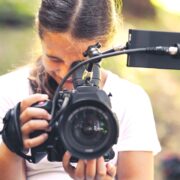
Cinematographers are the backbone of any film shoot, translating the director’s vision through instinct, artistry, and technical skill. Here, we’ve compiled the best advice from six DPs behind standout projects this year—on process, collaboration, and the evolving demands of the craft.
Henry Braham (“Superman”)
“I’m interested in the smallest physicality. Because of shooting on a large [Imax] format, we can shoot on wider lenses. If you think about some of the most spectacular films from the ’50s, ’60s, and ’70s, in the period of CinemaScope, that’s how those movies were shot: with wider lenses, closer to the action. What they couldn’t do was move as freely as we can now.
You might think of handheld as quite disturbing. It’s a very strong statement [that] of course has its place in storytelling. But by developing stabilization techniques that are bespoke to the way I work, we get the best of all worlds. We get the intuitive nature of being handheld without the audience being aware of the camera.”
Russell Carpenter (“Avatar: Fire and Ash”)
“One thing I had to learn, because I wasn’t a very social person, was that by going into interviews, I would just get better at communicating about myself. I think directors of photography are in the same position that actors are in. You go in for a lot of auditions, and you have to develop a thick enough skin to realize that if they don’t pick you, it’s not about you. Don’t internalize it—just keep having persistence.”
Ben Davis (“Heads of State,” “The Woman in Cabin 10”)
“When I started out, I went on a job and it was a very young director. We were shooting, and he wanted to shoot it a certain way, and I thought it was ridiculous and also terrible. And we fought about it. Not badly, but I thought it was a terrible way of going about it. And we filmed it and cut it together, and I saw it afterward—and it was absolutely brilliant. So that was a huge lesson for me. Just because it’s different doesn’t mean it’s not good or it’s not right. Just because the voice isn’t the same as yours doesn’t mean the voice isn’t worth listening to.
If you’re at the start [of your career], photograph or shoot all the time. Watch as much cinema as you can, but go out and actually photograph things. It’s much easier now than it used to be. It was expensive—you had to process it and cut it. And now there are so many mediums you can work in, and they’re all immediate and low cost.”
Erik Messerschmidt (“Bono: Stories of Surrender”)
“I think the cinematographer is the director’s appendage. We’re in some ways the instrument through which the director can orchestrate the visuals in their film. Part of that is interpretation—part of that is didactic construction, part of that is inspiration and our own personal stamp. It’s different with every director, but I see it very much like that. I also think, to be honest, cinematographers probably get too much credit for the way movies look and not enough credit for the way the story is told. In actuality, the production designer and the costume designer deserve more credit for the way the movie looks, and cinematography has a lot more to do with editing than it does with photography. That’s one thing that is just never fully discussed.”
Larkin Seiple (“Weapons”)
“Try to get a job on set where you can watch other cinematographers work and that can pay your bills and allow you to not have a 9-to-5. Try to crew up and get on set and watch other people. Also, the thing is, really, to find the director. The most talented directors have a cinematographer they’re working with. That’s rarely an open door; you have to build that collaboration from the beginning. Hopefully, they’ll take you along for the ride if they find success.”
Ari Wegner (“Honey Don’t!”)
“That’s one of the most fun things, I think, about filmmaking: It’s a team sport. You’ve got these highly specialized creative people, and they’re all going to come together under one director and do what they do best. And then when you look at a frame, it is all those elements that you see in front of you. What [colors] are the walls, and how do they go with the costumes, and how do we light it? We spend a lot of time taking all that into account: what costumes should be in which locations so they are both distinctive and bold, and they don’t disappear. It’s lots of conversations and lots of hustle. It’s one of the most satisfying parts of filmmaking, that collaboration between the departments.”