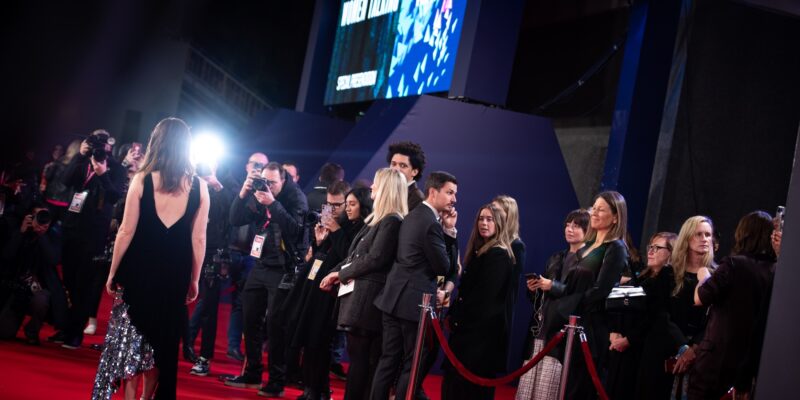
Film festivals can be intimidating places for directors. After all the time, money, and creative energy spent during the production process, their hard work is finally being exposed to the world. Given that kind of pressure, how can filmmakers ensure that they get the best possible experience when attending the likes of Sundance, Telluride, Tribeca, or any fest, really? Is there a method to making yourself known amid the madness of festival season?
Get the right people in the room.
“The films that are the most successful are always the ones with the hardest-working film teams, who are out promoting their work and mobilizing a grassroots audience,” says Cara Cusumano, the festival director and senior vice president of programming for New York’s Tribeca Film Festival. “You are your own best advocate.”
As much as packing out screenings with friends, family, and interested viewers can help, Cusumano has noticed that audiences particularly love when the filmmakers, stars, and subjects attend, too. “[Do] anything you can do to make that premiere a memorable one that people will walk out talking about,” she advises.
Director India Donaldson’s debut feature, “Good One,” premiered at the Sundance Film Festival in January, and she remembers its first screening as a “deeply meaningful time” with her collaborators, who attended the event alongside her. After earning rave reviews, Metrograph Pictures acquired the film and released it in limited theaters in August. But while Donaldson attended Sundance with the intention of promoting and selling the project, she cut her teeth at smaller, more regional festivals with her short films.
At the time, Donaldson admits to being disappointed that her earlier projects “Medusa” (2018), “Hannahs” (2019), and “If Found” (2021) didn’t get selected by more renowned programmers. Now, she says, “I wish I hadn’t been so hard on myself early on. Rejection is not a reflection of the quality of your work. Over the years, my skin has grown thicker. I take rejection more as a statement of it not being fit for that place. You get welcomed into the right festival at the right time.”
Additionally for Donaldson, who didn’t attend film school, festivals became havens where she could meet fellow filmmakers. “My film community was built around going to the festivals,” she says.
Figure out what “networking” means for you.
Indeed, many eager writers and directors see festivals as ideal places to network. They also, however, misinterpret networking to just mean cornering high-profile agents, managers, and executives and pitching them their next project. Cusumano has seen much more success over the years when filmmakers network with each other and vow to help with their respective projects. “People [should] take advantage of the incredible pool of talent that you are a part of to build relationships and meet future collaborators,” she says.
John Patton Ford, whose debut feature “Emily the Criminal” premiered at Sundance in 2022, didn’t take this approach when he attended the 2010 festival with his American Film Institute thesis short film, “Patrol.” “I just wanted a job of some kind. I was determined to meet someone who could get me one,” he recalls. Having already been emailed by several agents before attending the festival because of his links to AFI, Ford compares his experience to speed dating. “I thought that would be the best use of my time because getting an agent seemed like an elusive, aspirational thing to do,” he explains.
Ford ultimately realized that an agent could only help him so much. If he could go back, he would have prioritized finding like-minded creatives. “My mistake was that I was looking for Hollywood to give me a chance,” he says. “Don’t do that. You’ll go crazy. Go there already working on something that you can make yourself. If there [are] some other people there who can help you do that, great. But don’t look at it as your connection to a bigger world [where] someone is going to come along and save you.”
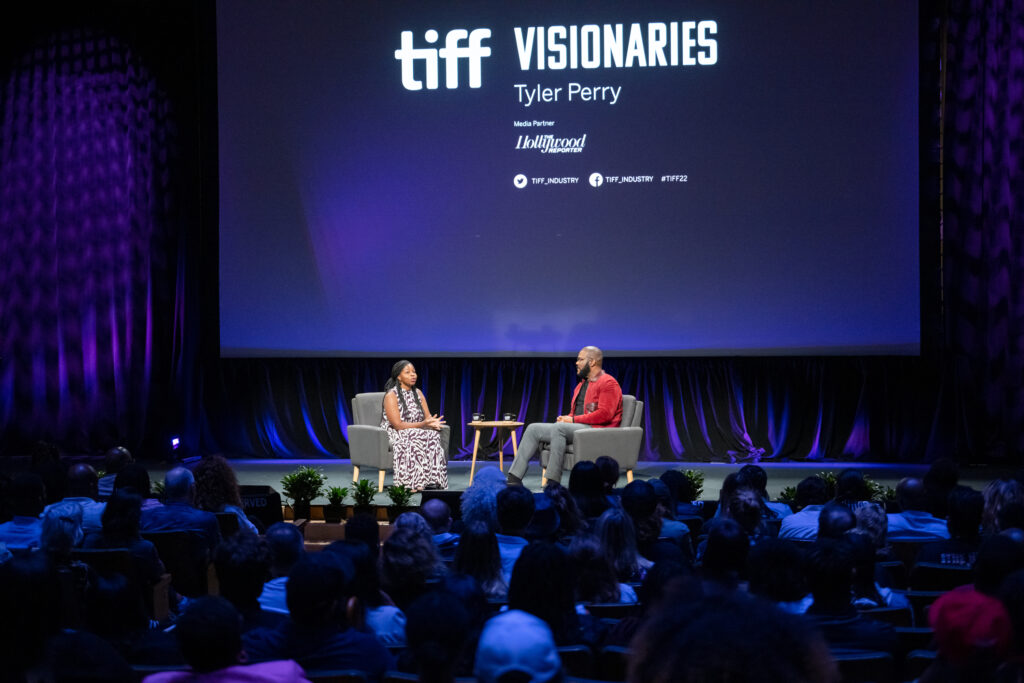
Image credit: Nick Wons
Be strategic with how you present yourself and to who.
Making sure that you have your next project’s pitch perfected for when you do get into conversations with potential collaborators will still help you. Ford suggests “speaking as if you’re already in the process of making it,” as projecting such confidence usually proves to be contagious. “You’d be surprised at how quickly people want to get involved if they sense you’re already in motion,” he says. “Even if it is a little bullshit.”
When Andrew Zuchero screened his short film “The Apocalypse” at Sundance in 2013, he ended up meeting many of the collaborators that would help him with his feature “Love Me” over a decade later. “With a short, when people are watching it, laughing, and liking it, that’s when you can really put the pieces together to make something bigger.”
“Love Me,” the post-apocalyptic romance starring Kristen Stewart and Steven Yeun, which he wrote and directed with his wife, Sam Zuchero, premiered at Sundance in January, was purchased by ShivHans Pictures in May, and will be released in limited theaters on Jan. 24, 2025.
Pulling together a list of who you want to speak to can prove an advantageous approach. Ford advises looking through the festival programs, figuring out which producers you’d like to talk to, then tracking them down by finding their email addresses on IMDb or by asking the event organizers. From there, you can try to arrange a meeting, with “the objective being, you can meet people who can actually get movies made,” Ford says.
Even after a festival, you can easily follow up to praise someone’s work. “I don’t usually go up to people at film festivals,” admits Sam Zuchero. “But if I like somebody’s work, I’ll sometimes email them and say, ‘Hey, I think you’re awesome,’ just to start a dialogue.” The filmmaking couple has even connected with people from festivals they didn’t attend. When the Zucheros were looking to get a movie set in Afghanistan and Yemen off the ground, they were so impressed by the 2023 film “Norah” that they perused through the Red Sea Film Festival program to reach out to its writer and director, Tawfik Alzaidi. “We went this circuitous way. But what we did was open up the doors to someone who would never know that we were aware of their work,” says Sam Zuchero. “Now we’re collaborating on the script together.”
Ultimately, whether you’re in Toronto, New York, Austin, or Cannes, what’s most important is to make sure you have a “good time” at the festival, insists Ford. And key to that is doing the thing that makes people want to write and direct in the first place. “See as many movies as you can,” says Sam Zuchero. “When you show up at a film festival and there are all these people who are into movies, it’s not just inspiring—it gives you a boost to keep going.”