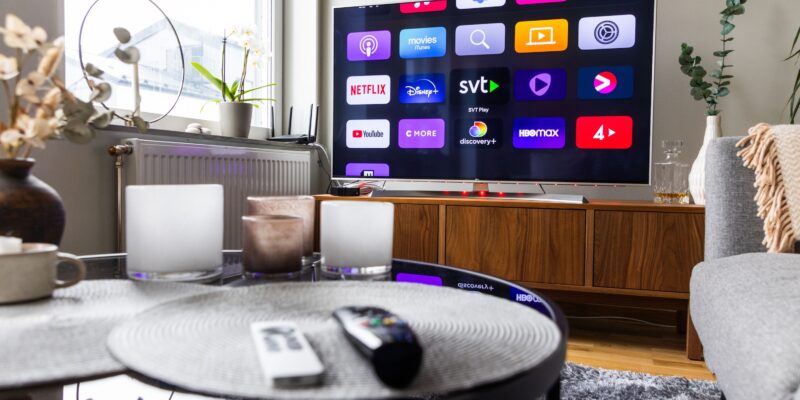
Thirty years ago, direct-to-video distribution was an insult. Theatrical release was king, and sending your project straight to home video was the industry’s way of hinting its commercial viability was questionable at best. Today, streaming films directly into people’s homes is not only a valid distribution method, but one that creators must consider when it comes to finding their audience.
Earlier this year, director Zack Snyder said that more people probably saw his 2023 movie “Rebel Moon—Part One: A Child of Fire” on Netflix than “Barbie” in theaters. But even if we count up hours viewed, has someone sitting on their couch made the same investment as someone who drove to the movie theater? While we can’t compare imprecise data between subscription-based streamers and theatrical ticket sales, for filmmakers, considerations around profit potential and how streaming affects both audience reach and creative decisions are now an undeniable part of the picture. One platform is not inherently better than the other; rather, there are costs and benefits to both.
Even with plenty of services floating around, Netflix is still at the top, followed by Prime Video and Disney+. Whether these services can continue to provide a steady output of films and television shows to keep viewers hooked remains to be seen; but for the time being, it’s fair to say their sizable holds on audiences are here to stay. But what does that audience mean, and how does it work for a filmmaker?
Streaming’s vast sea of films and TV shows means it’s difficult to have a breakout hit. While there may be a bit of marketing on your film’s behalf (a trailer, perhaps a press junket), you’re mostly reliant on social media buzz and the algorithm propping up your feature. For an established filmmaker looking for an audience, this may be a fair trade-off. Richard Linklater felt so when Netflix purchased his movie “Hit Man” out of the Toronto International Film Festival in 2023; the film had a limited release in theaters before a streaming premiere.
Linklater told IndieWire that studios who solely do theatrical distribution were less interested in a sexy, funny movie for adults than established IP: “The times bend against whatever originality we have; [originality] scares them…. To me, that’s what’s changed, that they’ve really figured out what they don’t do, and that’s the world we knew. It’s a reduced world, for sure. You need that middle to step up, but right now, it’s Netflix, and the streamers are in that space.”
For Linklater, a five-time Oscar-nominated director whose filmography includes such hits as “Dazed and Confused” (1993), “School of Rock” (2003), and “Boyhood” (2014), putting his latest feature on Netflix isn’t the end of his theatrical release road, but another step in his career. There’s not a scenario in which the performance of “Hit Man” causes Linklater to vanish into obscurity. There will be more Linklater movies because he’s an established name with successful films to his credit. And with his clout and the film’s success at TIFF, he stayed free from the common obligation to re-edit it for the “grab them from the jump” structure that’s become typical of streaming features.
The on- and offscreen streaming formula
Streaming can and does dictate the shape of a project. Unlike in a theater, viewers can click away or go and do something else, so grabbing them early on is crucial. “Rocketman” director Dexter Fletcher discovered this when making the action-comedy “Ghosted” for Apple TV+. Talking to the “A Trip to the Movies” podcast, Fletcher explained he had to cut the movie’s original opening because of Apple’s data findings. If “something doesn’t happen in the first 30 seconds,” said Fletcher, “people will just turn [it] off.” This helps explain why so many streaming features start in medias res, or in the middle of the plot, taking viewers to an exciting part of the story before circling back to explain how they got there.
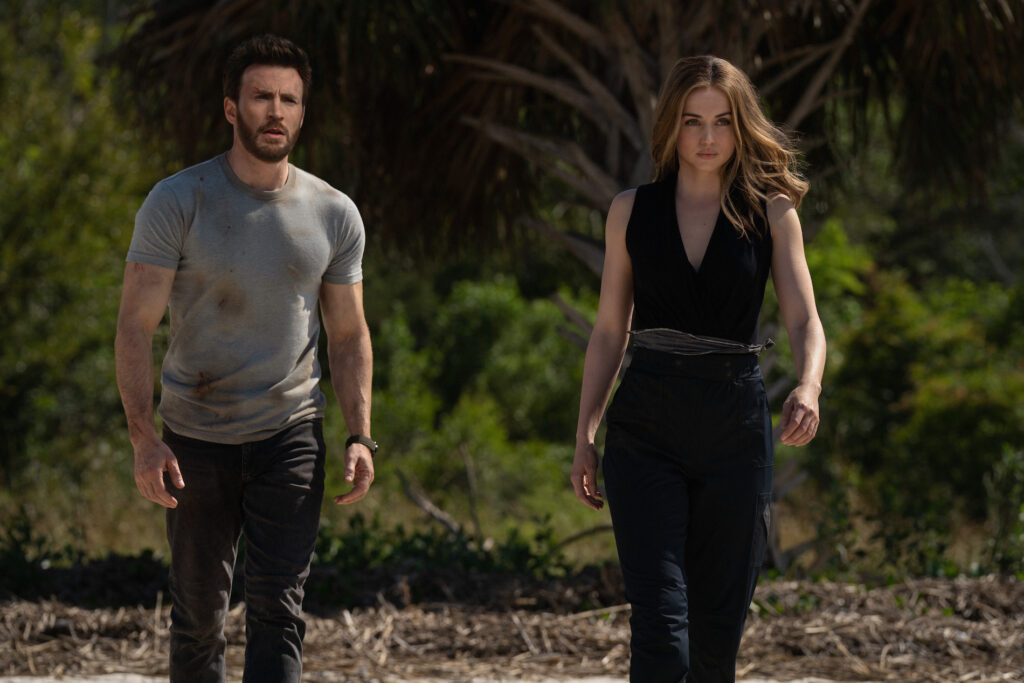
But streamers have more muscle and money right now. Katie Goodson-Thomas, the head of international production and development for Searchlight Pictures in the U.K., told a BFI London Film Festival audience that even though Searchlight is a subsidiary of the Disney powerhouse, they’re frequently getting outbid by streamers like Netflix, Prime Video, and Apple TV+. As a filmmaker, if your project falls outside of the IP-friendly domains of major studios, your options may not be between streamers and theatrical, but between streamers and nothing. Filmmaking is always about compromises, and changing the ideal distribution method of your film to get people’s attention may be one you have to make in today’s entertainment landscape.
The upside to theatrical
Let’s say you do have a clear choice between theatrical and streaming. Your movie just premiered at a major film festival, you’re a young talent, and you’re approached by both a streamer and by an indie studio like Neon or A24 that can provide theatrical release. Knowing that streaming is, in some ways, guaranteed to make your film more accessible (at least for subscribers to that distributor), whereas theatrical means you’ll have to compete against bigger movies and audiences who now prefer franchise fare if they do go to a theater, do you opt for the indie studios?
Director Lulu Wang was faced with this exact choice for her 2019 Sundance hit “The Farewell.” An undisclosed streaming company offered Wang roughly $15 million at the festival, but the writer-director ultimately chose to go with the $6–7 million deal from A24. Wang told Vulture she asked her mother for advice, because the streaming deal meant she could buy her a house. Wang said that her mother replied, “Why would you buy me a freaking house? I already have a house. The film is your baby, and you have to give it to the place that is not necessarily the wealthiest, but will give it the most love and joy and bring it into the world in the right way.”
For a newer filmmaker like Wang, there’s an intangible quality to entering the theatrical space and making a splash. Though Wang hasn’t spurned streamers (her follow-up project was 2024’s limited series “Expats” for Prime Video), sending a film to streaming may mean you have less influence in the long run.
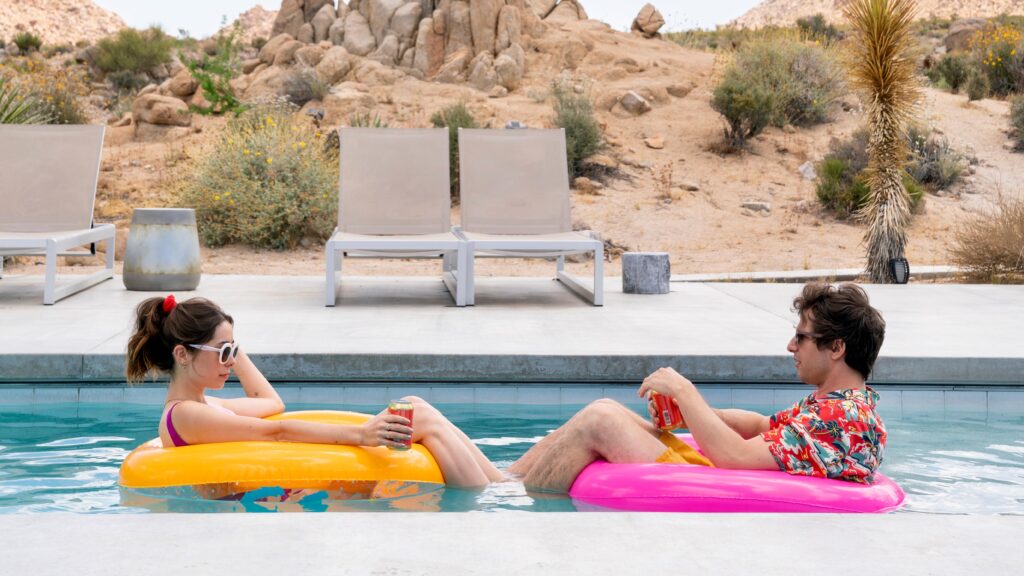
Take another early career filmmaker’s experience: Max Barbakow’s second feature “Palm Springs” sold to Neon and Hulu for $17.5 million in early 2020, but because the pandemic nixed a theatrical run, it only arrived on Hulu. His follow-up feature, “Brothers,” arrived on Prime Video in October 2024 with little fanfare.
On the one hand, both Wang and Barbakow are still working, and they’re not running from streaming. But it’s also easy to see the streaming market as its own kind of worst enemy, where few things can catch on because the market is too saturated. Anything streaming has to compete not only with everything else on that streaming service, but everything else on every other streaming service viewers may have, what they can rent at home, and the other entertainment devices they have available. Compare that to theatrical, and your only real competition is what else is in theaters at that moment.
As a filmmaker, you need to be cognizant of your long-term goals and the risks of each platform. Streaming may offer a big payday upfront, but that doesn’t necessarily mean more opportunity. The action-fantasy “Damsel,” starring Millie Bobby Brown, was Netflix’s biggest film of the first half of 2024, but that hasn’t translated to a major follow-up project for its director, Juan Carlos Fresnadillo.
On the flip side, there’s the argument that if you’re not working within the bounds of a franchise right now, your film may not have a chance to be a theatrical hit regardless. Clint Eastwood’s latest (and possibly final) film, “Juror #2,” is an old-fashioned courtroom drama; but the studio behind it, Warner Bros., didn’t feel like it was worth the effort for a wide theatrical release because it’s a movie made for adults rather than younger viewers who flock to franchise pictures. There’s reluctance to back this kind of movie because there’s no franchise or merchandising potential. Sadly, there will be no “Juror #2” lunchboxes and action figures.
There are, of course, exceptions: Osgood Perkins’ “Longlegs” made $126 million worldwide off a budget of $10 million—but keep in mind that Perkins’ first two movies, “The Blackcoat’s Daughter” (2015) and “I Am the Pretty Thing That Lives in the House” (2016), both went straight to VOD and Netflix, respectively; his third film, “Gretel & Hansel (2020), did get a limited release, however. You need to get a leg up somewhere, and if you have an original feature, then maybe streaming is the best chance to make it a hit, or at the very least, get it into the world and make further inroads into the industry.
The answer about what to do is going to be different for every filmmaker. Weigh the offers with the understanding that no follow-up project is guaranteed and every new film will present its own struggles no matter how well you’re able to pave the path.