Last year’s film slate may have lacked a distinct “Barbenheimer” event—two studio tentpoles duking it out in the same weekend—but it was a strong year for Hollywood and international cinema at large. Several great indies came from different corners of the world, and a number of genuinely inventive American works (like RaMell Ross’ first-person period drama “Nickel Boys”) pushed the filmmaking envelope. This year looks to be just as rewarding, with a number of highly anticipated projects—both major blockbusters and potentially under-the-radar gems. But what are the overarching trends that might carry over into 2025?
A transgender new-wave
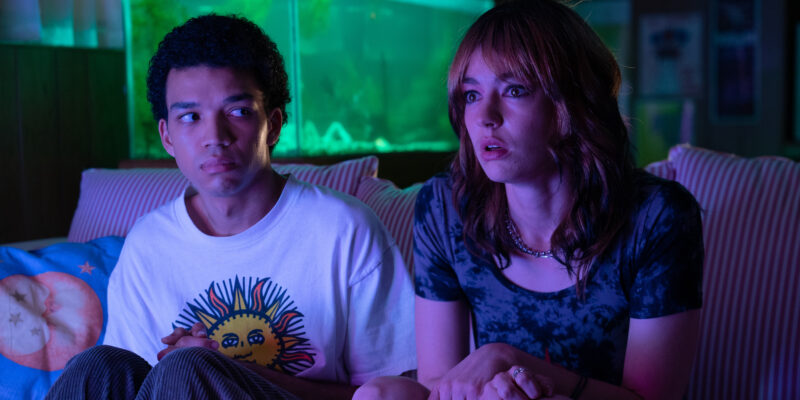
Critic Willow Catelyn Maclay already credited 2024 for ushering in “a new era of trans-authored cinema.” The year saw stories that expanded the possibilities of cinema as it pertains to gender expression, including Jane Schoenbrun’s abstract horror-drama “I Saw the TV Glow,” Vera Drew’s lo-fi superhero parody “The People’s Joker,” Theda Hammel’s COVID lockdown comedy “Stress Positions,” and 20-year-old Australian director Alice Maio Mackay’s punk-rock splatter-fest “T Blockers.” And these weren’t the only films from transgender filmmakers in 2024—Yance Ford made the searing police brutality docu-essay “Power,” while Sydney Freeland returned with her first feature in a decade, the Native American high school basketball drama “Rez Ball.”
Even outside of transgender filmmakers drawing on their experience and point of view, trans stories made waves. Just consider the Oscar-winning musical about a trans cartel leader, “Emilia Pérez”; the road-trip documentary “Will & Harper,” about Will Ferrell and his best friend Harper Steele, who has come out as a trans woman; Dev Patel’s gritty action saga “Monkey Man,” which featured a tribe of transgender heroines; and the zany horror pastiche “Cuckoo,” starring trans performer Hunter Schafer.
This year looks to be equally vital for trans representation—albeit a precarious one thanks to the overall political climate and decisions like Disney’s recent one to remove a transgender storyline from an upcoming animated show. But other areas of the industry seem keen on pushing for greater inclusion. The Sundance Film Festival played host to multiple trans stories, including the documentary “GEN_,” about reconciling in-vitro pregnancy and reproductive rights with diverse gender expressions; Australian drama “Jimpa,” which follows a nonbinary teenager; Sam Heder’s documentary “Heightened Scrutiny,” about anti-trans legislation; and Zackary Drucker’s celebrity doc “Enigma.” Other film fests are also spotlighting the trans experience: Berlin with transgender doc-cum-mermaid-fantasy “Sirens Call,” Rotterdam with “Midnight in Bali,” a narrative drama hailing from Indonesia, and Palm Springs with the coming-of-age drama “Bun Tikki” from debuting nonbinary Indian filmmaker Faraz Arif Ansar.
In fact, 2025 is shaping up to be an embarrassment of riches when it comes to trans filmmakers. Schoenbrun and Mackay both have follow-ups in the works (slasher movie “Teenage Sex and Death at Camp Miasma” and the supernatural demon horror “The Serpent’s Skin,” respectively). Isabel Sandoval has the Manilla-set heist film “Moonglow,” M.J. Bassett has the action-fantasy “Red Sonja,” Selene Kapsaski has queer sci-fi pastiche “The Moon Is a Hologram.”
As for films featuring trans and nonbinary characters/performers, the drag queen zombie horror “Queens of the Dead,” directed by Tina Romero (daughter of legendary zombie movie filmmaker George Romero) premieres later this year, and stars “I Saw the TV Glow” lead Jack Haven. There’s also Bill Condon’s “Kiss of the Spider Woman,” a Broadway adaptation starring gender queer actor Tonatiuh, as well as British legal drama “Hear Me Roar,” Danish drama “Sauna,” South African biopic “Granny Lee,” British trans model doc “Love & Rage,” and likely more that haven’t been announced yet.
In short, this new wave of trans movies will be worth keeping an eye on.
Old masters, bold swings
There are two opinions on filmmaking in old age: 61-year-old Quentin Tarantino, for example, has maintained since 2012 that he doesn’t want to become “an old-man filmmaker” doing the worst work of his career, and hopes to retire after his next film. On the other hand, 82-year-old Martin Scorsese has expressed new artistic discovery in his twilight years. “The whole world has opened up to me,” he said in a 2022 interview, echoing sentiments from Japanese legend Akira Kurosawa. No matter where one falls on this issue, the current state of cinema proves that older, wiser filmmakers are still tackling audacious projects.
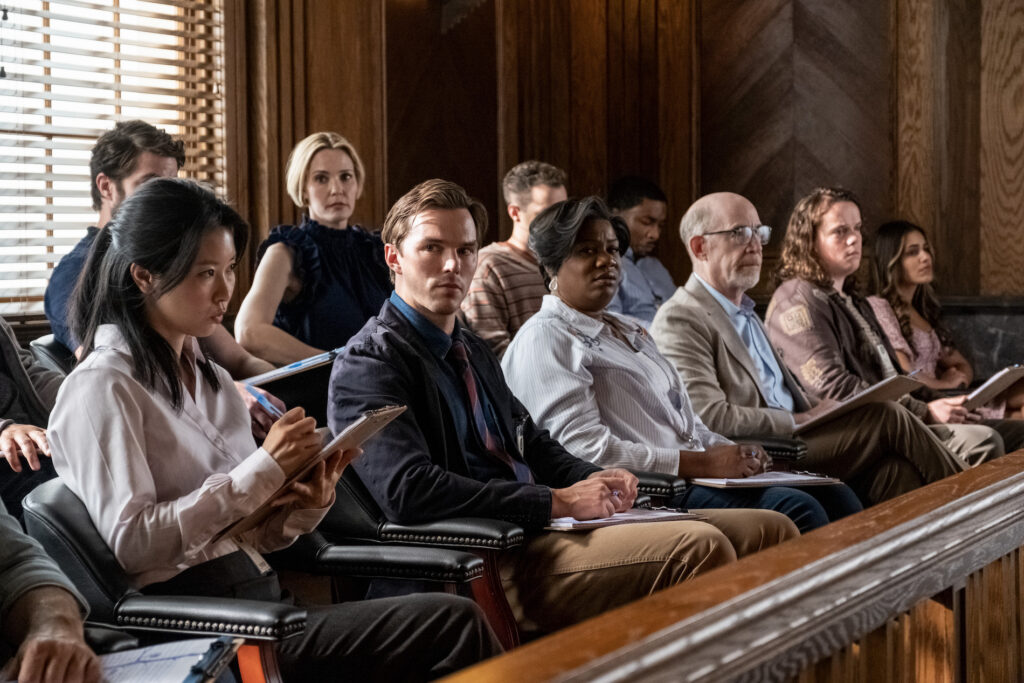
The 87-year-old Ridley Scott recently released “Gladiator II,” a film brimming with youthful political rage. At 85, “The Godfather” director Francis Ford Coppola finally premiered his self-financed mega-project, the mind-bending “Megalopolis.” A pair of aging auteurs confronted death head-on using personal avatars: 78-year-old Paul Schrader with “Oh, Canada,” about a terminally ill filmmaker, and 81-year-old David Cronenberg with “The Shrouds,” about a grieving tech CEO. And at 94, Clint Eastwood released the thrilling legal drama “Juror #2,” which turned the pristine image of the American nuclear family upside down.
North America wasn’t the only location for twilight-year filmmakers: 91-year-old Greek-French virtuoso Costa-Gavras released “Last Breath,” a dialogue on death between a philosopher and doctor specializing in palliative care, while at 88, British kitchen-sink realist Ken Loach released a film about the Middle Eastern refugee crisis, with the smalltown English drama “The Old Oak,” which he has cited as possibly his final film.
This year looks to continue the trend of seasoned filmmakers releasing new work. At 81, American visual poet Terrence Malick is finally set to release “The Way of the Wind,” his long-in-the-works Jesus Christ biopic. Mike Leigh (who’s 82) has just released “Hard Truths,” which sees him re-team with his “Secrets & Lies” star Marianne Jean-Baptiste, who delivers a blistering dramatic performance. 82-year-old German maestro Werner Herzog is all set for his first animated feature, “The Twilight World,” about a Japanese soldier who spent 30 years in hiding, believing that World War II was still ongoing (he also produced a book and a play on the subject).
Numerous great filmmakers aged 75 and up have projects in the works, including Claire Denis (78), James L. Brooks (84), and Agnieszka Holland (76)—and even Shrader appears to have written two more. This trend is enough to make the prospect of more “old-man filmmakers” (and “old-woman filmmakers”) all the more exciting.
RELATED: Top Advice From This Year’s Buzziest Filmmakers
Unconventional biopics + documentaries
Musician biopics and documentaries are a tried and true format—so much so that they were parodied to perfection by Jake Jasdan in 2007’s “Walk Hard: The Dewey Cox Story.” Any work that falls into the genre’s familiar conventions, or follow its birth-success-addiction-redemption plotline is often compared unfavorably to the spoof (films like 2018’s “Bohemian Rhapsody” follow its formula to a tee), but 2024 saw a handful of filmic biographies break the mold.
On the biopic front, “Better Man” transformed U.K. pop star Robbie Williams into a singing, dancing ape as a metaphor for how he felt in the spotlight; Pablo Larraín rounded out his trilogy of famous women (after “Jackie” and “Spencer”) with “Maria,” an exploration of the life of opera legend Maria Callas (Angelina Jolie) through a series of haunting memories. “Walk the Line” director James Mangold returned to the format to capture Bob Dylan, as played by Timothée Chalamet, with “A Complete Unknown,” and focused the story around one specific, controversial event: the night Dylan went electric.
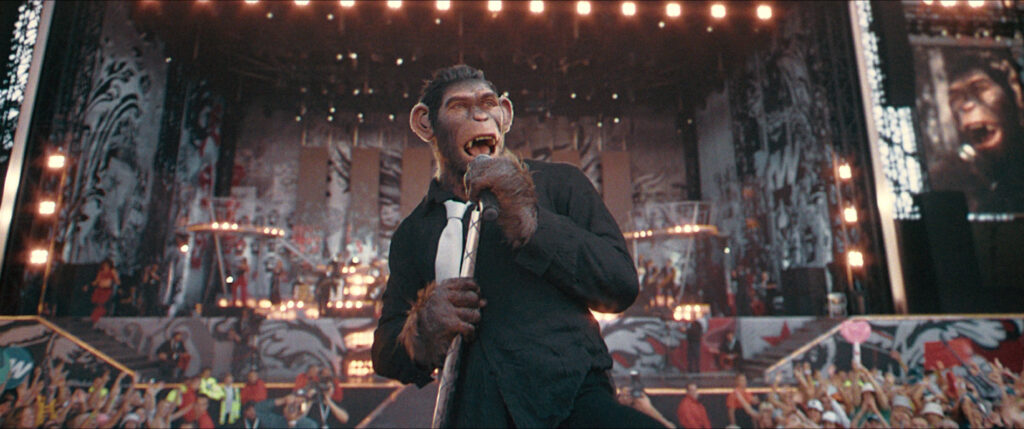
Last year’s music documentaries pushed the envelope too, eschewing traditional structures (the standard, sit-down interviews interspersed with archival footage concert footage), and captured their subjects’ music with cinematic aesthetics. The upbeat, imaginative talents of rapper-producer Pharrell Williams took dazzling LEGO form in the Morgan Neville-directed “Piece by Piece,” while Gary Hustwit’s documentary “Eno”—about experimental producer Brian Eno—takes on a choose-your-own-adventure format. Of course, neither of these conversations would be complete without Alex Ross Perry’s hybrid movie “Pavements,” which captures the ’90s slacker rock group Pavement and its particular brand of detachment by taking an almost prank-ish approach to both the musician documentary and the biopic.
Like 2024, which saw the release of the politically sanitized “Bob Marley: One Love,” 2025 will no doubt see a number of bog-standard musical films. However, a handful of them seem poised to further break the mold. While a second Pharrell Williams project, Michel Gondry’s 1970s coming-of-age musical “Golden,” was recently shelved after being shot, Jeremy Allen White is set to star as Bruce Springsteen in Scott Cooper’s “Deliver Me From Nowhere,” which will focus on the making of one album rather than chronicling the Boss’ entire life. Richard Linklater also recently debuted “Blue Moon” at Berlin, an even more granular biopic about Broadway songwriter Lorenz Hart (Ethan Hawke) set over a single night. On the documentary front, Bernard MacMahon’s part-archival “Becoming Led Zeppelin” is perhaps the form’s most thrilling prospect. The premiere of its work-in-progress cut at Venice last year was met with rapturous applause, and was said to contain the same kind of potency and excess as the English rock band’s early work—the kind of artistic meld of subject and form that, ideally, all musician docs and biopics aim for.