Homer’s Circe, Charybdis, and Sirens are imposing enough on page, but imagine them on a huge screen and shot in high-resolution: They become as tempting and frightening as they were to Odysseus. Plenty of moviegoers want to know what this will feel like; in mid-July, tickets to several 70 mm Imax screenings of Christopher Nolan’s Greek epic “The Odyssey” sold out—an entire year ahead of the film’s July 2026 release.
The craze for this capture and projection format has recently reached a fever pitch, with immersive films like Ryan Coogler’s vampire musical “Sinners” and Nolan’s historical drama “Oppenheimer” having lengthy, packed theatrical runs in the few dozen theaters capable of showing them as intended (at press time, 30 such locations exist, 25 of them in North America). In an increasingly digital landscape, this fervor for celluloid feels like an anomaly. But the use of Imax film in Hollywood has been growing—slowly but steadily—since 2008, and its history goes back significantly further.
For several years, the Imax company has slapped its label on a number of new digital cameras and projectors. However, film has traditionally been a more tangible medium for Imax moviemakers. The process of shooting on Imax involves running 70 mm film horizontally through a camera in order to maximize capture space. In digital terms, it would probably be the equivalent of 18K, so no actual digital camera comes close.
The first movie shot this way was the (now partially lost) 1970 experimental short “Tiger Child” by Donald Brittain, back when the Imax Corporation was known as Multiscreen. The following year, the Canadian company installed its first permanent projector at the Cinesphere Theater in Toronto, a venue that remained active until its closure for renovation in 2022. From the ’70s until the mid-2000s, Imax installed a number of setups as special attractions around the world, both in stand-alone cinemas and as part of science museums. Many larger-than-life documentaries started being produced, on subjects ranging from African Elephants to the Hubble Telescope.
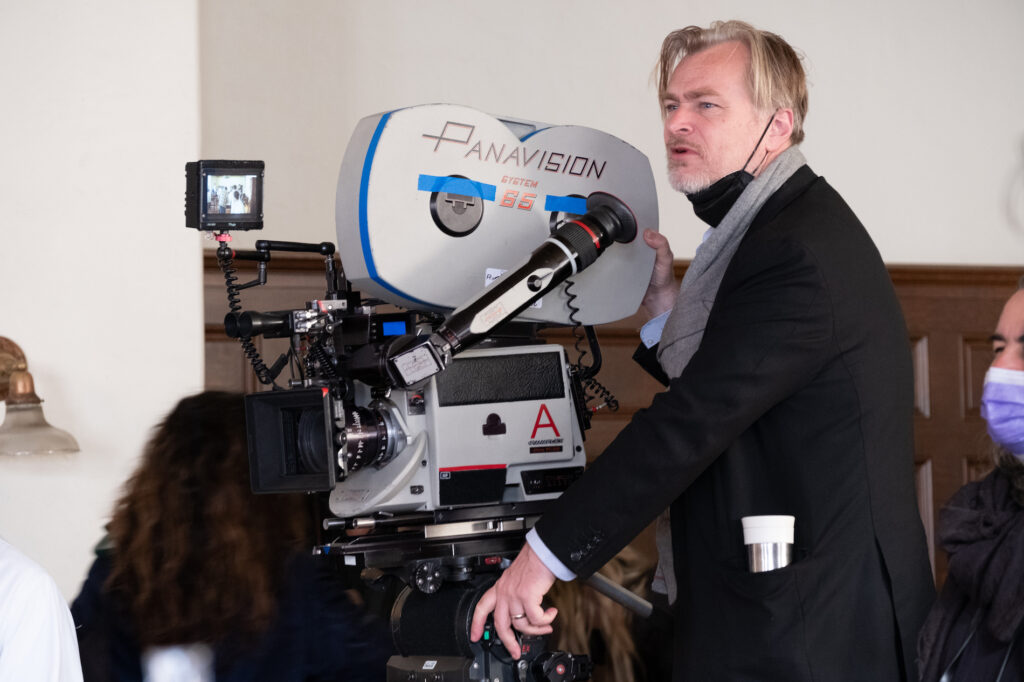
It wasn’t until 2008 that Hollywood got in on the action, with Nolan’s superhero blockbuster “The Dark Knight,” 28 minutes of which were filmed in the 1.43:1 “full frame” Imax aspect ratio. The difficulties of adapting Imax for studio features were immediately apparent: Only four Imax cameras existed at the time—one of which was damaged beyond repair during the movie’s truck-flipping stunt—and their enormous size posed limitations for movement and transport. Plus, the cameras’ jet engine–like motors made recording clean dialogue practically impossible on set.
These limitations ensured that Imax film would remain a special attraction rather than a default setting. There was also the expectation that Imax’s constantly shifting aspect ratios (between “taller” and “wider”) would break the audience’s immersion mid-scene. However, when used for specific sequences uninterrupted—rather than between shots within a single scene—the technology was much more effective. This was the case with 2011’s “Mission: Impossible—Ghost Protocol,” the Tom Cruise action vehicle whose risky, practical Burj Khalifa stunt became the movie’s marketing centerpiece (the sequence was filmed and presented entirely in 1.43:1 on Imax screens).
The 2010s saw a number of blockbusters continue using the Imax format: “Star Wars: The Force Awakens,” “The Hunger Games: Catching Fire,” and “Batman v Superman: Dawn of Justice.” But the industry’s shift toward digital capture and projection would prove a hurdle to its spread.
James Cameron’s record-breaking 2009 alien drama “Avatar” helped usher in a wave of digital 3D (both natively shot and post-converted), and led to the replacement of numerous film projectors with new digital technology. The success of digital alternatives resulted in either the shuttering or digital “downgrading” of several Imax film locations, such as the Imax Dome in Mumbai. Meanwhile, newer locations opened with smaller, digital-only Imax screens, until the meaning of the word “Imax” no longer referred primarily to celluloid.
However, this wasn’t the end of Imax’s Hollywood story. Some feature films continued to shoot on 70 mm Imax, especially those made by Nolan (“The Dark Knight Rises,” “Interstellar,” “Dunkirk,” “Tenet”). This has led to increased curiosity about the format, as each of the director’s movies employed more and more Imax film as the technology progressed. That meant more portable cameras with less disruptive sound, and—in the case of Nolan’s 2023 surprise mega-hit and Oscar-winning “Oppenheimer”—new black-and-white film stocks and larger platters to hold more Imax film, as the three-hour biopic was being projected off a massive single reel.
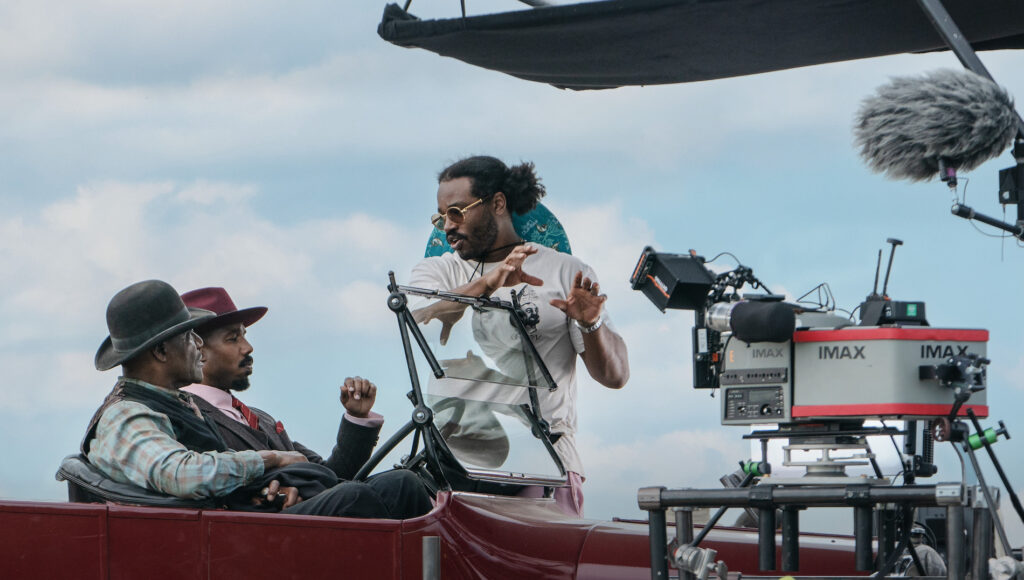
“Oppenheimer” had two successful re-releases in Imax—one in 2024 and the other earlier this year. In March, Kodak produced a video with “Sinners” director Coogler, which not only explained the various projection formats on which the movie could be seen, but distilled and simplified a mountain of technical information for the average viewer. Despite only playing in 70 mm Imax at a handful of locations, these screenings ran jam-packed—as was the case with the movie’s subsequent Imax re-release in May.
In the wake of Nolan’s and Coogler’s success, the Imax Corporation plans to build new 70 mm locations while upgrading existing digital ones. Imax chief commercial officer Giovanni Dolci even claims that for the first time in his 12 years at the company, flagship digital theaters have been approaching him with such requests. The demand clearly exists, and it’s being heard.
Nolan’s “The Odyssey” will take advantage of newer, quieter film cameras and will be the first studio feature shot entirely in the format. As other large-capture, retro film formats make a comeback—like VistaVision used for Brady Corbet’s “The Brutalist” and Paul Thomas Anderson’s upcoming “One Battle After Another”—celluloid could be set for a defiant return in the digital era.