In a year filled with onscreen riches, it can be hard to zero in on specific highlights; after all, every scene is part of a larger whole. However, these six slivers of cinema—each commanded by expert filmmakers from around the globe—represent the height of the art form’s splendor. From dazzling feats of technical coordination, to moments of spellbinding emotion, to aesthetic embodiments of theme and tone, these are the movie scenes that best define what 2025 had to offer.
“If I Had Legs I’d Kick You”: The sky is falling
Great films teach you how to watch them. When Mary Bronstein’s “If I Had Legs I’d Kick You” begins, the camera remains tethered to Rose Byrne’s close-ups, as she plays an exhausted mother to a sick five-year-old. The mounting pressures in her life calcify in the form of her ceiling suddenly collapsing and flooding her apartment, a chaotic mishap edited for maximum anxiety. This nerve-shredding introduction sets the stage for a movie that seldom (if ever) allows you to breathe, or break eye contact with Bryne’s devastating performance during her gradual breakdown.
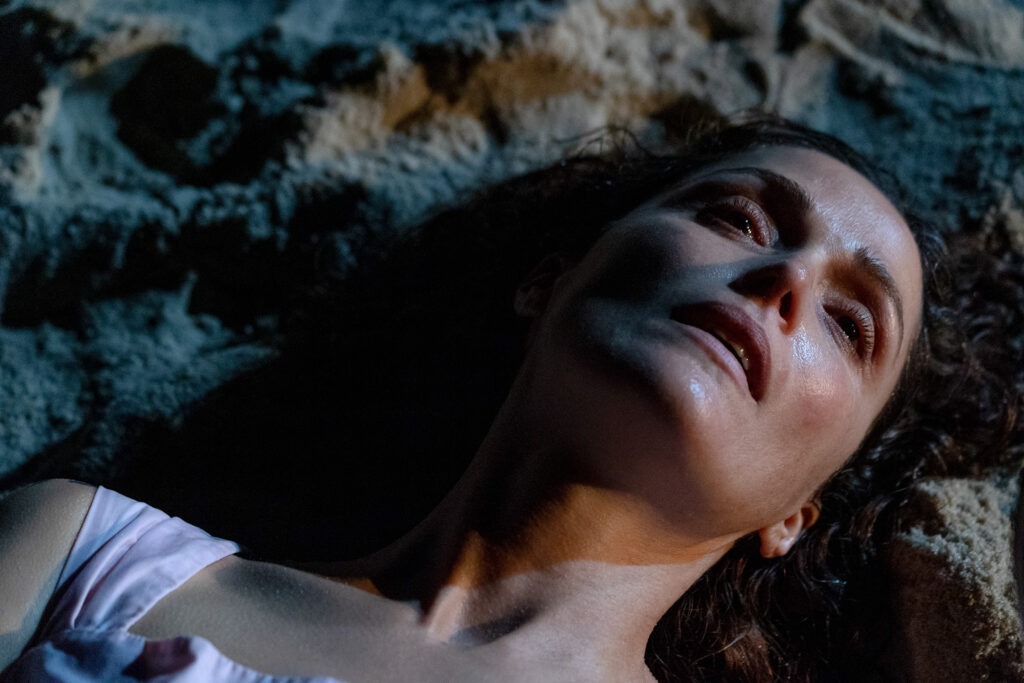
“April”: A haunting stillbirth
Banned in its native Georgia, Dea Kulumbegashvili’s murky medical drama “April” follows an obstetrician risking her career by performing illegal abortions for desperate women. It draws its power from visceral imagery unafraid to capture the beauty of the female form or the violence wrought upon it, starting with a live birth captured in close-up. Onscreen, a pregnant woman delivers and immediately mourns her stillborn child. In reality, a healthy baby was born to the expectant actor (whose identity has been hidden, given local backlash to the movie). This devastating tightrope walk of emotions—born from the mother’s performance and Kulumbegashvili’s own fears while pregnant during the production—leaves an indelible impact.
“Resurrection”: Countdown to sunrise
In Bi Gan’s arthouse drama “Resurrection,” a biomechanical being (Jackson Yee) dares to dream in a world where people have given up all things illusory in a bargain for longer life. These dreams—each an abstract reflection on cinema—take the form of six vignettes of different genres, each harkening back to specific filmmaking movements, and to China’s evolution across the 20th century. The movie’s miraculous centerpiece unfolds in the late hours of New Year’s Eve, 1999. It welcomes a new dawn with an expertly timed and coordinated single take that lasts 37 minutes onscreen, but stretches and compresses time in mesmerizing ways, as it follows a young criminal couple making their way through an entire city, en route to a moving sunrise.
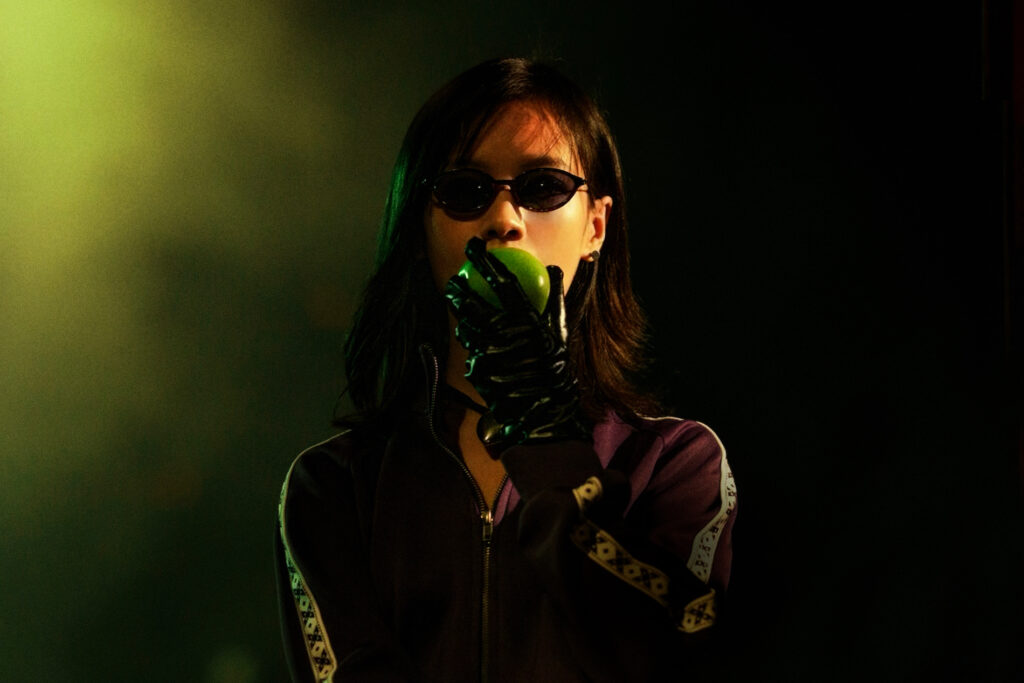
“It Was Just an Accident”: A desperate interrogation
In “It Was Just an Accident”—Jafar Panahi’s first film after being jailed and interrogated in Iran—a colorful cast of characters kidnaps a one-legged man who they believe tortured them in an Iranian prison. They might not be sure it’s him, but one of the movie’s climactic scenes (a 13-minute static shot lit only by red taillights) allows the leading actors to go to vulnerable, harrowing places as they try to seek answers and find closure over what was done to them—if such a thing is even possible.
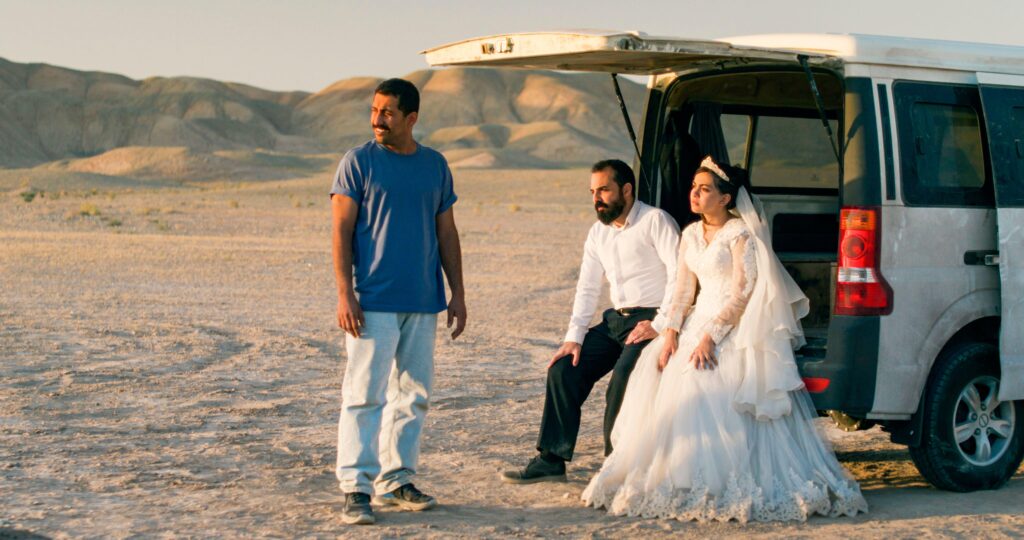
“One Battle After Another”: A winding road
Paul Thomas Anderson reckons with rising and falling political tides in “One Battle After Another,” a sprawling Hollywood comedy-drama whose title and premise reflect never-ending struggles for political liberation. This feeling is embodied by its unique action climax, a tightly edited car chase across a wavy, mountainous highway. The road dips in and out of view, and the characters’ vehicles practically become roller coaster cars playing peekaboo, as the film cuts rapidly between them. Few scenes this year have so deftly embodied a story while also turning it into an enthralling, dizzying sensation.
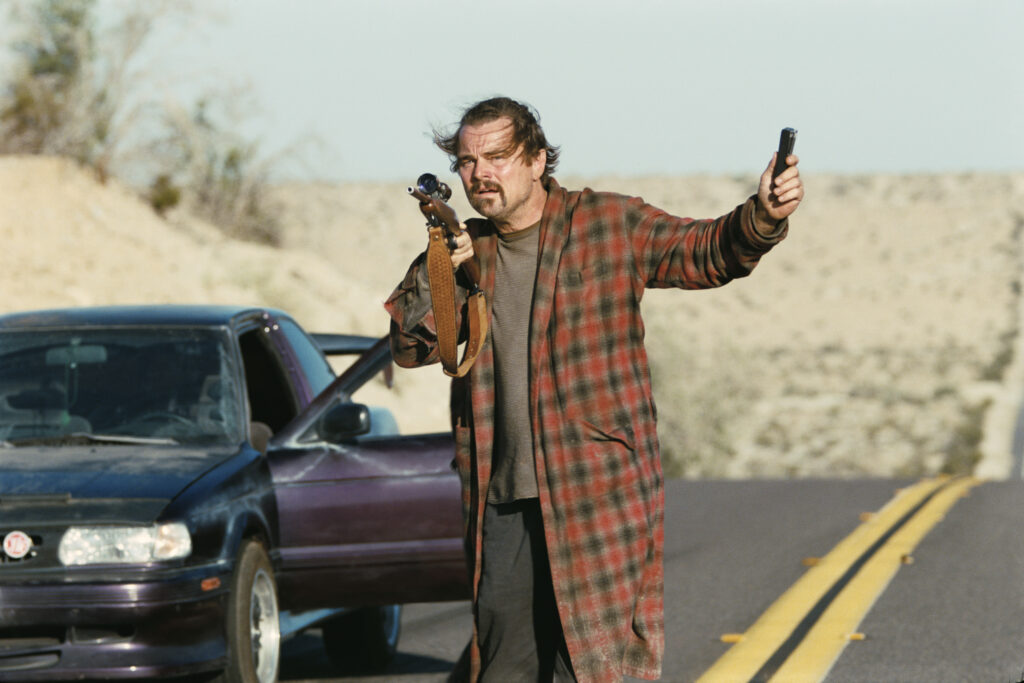
“Sinners”: Summoning spirits
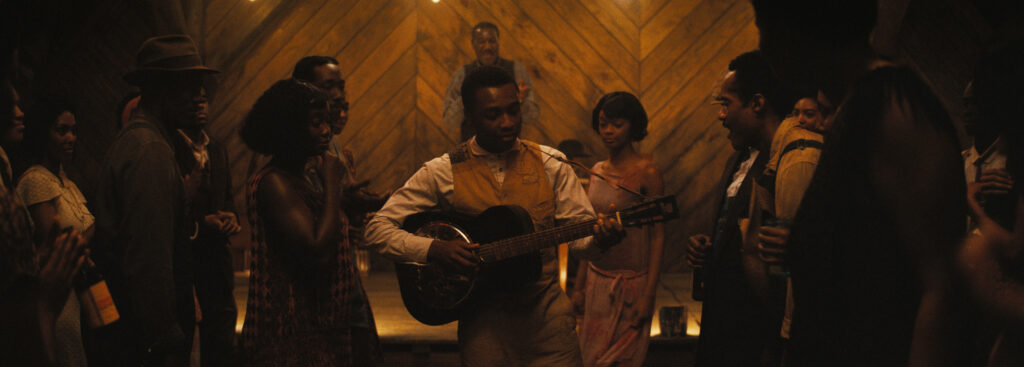
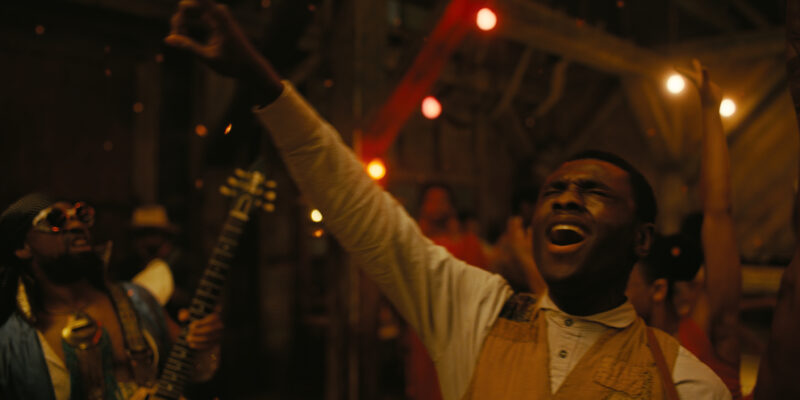
Past and future collide at the midpoint of Ryan Coogler’s “Sinners,” a 1930s-set, Western-inspired horror musical, in which vampires covet Sammie “Preacher Boy” Moore (Miles Caton) and his power to summon spirits with his songs. In a sweltering juke joint, as Sammie strums and croons melodically in an unbroken take, specters of the past, like masked African Zaouli dancers, step into the frame with as much zeal as those visiting from the future—the rock and rap stars yet to come—creating a rhythmic continuum of African American art across the centuries, connected by the blues. It’s a defiant example of cinema’s power to clarify complex symbolism and imbue it with enrapturing soul.