
Kyle Marvin and Michael Angelo Covino had a good thing going during their years working on commercials. But the longtime friends were pining to focus on narrative filmmaking. So, in between creating ads, they produced, wrote, and directed short films. After having 15 projects rejected by the Sundance Film Festival, their short “The Climb” was accepted in 2018; it proved to be the catalyst for their dream career. The next year, they turned “The Climb” into a feature. The pair co-wrote and co-starred in the film, with Covino directing.
Their sophomore cinematic effort “Splitsville,” again directed by Covino, features the duo starring opposite Dakota Johnson and Adria Arjona. The movie revolves around two couples who explode into conflict when a distraught Carey (Marvin) learns his wife, Ashley (Arjona), wants a divorce, then sleeps with his best friend Paul’s (Covino) wife, Julie (Johnson), after discovering the two are in an open relationship.
Here’s their advice on how to break into feature filmmaking.
Go to festivals ready to pitch.
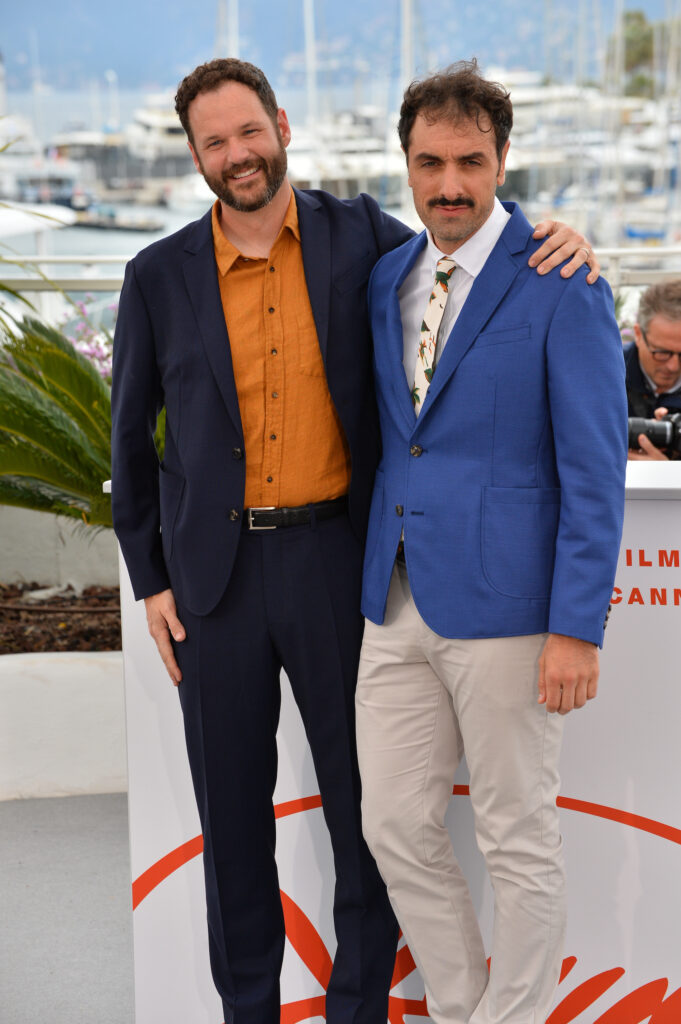
Credit: Paul Smith / Featureflash
When “The Climb” got into Sundance, Marvin and Covino knew that there would be opportunities to talk to producers, studios, and production companies about their projects. “Rather than going to the festival to have a good time, we went with 12 or 13 pitches ready,” says Covino. It was there that Topic Studios commissioned them to write the feature version of “The Climb.”
Marvin and Covino began shooting within six months, and “The Climb” premiered at the Cannes Film Festival in May 2019, before being released in theaters by Sony in November 2020. “Topic then signed us to a first-look deal, so we developed movies under them for a three-year period, one of which was ‘Splitsville,’ ” Covino says. After meeting Johnson at a film festival, they impressed her with the idea for “Splitsville” and sent her the script. She soon signed up to both appear in and co-produce, with Neon and Topic co-financing.
Marvin can’t help but lavish praise on Topic, calling them “great partners.” When asked whether filmmakers need to be patient to find a production company that matches their sensibilities, Marvin instead says they need to have tenacity. “We weren’t really that patient,” he admits, with Covino quickly adding, “We were working as hard as we could because there definitely wasn’t any patience. The window of opportunity is so small. You have to be ready to go at a moment’s notice.”
Have numerous projects in the works.
Covino and Marvin are regularly working on around 50 ideas for different movies at any given time. “We’ll come up with an idea for a movie, character, dynamic, scenario, logline, or title; jot it down really quickly; even bang out a quick outline; then say, ‘OK, we can come back to that,’ ” explains Covino.
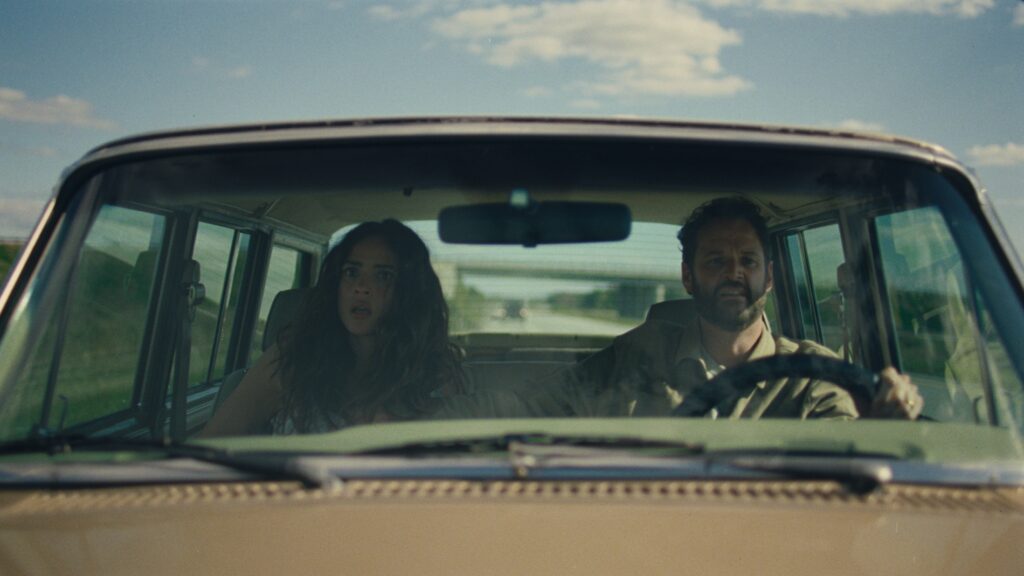
“Splitsville” was born out of two scenes that Covino and Marvin kept returning to. One is the film’s opening sequence, when a car crash provokes Carey and Ashley to have a candid discussion about their marriage. The second is the prolonged fight scene between Carey and Paul that occurs halfway through.
“That’s how we pitched the film,” says Covino. “We told them about the car crash, her asking for a divorce, him running away, showing up at his friend’s house, learning about the open relationship, them sleeping together, the 10-minute fight. Then [we] said, ‘You know what the movie is. Wherever it goes from there, that will be the framework,’ ” recalls Covino.
Be aware of the cinema landscape.
Shortly after they started making short films together, they were involved in the making of a “beautiful film that won the audience award at like 20 regional film festivals but never got into the big festivals or broke through,” remembers Covino. While it was a short film that they were proud of and told a story that they wanted to tell, he adds that it “was disconnected from the landscape of the film industry.”
“We weren’t thinking about what programmers wanted to program or what audiences wanted to see. When it came out, I remember it felt like it was five or six years too late,” he continues. The lesson they learned from this experience is that they needed to be “aware of the landscape of cinema and film, and know what’s going on at least a little bit,” says Covino.
From that point on, they constantly kept up-to-date with what stories or genres were thriving, as well as keeping an eye on ones that hadn’t been explored in a while. “We’re always consuming a ton of cinema, whether it’s working in it or producing or just going to festivals,” Marvin explains.
For “Splitsville,” Covino and Marvin decided to make a screwball comedy because they hadn’t seen a film from the genre in a while. They also wanted to make sure it explored sex and relationships in a modern way. “Our instinct is toward great characters and a great story, while we’re always looking to tap into things we’re interested in and that we find compelling,” says Marvin.