This year’s festival circuit delivered everything from “Hamnet,” Chloé Zhao’s intimate portrait of William and Agnes Shakespeare’s devastating loss, to “Marty Supreme,” Josh Safdie’s bombastic, Timothée Chalamet–led pingpong dramedy. But beyond the breakout hits that captured mainstream attention, several boundary-pushing works flew under the radar. Here, we rounded up nine hidden gems from 2025’s festival season that deserve a wider audience.
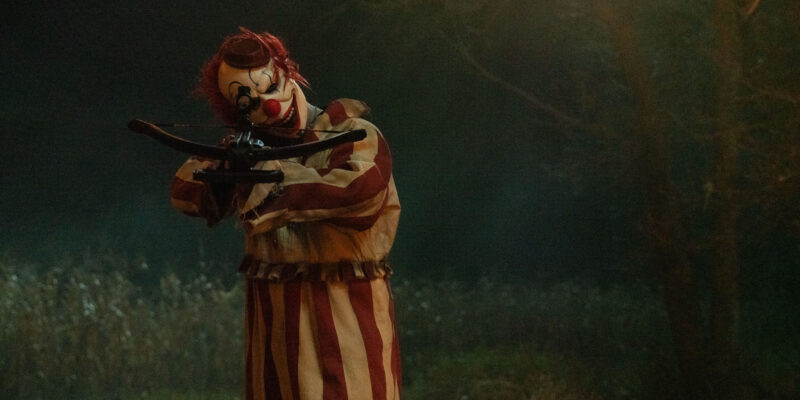
“Clown in a Cornfield,” dir. Eli Craig (South by Southwest)
This crowd-pleasing slasher is both hilarious and scary, offering frightful delights alongside sharp satire about corporate dependence and generational divides. Craig maintains a brisk pacing, tapping into primal clown-based fears while building eerie atmospheric tension from the rural setting.
“My Father’s Shadow,” dir. Akinola Davies (Cannes Film Festival)
Davies’ impressive feature debut follows a mostly absent dad (Sope Dirisu) who reunites with his two young sons in early ’90s Nigeria. As the trio make their way from a rural enclave to Lagos, the filmmaker and Dirisu pull off something miraculous in this depiction of masculinity, both honoring its gentle shades and living up to the two kids’ idolization of their unbreakable father figure. —Tomris Laffly
“Plainclothes,” dir. Carmen Emmi (Sundance Film Festival)
For a verité take on queer life, look to the understated work of Tom Blyth and Russell Tovey in “Plainclothes,” which won the U.S. Dramatic Special Jury Award for Ensemble Cast. Emmi’s 1990s-set drama stars Blyth as a cop who’s coming to terms with his sexuality even as he orchestrates stings to entrap other gay men. When he meets a married man (Tovey), the two embark on an affair that’s fraught but tender. —Esther Zuckerman
“The Blue Trail,” dir. Gabriel Mascaro (Berlin International Film Festival)
A septuagenarian embarks on a hallucinogenic river journey to escape an ageist authoritarian regime in this Amazon-set liberation fable. It’s a compelling exploration of aging, autonomy, and the insidious ways propaganda seeps into consciousness, but the film earns a rewatch on Mascaro’s lush visuals and intimate close-ups alone. The director transforms the river into both sanctuary and liminal space, where reality dissolves into something more primal and true.
“Sham,” dir. Takashi Miike (Tribeca Film Festival)
Miike trades his trademark excess (the bag scene in 1999’s “Audition” still haunts our dreams) for procedural precision in this sort-of-true-crime thriller. Using a fragmented timeline, the auteur employs an unusually restrained approach—muted colors, formal compositions, dramatic irony over shock—to depict the mob mentality that grips a nation when an elementary school teacher is accused of abusing his student. You’ll be left questioning your assumptions about guilt, innocence, and the morally grey spaces between.
“Wormtown,” dir. Sergio Pinheiro (Chicago Horror Film Festival)
Ohio is transformed into a postapocalyptic nightmare in this creative and ambitious debut about a parasitic invasion, zealotry, and gender. Pinheiro uses in-camera practical effects, makeup, and set design instead of relying on CGI or AI to build his terrifying survival drama, resulting in an uncanny valley feel that’s both terrifying and impressive.
“Wicket,” dir. Lily Plotkin (Frameline)
Plotkin capitalizes on the tension between public and private lives in this powerful portrait of San Francisco B-boy Gabriel “Wicket” Joachico, a now-out gay man who was closeted for most of his life. This expansive documentary contrasts moments of quiet reflection from contemporary interviews with high-energy scenes from 1990s hip-hop dance battles, making a nuanced argument about the power of living authentically.
“Comment ça va? (How Are You?)” dir. Caroline Poggi and Jonathan Vinel (Berlin International Shorts)
Part adorable animals, part exploration of existential absurdism, this animated short perfectly encapsulates the millennial experience. Poggi and Vinel deftly strike a balance of surrealism and authentic emotion through a lens of bold formal experimentation, treating the short format as a tool all its own rather than as a steppingstone to feature-length projects.
“The Plague,” dir. Charlie Polinger (Cannes Un Certain Regard)
Take the physical and psychological pains of adolescence, add a manipulative bully and some perfectly placed body horror, and shoot using stark minimalist tones on 35 mm, and you might just get Polinger’s insidiously terrifying coming-of-age debut about a boy trying to find his place at water polo summer camp. The film’s confined campground setting, distressing sound design, and moments of stark stillness function as a perfect pressure cooker for examining the casual cruelties of childhood.