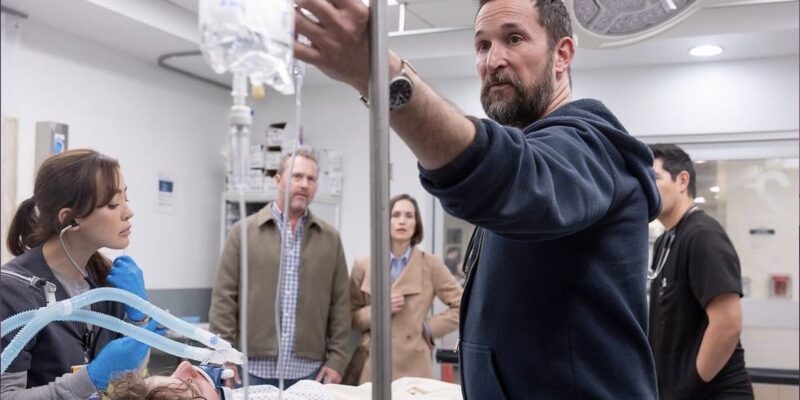
When Amanda Marsalis was first approached about directing the HBO Max series “The Pitt,” she didn’t think a medical show was right for her. But now, after being changed by the experience—and receiving an Emmy nomination—she couldn’t be more thankful she was wrong.
Marsalis initially made a name for herself as a fashion photographer for publications such as Vogue and GQ. Then an unexpected call changed the course of her career, leading her to direct the 2014 indie drama “Echo Park.” She’s since become an in-demand television director, helming episodes of sci-fi and crime series like “Westworld,” “The Umbrella Academy,” and, most notably, multiple crucial installments of “Ozark.”
What did attract Marsalis to “The Pitt” was the opportunity to collaborate with John Wells, the veteran producer behind NBC’s long-running medical drama “ER.” Wells had joined forces with “ER” star Noah Wyle and “The Pitt” creator and showrunner R. Scott Gemmill, who worked as a producer on “ER.” Set during a grueling shift at a Pittsburgh emergency room—with each installment spanning an hour of the day—the series became a phenomenon earlier this year thanks to its realistic portrayal of the challenges facing the health care community.
Marsalis directed four episodes of the first season, and she’s earned an Emmy nomination for directing the powerful 12th installment, “6:00 P.M.,” in which the hospital is thrown into chaos in the wake of a mass shooting. Here, she discusses the technicality and emotional impact of “The Pitt,” as well as her transition from photography to filmmaking.
When you reflect back on the experience of making “The Pitt,” where does your mind go first?
I think about support and trust. John Wells trusts Scott Gemmill; Scott trusts Noah; Scott and Noah trust me.
With John, it’s like when somebody uses their powers for good and not evil. It’s a really lovely environment of people who let other people do their jobs, and it’s something I don’t take for granted. In those environments, you just do your best work. It was a really lovely place to call home.
What initially drew you to the show?
The main reason I wanted to do “The Pitt” was because it was with John. I try to say this without sounding like an asshole, but I didn’t think a medical show was for me. And I was incredibly wrong. As soon as I read the script, I understood how amazing it was. I got an ego check like nobody’s business. I’m now nominated for an Emmy. Like, this is a life-changing experience, and thank goodness for that.
We did something really special. A friend of mine who lives in Denmark texted me a newspaper review of “The Pitt” and translated it for me. It said “competency porn.” It’s a show about a bunch of people who are just trying really hard to do good work, and that’s something that all of us could use right now.
Do you have a general approach to your preparation for an episode, and was there anything unique about it when it came to this show?
I can’t imagine a director not being like, “Prep is everything,” because prep is everything. If you are not prepared, your whole crew will just smell it and you are chum in the water. I think it’s technical and emotional. To know what we need to feel that day and to know what the point of our scenes are allows us, in the technical prep, whenever something goes wrong, to center ourselves back to: The only thing that matters here is that we feel this. And so if we felt it, then you know we’re OK.
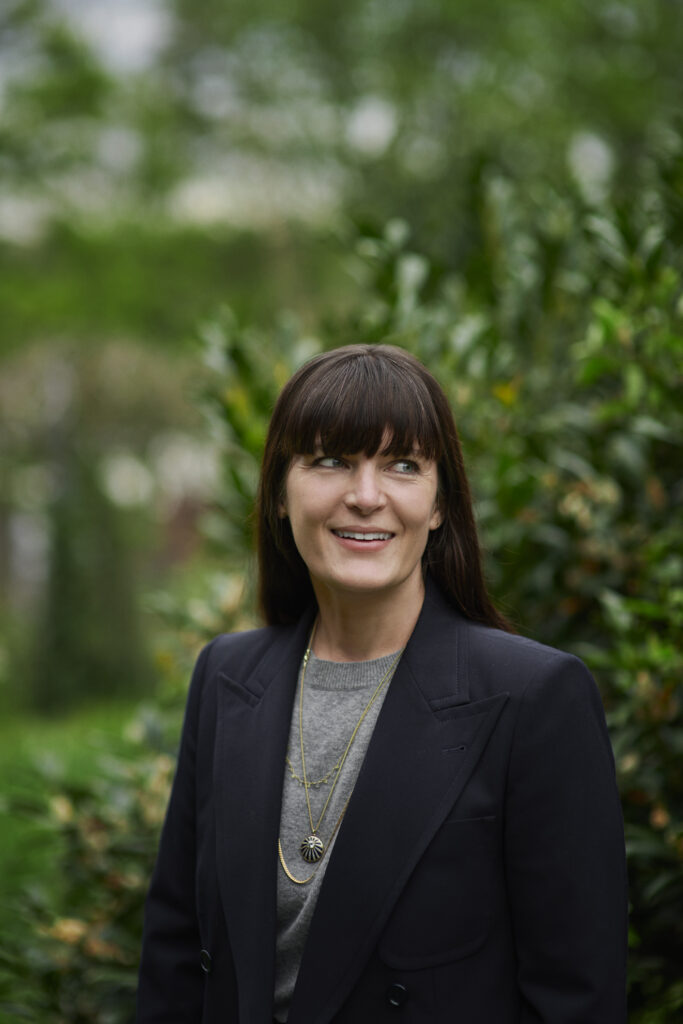
You’re nominated for directing Episode 12, which follows the hospital staff dealing with the devastation from a mass shooting. From the start, were you aware that this was coming?
I knew. In some ways, it was like a wall of violence coming my way. And I knew I didn’t want the episode to be like medical porn. The reason the episode is so good is that it really shows us how horrible and difficult events like this are to the actual humans in them. Prepping it was very technical. There was a lot of, “This person’s going to move there; this person’s going to come back.”
And, oh my goodness, all the blood. We had a blood library. And the amount of blood—there’s floor blood, clothing blood, mouth blood, wound blood, artery blood. I should have done a photo book on the blood of “The Pitt.”
You previously had a career as a successful photographer. But did you always want to be a filmmaker, and what was that transition like for you?
I always wanted to be a photographer, from [the time I was] a 13-year-old punk rocker going to shows in people’s basements and all-ages clubs. I started taking pictures because I wanted to have a reason to be there and to participate.
I went to art school, and I didn’t even know I was going to be a working photographer. I was just like, Wait, I have to pay the bills, so I’d better figure this photography thing out. I had a really wonderful career and traveled the world. Then I got an email one day from Rebecca Walker, whose mother is [writer] Alice Walker. I had photographed Rebecca many years before, and we had stayed friends.
She was like, “There are these guys who have a movie called ‘Echo Park,’ and they’re looking for a director. I thought you would be good. Are you interested?” It wasn’t like I was trying to be a director; I was deeply satisfied with my photography. [But] now, if I wasn’t a director, I don’t know if I would still be alive. I can’t explain my life without it; I’m using all of my brain, and I was not before.
What advice would you give to aspiring filmmakers who are also looking to make the jump from whatever field they’re currently in?
Make your own work. Trying to chase something—like, “Oh, this is the thing that I think will get me hired”—doesn’t work. But telling your own stories and making your own art and understanding yourself does really well for you. It’s a very hard time right now, but there’s always room for passionate, talented people.