
The immortal warriors of “The Old Guard 2” combine the permanency of eternal existence with the urgency of present conflict. So, too, does the movie’s director, Victoria Mahoney, juxtapose timeless truths with mindful awareness in her filmmaking approach. The director is relentless in her pursuit of “some sweet sliver of truth” through creative collaboration, offering valuable lessons to aspiring filmmakers.
Ground everything in emotion.
When developing the action sequences for “The Old Guard 2,” Mahoney established a rule that applies far beyond the genre: Spectacle without feeling is meaningless. “I don’t care about cool moves; cool doesn’t matter if the action is not grounded in emotion,” she says. Instead, she breaks down the emotionality of each stage of a fight, whether “shame, remorse, guilt, punishment, anger, venom, love, kindness, regret, etc.” Using this emotionality as a lens, she asks, “How do the actors stand? How do they move? Do they pause? Why do they pause?” That interrogation makes it so that “each hit, punch, kick, jump, or leap [are] grounded in reason, ensuring the sequence and the actors were tethered by emotion.” Or to put it simply: Every movement should serve the story.
Let actors lead the way.
Director-actor relationships centered on collaboration—rather than control—are key, Mahoney says. “My goal on any project is to learn an actor’s language versus imposition,” she says. “Ultimately, my job is to make [them] feel safe in order to give their optimal creative self.” Drawing from her theatrical training, she invites actor participation by planning early rehearsals, discussing questions about the project and characters, and assigning exercises and homework. By letting actors lead the way, Mahoney creates a synergistic environment of what she calls “unshakeable navigation toward keen lockstep and unspoken communication.”
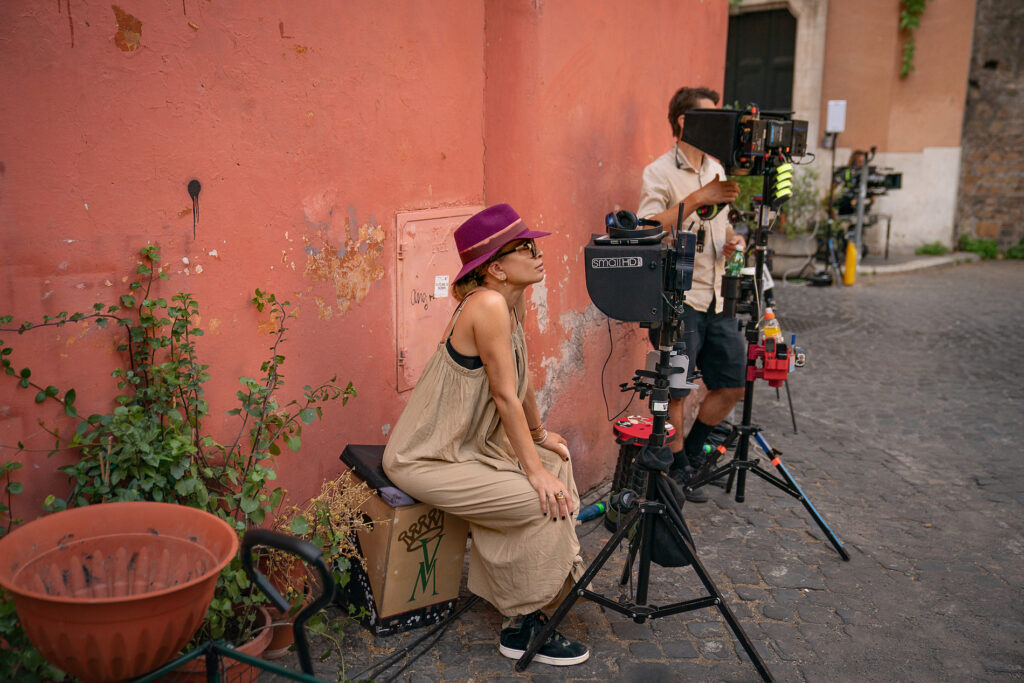
Fully commit to your path.
Mahoney believes that the “freedom of creative flight” is “tucked away in your bone marrow,” which means internal artistic inspiration transcends any external obstacles. “Here’s the good news: The right path is your path—there is no other path,” she says. “Embrace the lows with the same vigor you embrace the highs. Whenever you land in the trenches, seek to identify the lesson. Do not hopscotch past lessons or you’ll find yourself in the same ol’ trench over and over again.” And the best time to start on that path? “Right now! Whatever you have access to, start there.” Even if you don’t have a lot to work with, “the biggest opportunities reside on the highway interlocking your heart, your will, your eye, your hunger, and your fingertips,” she says. “I promise you: Nothing and no one can stifle the muscularity of your creativity when you know precisely what you’re made of and where you need to grow.”
Practice mindfulness.
For filmmakers working on their first big project, Mahoney advises living in the eternal present of creation. “Remove psychological distractions,” she says. “Attack creative barriers. Overprepare. Link arms with trustworthy collaborators. Trust your instincts. Tell yourself there is no tomorrow and there is no yesterday. Embrace the unknown. And have fun!”
Ultimately, Mahoney teaches us that emotional authenticity trumps technical flash, creativity isn’t confined by circumstances, and the most important step is the first one. Her approach demonstrates that the tools for meaningful storytelling are already within reach. They’re in your bone marrow, waiting to be awakened.